Who is Antoinette Forbes? Police search for missing DC mother

Daftar Isi
Police Continue Search for Missing Washington Mother and Public Affairs Executive
Cybersecarmor.com – Washington, D.C., authorities are seeking public assistance as the search continues for Antoinette Forbes, a 53-year-old single mother and Eli Lilly public affairs executive who has been missing for more than a week.
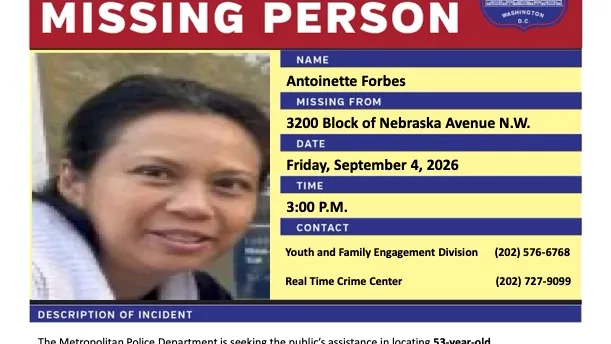
The Metropolitan Police Department has designated the case as a critical missing persons investigation. Forbes was last seen on Sept. 4 in the 3200 block of Nebraska Avenue NW, an area in Northwest Washington near residential neighborhoods and several major institutions.
Investigators describe Forbes as an Asian woman standing 5 feet 2 inches tall and weighing approximately 115 pounds. She has black hair and brown eyes. Police have not identified what she was wearing when she disappeared.
Officials have released a missing-person poster and continue to ask residents, commuters, and anyone who spent time near Nebraska Avenue NW during the weekend of Sept. 4 to review any information that could be relevant. Surveillance video, doorbell-camera footage, and dashcam recordings may help establish a clearer timeline.
Limited Details Released in Active Investigation
Police have not publicly outlined the circumstances surrounding Forbes’ disappearance. They also have not released information about her 10-year-old son. The department has said the investigation remains ongoing and is being treated as a priority.
“This investigation remains a priority for our department, as all missing person cases are. This case remains an active and ongoing investigation with the Metropolitan Police Department.”
Forbes’ disappearance has drawn concern from relatives, friends, coworkers, and members of the broader D.C. community. National Presbyterian Church, where Forbes is a congregant, said she vanished from her home in what it called “mysterious circumstances.”
On Sept. 12, friends, colleagues, and community members gathered for a vigil. The church later urged the public to share any potentially useful information with police, emphasizing the importance of footage or observations from the Nebraska Avenue NW area around the time she was last seen.
“Our National Presbyterian Church community is urgently asking for your prayers and assistance … her family is desperately seeking any information that could help bring her home safely.”
Personal Belongings Found at Home
Court documents indicate that Forbes’ vehicle, cellphone, purse, and dog were found at her residence on Sept. 6. A friend checked on her after family members were unable to contact her and found personal belongings still at the home.
Those details have deepened the alarm among people close to Forbes. Her sister, Aileen Forbes, has said the disappearance is unlike her sister and that the two women were in regular contact.
“We’re practically twins. We’re best friends. She is probably the most important person in my life. There is no way that she would just leave.”
Before Forbes vanished, the sisters had been discussing a Christmas vacation with family members and intended to finalize flight plans the following day. The plans gave relatives no indication that anything was wrong, Aileen Forbes said.
Forbes is described by loved ones as a respected communications professional, devoted parent, sister, daughter, colleague, and friend. A fundraising page created to support the family’s search efforts reflects the widespread concern surrounding her disappearance and the desire to bring her home safely.
Professional and Family Connections
Forbes serves as associate vice president and head of public affairs at Eli Lilly, one of the nation’s largest pharmaceutical companies. The company has said it is cooperating with authorities and has encouraged anyone with information to contact police.
Her role in public affairs involves communications work, while her family has emphasized her identity as the mother of a young son. The absence of a public explanation for her disappearance has left friends and relatives searching for answers while investigators continue their work.
Authorities are asking the public to focus on concrete details rather than speculation. People who noticed unusual activity, encountered Forbes, or possess recordings from the relevant area may have information that appears minor but could help investigators piece together her last known movements.
Arrest in Pennsylvania
Russell Ashford, the father of Forbes’ son, was arrested in Pennsylvania on a warrant alleging a probation violation in Maryland. The Montgomery County State’s Attorney’s Office confirmed the warrant but did not provide further details about the alleged violation.
A Pennsylvania State Police report says Ashford was taken into custody on Sept. 12 during a traffic stop in Brighton Township, Beaver County. Troopers determined that he was wanted by Maryland authorities. He is being held in Beaver County Jail pending extradition.
Police have not publicly connected Ashford’s arrest to Forbes’ disappearance, and no additional details have been released about the missing-person investigation.
Anyone with information that could assist the search is urged to contact the Metropolitan Police Department. Investigators are particularly interested in information tied to the vicinity of Nebraska Avenue NW near Sept. 4, including footage that may help account for Forbes’ movements or identify activity near her home.
Related Reading
Frequently Asked Questions
What is Who is Antoinette Forbes Police search?
Who is Antoinette Forbes Police search is the main topic of this guide. The article explains the context, practical details, and next steps readers should understand.
Why does Who is Antoinette Forbes Police search matter?
Who is Antoinette Forbes Police search matters because readers are looking for a useful answer, not just a short summary. Good content should match search intent and help them decide what to do next.