
Ukraine’s President Zelenskyy invited to NATO summit in Ankara, Rutte confirms
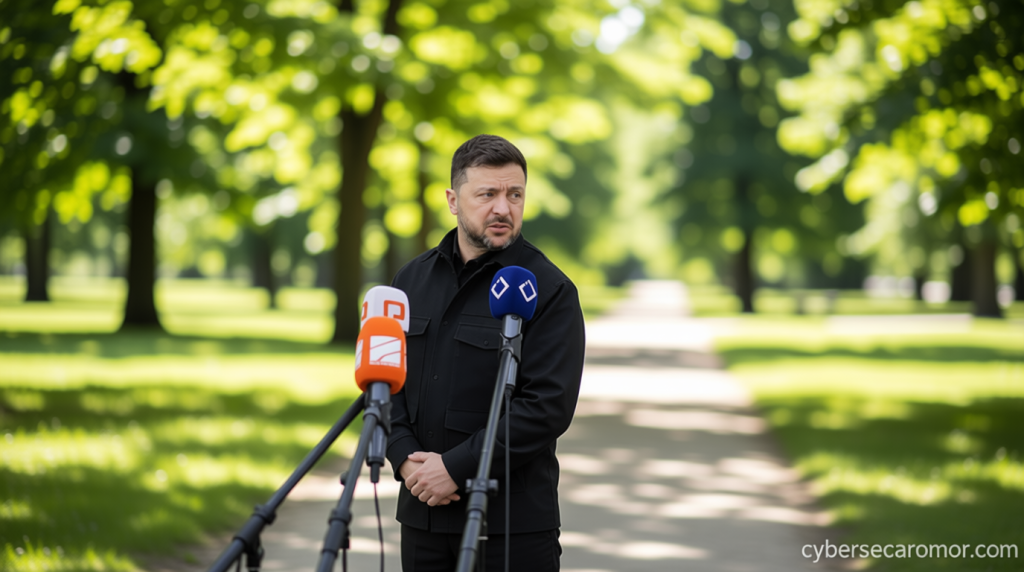
Ukraine’s President Zelenskyy Invited to NATO Summit in Ankara, Rutte Confirms
Ukraine s President Zelenskyy invited to NATO – Mark Rutte, the Secretary General of NATO, confirmed on Friday that Ukrainian President Volodomyr Zelenskyy has been extended an invitation to attend the upcoming NATO summit in Ankara, set for July. Speaking during a press conference held after a foreign ministers’ meeting in Sweden, Rutte stated, “I invited him already,” adding, “He will be there.” This marks a notable step for Zelenskyy, whose presence at the summit will be a key focus for the alliance. However, the nature of his invitation appears to have evolved from the limited engagement seen at last year’s gathering in The Hague.
Shifting Priorities and Strategic Focus
Last year, the invitation to Zelenskyy during the summit in The Hague was framed as a symbolic gesture, primarily influenced by the Trump administration’s emphasis on other global priorities. In contrast, this year’s invitation suggests a renewed commitment to Ukraine’s integration into NATO. The summit in Ankara, however, may not be as centralized on Ukrainian concerns as previous events. While the exact scope of Zelenskyy’s involvement in the summit’s private sessions remains unclear, the decision reflects a strategic recalibration within NATO. This shift comes amid ongoing debates about the alliance’s priorities and the influence of different administrations on its direction.
“I invited him already,” Rutte said at a press conference following a foreign ministers meeting in Sweden. “He will be there.”
The invitation to Zelenskyy this time is expected to be more significant than last year’s, which was shaped by the Trump administration’s approach. During the 2025 summit in The Hague, the White House prioritized the 5% GDP defence spending target over detailed discussions on Ukraine’s war. This year, however, the focus on Zelenskyy appears to be more pronounced, though the exact terms of his participation are still being clarified. The summit in Ankara will provide a platform for Ukraine to engage with NATO leaders, potentially signaling a shift in the alliance’s stance toward the country’s membership aspirations.
Contrast Between Administrations
The difference in approach between the Biden and Trump administrations is stark. In 2024, the summit in Washington saw Zelenskyy honored as a guest of distinction, with allies offering Kyiv guarantees that it was on an “indestructible path” to NATO membership. These assurances, however, are no longer part of the current dialogue under Trump. The Trump administration has emphasized a more transactional relationship with NATO, focusing on specific deliverables rather than broader strategic support. This has created a noticeable contrast with the more comprehensive engagement seen during the Biden era.
During the recent foreign ministers’ meeting in Sweden, the alliance’s leaders discussed a range of issues, including the Iran war. US Secretary of State Marco Rubio highlighted the ongoing frustration within the White House regarding NATO allies’ reluctance to join the US and Israel in the conflict. “Leaders will have to respond to Trump’s disappointment over their lack of early support,” Rubio noted. This sentiment underscores the tension between the US and its NATO partners, particularly in light of the recent military actions in the Middle East.
“The fundamentals remain the same,” said Rubio. “Iran cannot have a nuclear weapon, and we have to address the issue of highly enriched uranium.”
Rubio also addressed Iran’s attempts to assert control over the Strait of Hormuz, a critical international waterway that accounts for roughly one-fifth of the world’s gas and oil supplies. The US has expressed concern over Iran’s increasing influence in the region, with Rubio stating that the country is trying to “create a tolling system” on the strait. This system, he explained, would allow Iran to levy charges on vessels passing through the waterway, effectively turning it into a strategic asset under its control. “They’re trying to convince Oman to join them in a tolling system in an international waterway,” Rubio added, emphasizing the geopolitical implications of such a move.
International Reactions and Alliance Commitments
The Iran war, which began on 28 February, has sparked significant debate among NATO members. While the US and Israel launched surprise strikes against the Islamic Republic, many European countries were not consulted on the military strategy or objectives of the operation. This lack of coordination has led to criticism from Trump, who accused European nations and Canada of being “cowards” for not supporting the reopening of the Strait of Hormuz. “The solution would be to open the Strait of Hormuz,” Trump wrote in a social media post. “A simple military maneuver…with so little risk,” but he claimed allies “don’t want to help.”
Despite these disagreements, NATO allies have shown a willingness to collaborate. During the recent meeting in Sweden, several members, including Japan, Australia, and South Korea, expressed commitment to participating in an operation to restore access to the Strait of Hormuz once hostilities conclude. This indicates a shared interest in securing the waterway, even if their priorities have diverged from the US’s initial demands. The possibility of a deal to end the Iran conflict has also been raised, with Rubio noting that “some slight progress” has been made in ongoing talks. These negotiations, he said, involve discussions with Iran’s foreign minister and other regional partners, including Pakistan’s interior minister.
“We await word on those conversations that are ongoing, there’s been some slight progress,” he said.
While the summit in Ankara will focus on multiple issues, the inclusion of Zelenskyy signals a renewed emphasis on Ukraine’s position within the alliance. The summit is seen as a critical opportunity for the country to gain further support, particularly in light of the recent divergence in priorities between the Trump administration and its NATO counterparts. For Zelenskyy, the event may serve as a chance to reassert Ukraine’s commitment to NATO’s expansion and to secure additional guarantees for its security. The outcome of the summit will likely shape the future of Ukraine’s integration into the alliance and the broader dynamics within NATO.

