Our Flock camera investigation sparks police firings, arrests

Daftar Isi
License Plate Cameras Turned Personal Surveillance Tools: 19 Officers Hit Across Five States
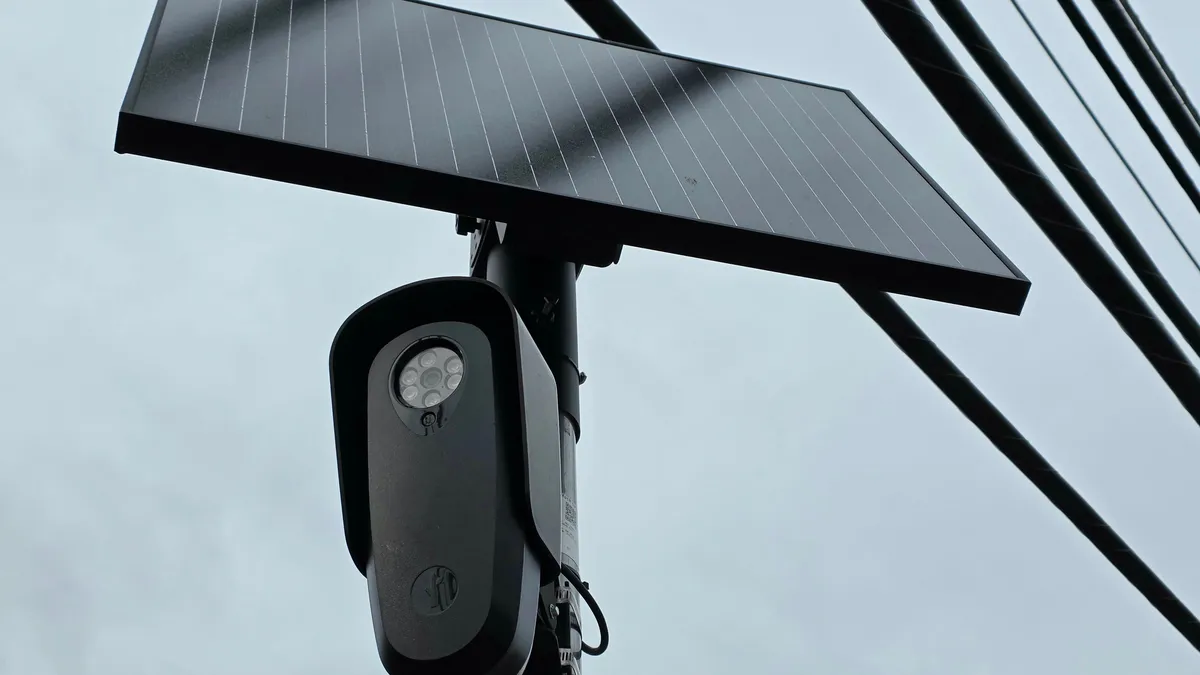
Cybersecarmor.com – Within a two-month window, at least 19 members of police departments and sheriff’s offices spread across five states found themselves arrested, terminated, placed on administrative leave, or subjected to formal investigations. The common thread in every case: employees had been using Flock Safety’s sprawling network of automated license plate reader (ALPR) cameras to monitor the movements of specific vehicles for reasons that ranged from questionable to outright improper.
What made the pattern visible was not internal oversight. Department supervisors did not flag the irregular query activity. Instead, investigative journalists at USA TODAY identified the suspicious search patterns first, then alerted the employing agencies. Only after reporters reached out did the departments move to investigate or discipline.
Specific Cases That Triggered Consequences
In Dallas, Georgia, state investigators took a 911 dispatch director into custody after she ran more than 2,500 plate lookups tied to vehicles belonging to her estranged husband and his new romantic partner. The volume and repetition of the queries made the surveillance unmistakable once examined.
In Sarasota, Florida, a patrol officer who logged at least 335 searches for an ex-girlfriend’s vehicle over a two-month stretch was both fired and arrested. The sustained frequency of lookups on a single plate, unconnected to any active case file, drew immediate scrutiny once the pattern was surfaced.
The most extreme example emerged in Lufkin, Texas. After Texas Rangers arrested an officer who had repeatedly queried seven specific license plates—one of them more than 3,400 times—the Lufkin Police Department suspended all Flock access department-wide. The officer faces charges on at least 100 felony counts.
These three incidents represent the tip of a much larger set. USA TODAY identified more than a dozen additional cases in which reporters flagged questionable search behavior before the agencies themselves noticed. In every instance, agency action followed only after external contact.
A Transparency Gap in Ubiquitous Surveillance Infrastructure
The cases expose a structural problem now playing out in communities nationwide. Flock and competing ALPR brands have installed camera arrays in nearly every state, creating a de facto national tracking grid. Yet many law enforcement agencies have done little to audit how their own personnel query that grid. The monitoring burden has effectively shifted onto journalists, civil-liberties advocates, and other watchdogs who worry that anyone with system access can follow virtually any driver’s movements with a query as casual as typing a name into a search engine.
USA TODAY’s investigation was built on a dataset of more than 75 million Flock plate-reader searches spanning three and a half years and covering more than 6,300 agencies. That figure represents only a fraction of total queries logged by Flock users during the period. Within that sample, analysts identified hundreds of instances in which individual officers searched a single license plate hundreds or even thousands of times over extended stretches.
The stated justifications attached to many of those queries were vague or nonsensical: entries such as “SUS,” “TRAFFIC,” “INQUIRY,” “INVESTIGATION,” “TEST,” or a lone alphabet letter like “A,” “B,” or “Z.” Where reporters were able to determine who owned the targeted vehicles, several turned out to be registered to the searching officers’ former partners, coworkers, family members, or other acquaintances.
240 Users Flagged; Agencies Split on Response
The analysis ultimately surfaced 240 Flock users whose search frequency and persistence stood well apart from casual or operational use. Reporters contacted the employing agencies for 67 of those individuals. Roughly half of the contacted agencies confirmed an existing investigation or launched a new one into potential misuse. About a quarter offered no response at all. The remaining quarter indicated they lacked sufficient information to act or concluded the usage appeared legitimate.
Flock’s December 2025 Software Change Narrows the Window
Until December 2025, Flock customers could pull monthly usage audits that displayed the initials of each person who queried the camera data, the specific plates searched, and the textual reason entered for each lookup. In many states, those audit logs qualify as public records, giving residents a degree of transparency into how officers interact with the system.
In December, Flock altered its software to redact most officer initials, license plate numbers, and stated reasons from those logs. The change makes large-scale external analyses of the kind USA TODAY conducted virtually impossible going forward, effectively closing the primary avenue through which outside observers could detect sustained, single-target surveillance.
Flock declined to answer detailed questions from USA TODAY, offering instead a brief emailed statement.
“Any officer abuse of our system is completely unacceptable, and the people that abuse our system should absolutely be held accountable,” said the statement from Paris Lewbell, Flock’s public relations manager. “We are committed to setting a baseline for where safeguards and transparency for our industry should be, and welcome further conversations and regulations from local communities about the rules of the road that they want to set for public safety technology.”
Lewbell indicated that Flock began redacting key details from audit logs in response to a “pattern of pe” — a phrase the statement left incomplete in the available record.
What Comes Next
The convergence of ubiquitous ALPR hardware, minimal internal oversight, and the recent reduction in audit transparency raises questions that extend well beyond any single department. If the tools that allow a single officer to track a neighbor’s car thousands of times are no longer subject to public-record scrutiny, the accountability gap widens precisely when oversight is most needed. State legislatures and local councils that have not yet enacted specific ALPR-use policies may find themselves facing pressure to define retention limits, query-logging requirements, and public-access rules before the next wave of individual cases forces the issue.
Related Reading
Frequently Asked Questions
What is Our Flock camera investigation sparks police?
Our Flock camera investigation sparks police is the main topic of this guide. The article explains the context, practical details, and next steps readers should understand.
Why does Our Flock camera investigation sparks police matter?
Our Flock camera investigation sparks police matters because readers are looking for a useful answer, not just a short summary. Good content should match search intent and help them decide what to do next.