
Ryanair issues angry statement against Fraport Greece for Thessaloniki and ‘the German monopoly’
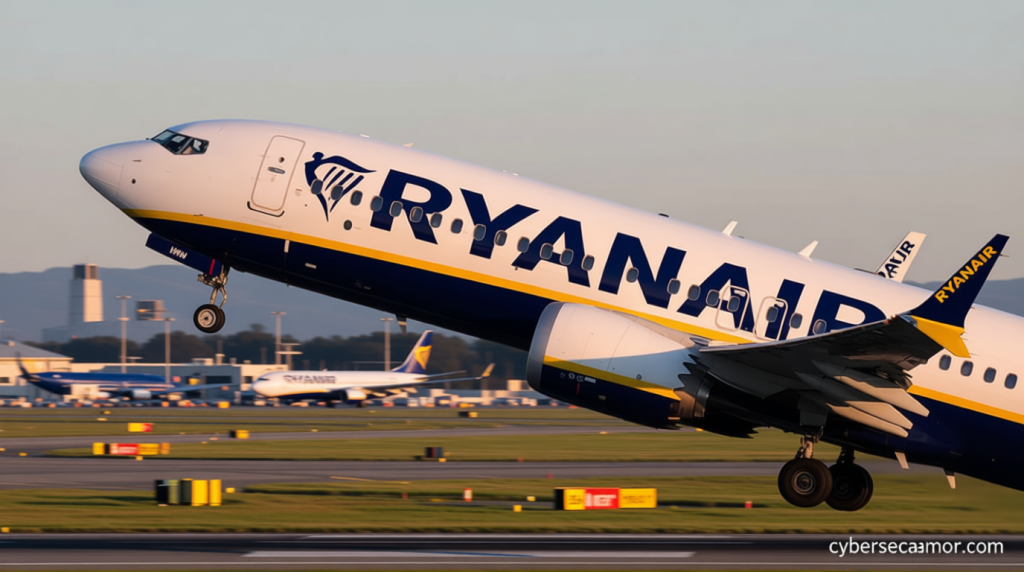
Ryanair Launches Sharp Criticism of Fraport Greece and German Airport Operator Dominance
Ryanair issues angry statement against Fraport – In a pointed critique, Ryanair has accused Fraport Greece of stifling competition in the country’s aviation sector, citing its decision to close three aircraft bases at Thessaloniki’s Macedonia airport for the 2026 winter season. The Irish low-cost carrier has framed this move as a direct consequence of Fraport’s refusal to pass on significant cost savings to airlines and passengers, despite a 75% reduction in the Airport Modernisation and Development Fee introduced by the Greek government. The airline’s statement, released shortly after Fraport announced its charge hikes, highlights a growing rift between the operator and the carriers it serves.
Ryanair’s Allegations Against Fraport Greece
Ryanair has leveled accusations of monopolistic behavior at Fraport, which oversees 14 regional airports in Greece, including the critical Thessaloniki hub. The airline claims that the German-owned operator is leveraging its dominant position to retain the benefits of the tax cut, rather than distributing them to support growth in the aviation sector. According to Ryanair’s statement, this has left Greek airports at a disadvantage compared to their European counterparts, such as Albania, Italy, Slovakia, and Sweden, which are actively slashing fees to attract more travelers and boost economic activity.
“The announcement issued by the Fraport Greece monopoly on 8 May demonstrates how out of touch the German-owned operator is with the realities of the aviation industry,” Ryanair stated. The airline emphasized that its decision to scale back operations at Macedonia airport is a direct result of Fraport’s decision to raise charges by 66% following the pandemic. This, Ryanair argues, has created an environment where smaller airlines are forced to bear the brunt of higher costs, while the monopolist reaps greater profits.
Ryanair’s frustration stems from the belief that the modernisation fee reduction was intended to improve interconnectivity and sustain tourism across Greece. The airline asserts that Fraport has instead prioritized its own financial interests, using the tax cut as a means to pad its margins. “This strategy has left Greek aviation hopelessly uncompetitive,” the statement added, noting that the burden of increased charges is now stifling the sector’s ability to expand capacity and attract investment.
Fraport Greece’s Defense of Its Policies
Fraport Greece, which manages the country’s 14 regional airports, responded by defending its charge increases, arguing that they were necessary to maintain infrastructure quality and service standards. The company noted that Ryanair had only informed Fraport of its decision to reduce winter services on the same day as the announcement, suggesting a lack of prior communication that may have allowed for more collaborative solutions.
“Fraport Greece has always respected the business model and profitability criteria of Ryanair,” the company stated. “The reduction in winter services at Macedonia airport is exclusively linked to the airline’s own strategy, not the decisions of the airport operator.”
Additionally, Fraport dismissed Ryanair’s claims as unfounded, stating that the airline was using airport charges as a pretext to criticize its operations. The company highlighted its role in connecting Thessaloniki to over 33 countries and 93 destinations, emphasizing that its partnerships with more than 40 airlines have been instrumental in sustaining regional connectivity. “We remain committed to providing high-quality infrastructure and services,” Fraport reiterated, underscoring its dedication to the Greek aviation market.
Broader Implications for Greek Aviation
The dispute between Ryanair and Fraport Greece has sparked a debate about the impact of monopolistic practices on the sector’s competitiveness. Ryanair’s accusations suggest that the current fee structure is not only unhelpful but actively detrimental to Greece’s tourism and economic growth. The airline’s decision to withdraw from Thessaloniki could signal a shift in the market, with smaller carriers potentially losing ground to those willing to pay higher charges.
While Fraport maintains that its actions are justified, critics argue that the 66% increase in airport fees is a direct contradiction to the Greek government’s efforts to reduce costs and stimulate travel. This tension is exacerbated by the fact that Greece’s aviation sector is already struggling to attract investment compared to other European nations. The country’s airports, for instance, face challenges in maintaining modern facilities and competitive pricing, which could deter both domestic and international flights.
Ryanair’s call for the Greek government to intervene and break the monopoly highlights the need for regulatory oversight. The airline has pointed to the success of other European countries in reducing fees and improving passenger traffic as evidence of what Greece could achieve with a more competitive framework. “By freezing airport charges and passing on the 75% reduction, we can create an environment that supports growth,” Ryanair’s statement asserted.
Economic and Strategic Context
Fraport’s control over 14 airports in Greece gives it significant leverage in setting prices and terms for airlines. This has raised concerns among industry analysts about the potential for the operator to favor its own financial interests over the broader aviation ecosystem. For example, the modernisation fee cut was intended to make Greece a more attractive destination for travelers, but Ryanair argues that the fee remains a barrier to entry for smaller operators, who may lack the resources to absorb higher costs.
The dispute also reflects a broader strategic dilemma for the Greek government. While reducing fees can attract airlines and boost tourism, it must balance this with the need to fund infrastructure improvements. Fraport’s decision to retain the savings, however, has sparked accusations that the government is not adequately supporting the sector’s long-term development. “This approach risks making Greece dependent on a single entity for its aviation future,” a source noted.
In response to the criticism, Fraport Greece has stressed that its fee adjustments are aligned with the economic realities of operating airports. The company has also pointed to its role in maintaining the quality of services, arguing that the modernisation fee is a necessary investment to ensure that airports can sustain operations and deliver value to passengers. “We are not just an operator—we are a partner in Greece’s aviation growth,” Fraport stated, highlighting its collaborative efforts with over 40 airlines.
Ryanair’s actions, however, have drawn attention to the need for structural reforms. The airline’s withdrawal from Thessaloniki could serve as a catalyst for change, pushing the Greek government to take a more active role in regulating the sector. With the 2026 winter season approaching, the outcome of this dispute may have lasting implications for Greece’s position as a tourism destination and its ability to compete with other European markets.
The situation underscores the delicate balance between cost reduction and infrastructure investment. As Ryanair continues to challenge Fraport’s dominance, the Greek aviation market stands at a crossroads. Whether the government will act to introduce competition or allow the monopoly to persist remains a key question for the sector’s future.

