‘It’s amazing’: Lindsay Clancy’s defense lawyer has shot to stardom

Daftar Isi
The Motorcycle Lawyer Taking Center Stage in Massachusetts’ Most Watched Trial
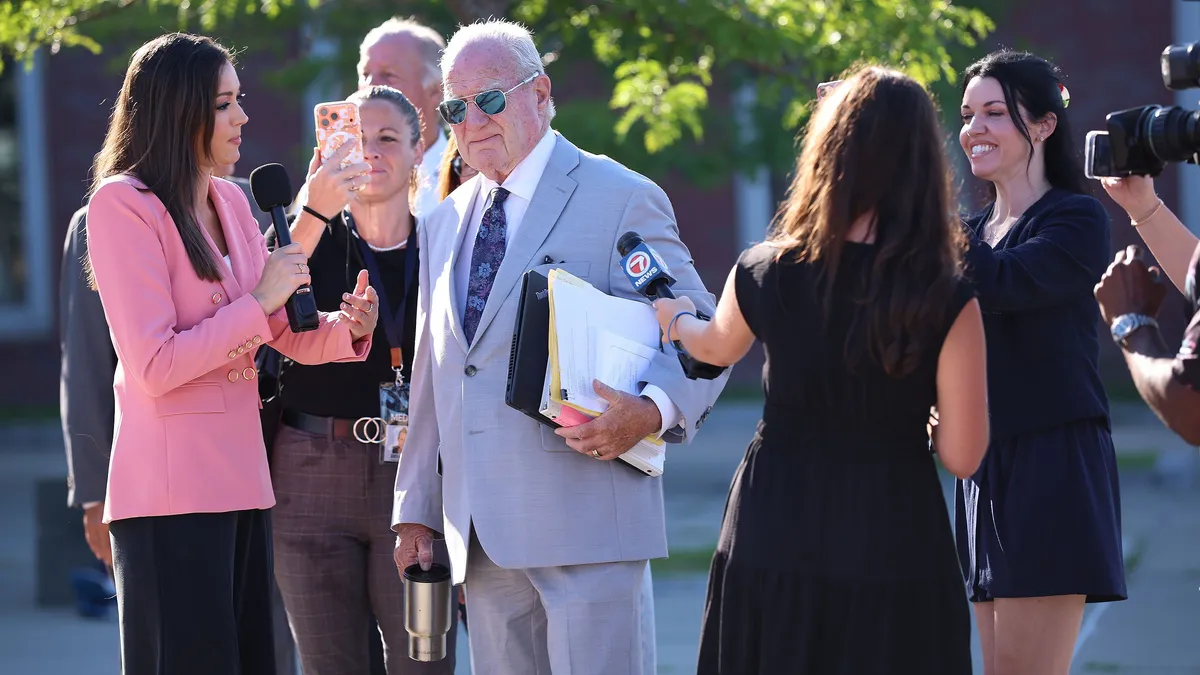
Cybersecarmor.com – As a Massachusetts jury prepares to deliberate on whether Lindsay Clancy was temporarily insane when she strangled her three young children to death on a January 2023 evening, all eyes have turned to the man at her defense table: Kevin Reddington, a 75-year-old criminal defense attorney whose decades of courtroom work have now collided with the age of viral video clips and internet fandom.
The trial has drawn a national television audience, and Reddington’s unscripted, plainspoken manner has made him something of a cultural phenomenon. Viewers watching from their couches have seen him stroll the courtroom perimeter while posing straightforward questions to witnesses, and they have watched him clasp Clancy’s hand during harrowing testimony describing the killings. His ability to translate dense psychological expert testimony into language a layperson can follow has become the defining feature of the proceedings.
An Unconventional Figure for a High-Stakes Case
Reddington does not fit the mold of a silver-haired, wingtip-sporting litigator. A photo surfaced through an NBC Boston 10 news segment showing the wizened attorney perched on his Harley-Davidson motorcycle, wearing a sleeveless denim-and-leather ensemble with a visible arm tattoo. He told that outlet before the Clancy trial began that he still takes on roughly ten trials annually and has no intention of hanging up his robes.
“I don’t want to work at Walmart, I don’t want to work at Lowes, you know. So I think I like what I’m doing, I enjoy what I’m doing.”
That irreverent candor, paired with his courtroom showmanship, has generated memes across TikTok and Instagram, rallying online sympathy for Clancy and, by extension, for Reddington’s defense strategy. Whether he consciously cultivates that attention or simply lets it happen, the veteran lawyer has navigated the social-media dimension of modern litigation with surprising ease.
A Track Record Built on Mental-Condition Defenses
The strategy at the heart of the Clancy trial — arguing that her client, who is paralyzed from what Reddington describes as a suicide attempt, experienced a temporary psychotic break at the moment of the killings — is not new to him. More than 35 years ago, Reddington won a nationally noticed acquittal for Therese Rogers, a Massachusetts woman who fatally stabbed her sleeping boyfriend in the eyes. He told the jury that years of domestic abuse had left Rogers delusional, a condition rooted in post-traumatic stress disorder and what was then called battered woman syndrome. That victory earned him an invitation to the American College of Trial Lawyers, an invite-only organization that limits its membership to fewer than one percent of any state’s total attorney population.
His 1998 acquittal of former Boston Red Sox slugger Mo Vaughn further cemented his reputation. Vaughn had been charged with drunk driving after crashing his car following a night out at a nightclub. Reddington contended that Vaughn’s poor performance on field sobriety tests — administered after he declined a breathalyzer — was attributable to the crash itself rather than alcohol impairment. The jury agreed.
Not every case ends in victory, of course. Catherine Greig, the longtime girlfriend of Boston mob figure James “Whitey” Bulger, pleaded guilty in 2012 to harboring Bulger while he was a fugitive from justice. In that instance, Reddington asked the sentencing judge to impose a 27-month prison term, arguing that Greig had acted out of love. The outcome underscored that his client list spans both triumphant acquittals and negotiated resolutions.
Why This Lawyer, Why Now
Martin Weinberg, a prominent Boston criminal defense attorney who served as appellate counsel for Karen Read — acquitted in 2025 of killing her boyfriend, Boston police officer John O’Keefe — offered his assessment of Clancy’s choice of counsel. Weinberg emphasized that selecting an advocate comfortable with mental-condition defenses, experienced in homicide trials, and equipped to maximize the odds of success is a matter of professional judgment as much as personal trust.
“It’s just like it would be if you were a medical patient going in for some unusual or challenging surgery. You’d want a doctor that’s done it, and not a doctor who’s doing his first operation on the kind of medical condition you have.”
That analogy captures the stakes facing the jury in the coming days. Clancy’s case sits at the intersection of forensic pathology, psychiatric testimony, and raw human grief, and the defense’s burden is to convince twelve jurors that a mother’s hands moved without her conscious mind directing them. Reddington has spent a career building exactly that kind of argument, and the outcome of this trial will likely define the final chapter of his professional life.
The broader implications extend beyond one family’s tragedy. In an era when televised trials and short-form video clips shape public perception of justice in real time, Reddington’s case illustrates how a seasoned litigator’s instincts for narrative clarity can translate into something resembling celebrity — and how that celebrity, for better or worse, now becomes inseparable from the verdict it accompanies.
Related Reading
Frequently Asked Questions
What is It s amazing?
It s amazing is the main topic of this guide. The article explains the context, practical details, and next steps readers should understand.
Why does It s amazing matter?
It s amazing matters because readers are looking for a useful answer, not just a short summary. Good content should match search intent and help them decide what to do next.