It’s official: Shadow the bald eagle’s new companion is named Kaydee

Daftar Isi
Kaydee: The Name Given to Shadow’s New Companion After Jackie’s Passing
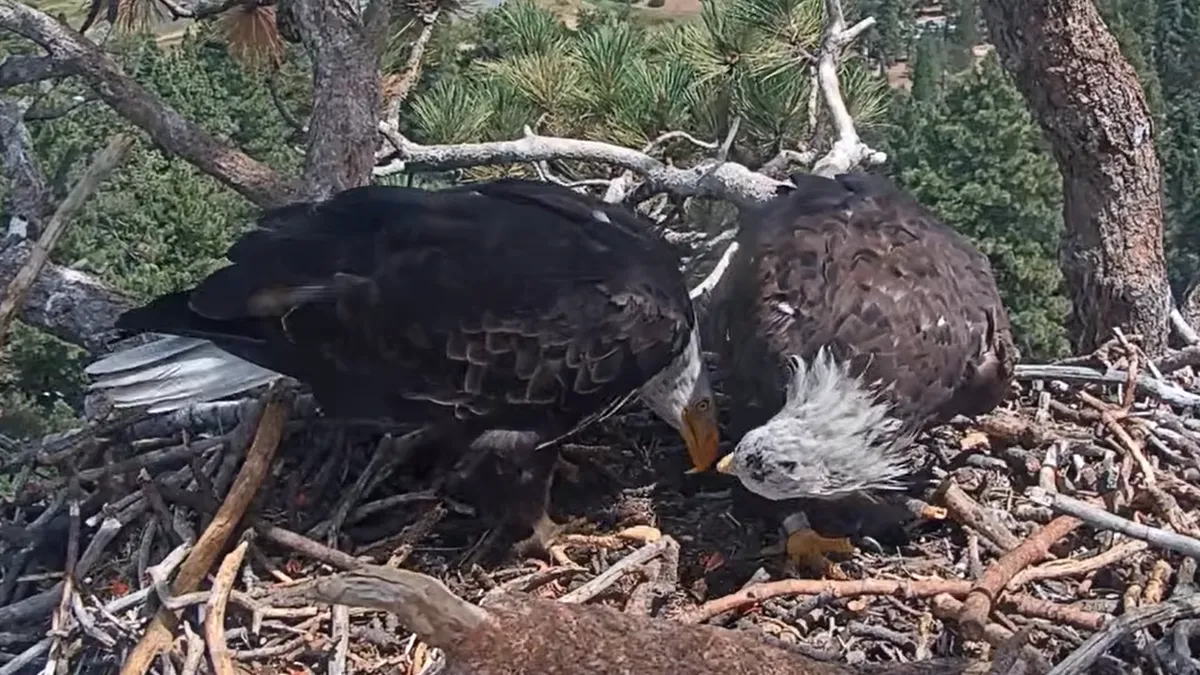
Cybersecarmor.com – In the quiet pines of Big Bear Valley, Southern California, a bald eagle long known to millions of online viewers has found unexpected company in the wake of profound loss. Friends of Big Bear Valley, the volunteer group responsible for streaming the daily lives of the region’s most famous raptors, confirmed on Wednesday, August 19, that the female eagle who has been keeping Shadow company since Jackie’s death will carry the name Kaydee. The announcement, posted to the group’s Facebook page, marked a departure from their usual practice of withholding names from transient visitors until a long-term pattern of residency becomes clear.
“Until now,” the organization stated. “We have chosen to name (the eagle) Kaydee, whether or not they decide to stay in the area.”
The decision to break with convention was driven by the sheer volume of time the two birds have already spent together in the very nest where Shadow and Jackie once raised their young. Since Jackie’s death was confirmed last week, the new female has been a near-constant presence at the site, and the group felt the moment warranted an official designation rather than continued anonymity.
Where the Name Came From
The label “Kaydee” traces directly to a wildlife-management ankle band fitted to the bird. Officials in California tag eagles with alphanumeric identifiers to track migration, survival, and reproductive patterns across the species’ range. This particular band reads “KD1,” and within hours of the female’s arrival at the nest on Monday, August 10, fans had already begun calling her KD, Katie, or Kaydee in the comment streams that accompany the live feeds. The organization simply formalized what the audience had already decided.
A Rapid Timeline of Two Birds Finding Each Other
The sequence of events moved quickly once Jackie’s passing was announced. Three days after the news broke, on Thursday, August 13, Shadow and the un-named female shared the nest for the first time. Viewers watching the live feed reported that the two appeared to touch beaks while surveying one another, and the female picked up several sticks and shifted them around the structure — a behavior that prompted lighthearted commentary about furniture rearrangement.
The following day, Friday, August 14, a second camera captured the pair perched side by side in the same tree for roughly two hours. By Tuesday, August 18, they had returned to a favored roost tree together. On the morning of Wednesday, August 19, the group noted that both birds “both belted out good mornings to the valley below,” a vocal display characteristic of territorial bald eagles at dawn.
The afternoon brought an even tighter coupling. Shadow flew to a perch tree, and within under sixty seconds the female landed on a nearby branch. They remained adjacent for approximately three hours. When Shadow eventually departed, the female followed two seconds later, according to the organization’s account. That evening, the pair reappeared in the roost tree and ended the day chortling near one another — a soft, rattling vocalization that fans had previously associated exclusively with Shadow’s interactions with Jackie or their offspring.
Grief, Comfort, and the Question of Intent
Jackie, who died of an undiagnosed illness at fourteen years old, had been Shadow’s mate for nearly a decade and the mother of every eaglet he has raised. Her absence has left a visible void in the valley’s ecosystem of online viewership, and many fans have interpreted Kaydee’s sudden appearance as something more than coincidence. Some speak of a spiritual sending; others simply find solace in the fact that Shadow is not sitting alone in an empty nest.
“I think Jackie sent Kaydee to Shadow and we are here for it!” wrote fan Terri Fox in the comments. Tracy Heron-Fedele offered a warmer welcome: “Welcome Kaydee to the Big Bear Family.” Brenda Oninski took a lighter tone: “Kaydee and Shadow sitting a tree …”
The organization itself struck a more measured note alongside the naming announcement.
“Our hearts are broken by the loss of Jackie and though we know this is nature, it will take time for all of us, including all of you, to get through this,” Friends of Big Bear Valley wrote.
Eagle devotee Anna Marie Bell framed the loss in terms of gratitude rather than finality.
“Jackie’s legacy is that she allowed all of us to be part of her life, her family, her journey. For that we’re all so eternally grateful. Rest easy Jackie. Your job is done.”
Shadow’s Mating History and What Comes Next
While most bald eagles pair for life, Shadow’s own history shows the species’ flexibility. Before Jackie, his first partner was a female tracked as Mr. B — a designation that reflects the informal naming conventions of early monitoring. The pair produced two eaglets in 2018. One perished during a twenty-four-hour rainstorm; the survivor, named Stormy, departed Big Bear that summer. Shortly afterward, a new male arrived, displaced Mr. B, and won Jackie’s allegiance. That interloper was Shadow himself.
For the past eight seasons, Shadow and Jackie have mated each winter, reinforcing their shared nest as California’s eagle breeding hormones peak between December and January. Wildlife biologists expect Shadow will seek a new mate once that hormonal window opens, regardless of whether Kaydee remains in the valley. Whether the two birds form a lasting pair, or whether Kaydee simply provided transitional company during a period of acute loss, will become apparent over the coming months.
Jenny Voisard, spokeswoman for Friends of Big Bear Valley, offered a characteristically understated outlook when asked about the pair’s future.
“He’s got some time,” Voisard said. “All we can do is watch and see.”
For now, the cameras keep rolling, the valley keeps its quiet rhythm, and two eagles share a branch that, until recently, held only one.
Related Reading
Frequently Asked Questions
What is It s official?
It s official is the main topic of this guide. The article explains the context, practical details, and next steps readers should understand.
Why does It s official matter?
It s official matters because readers are looking for a useful answer, not just a short summary. Good content should match search intent and help them decide what to do next.