
Palestinians gather to mark 78th anniversary of the Nakba and call for ‘right of return’
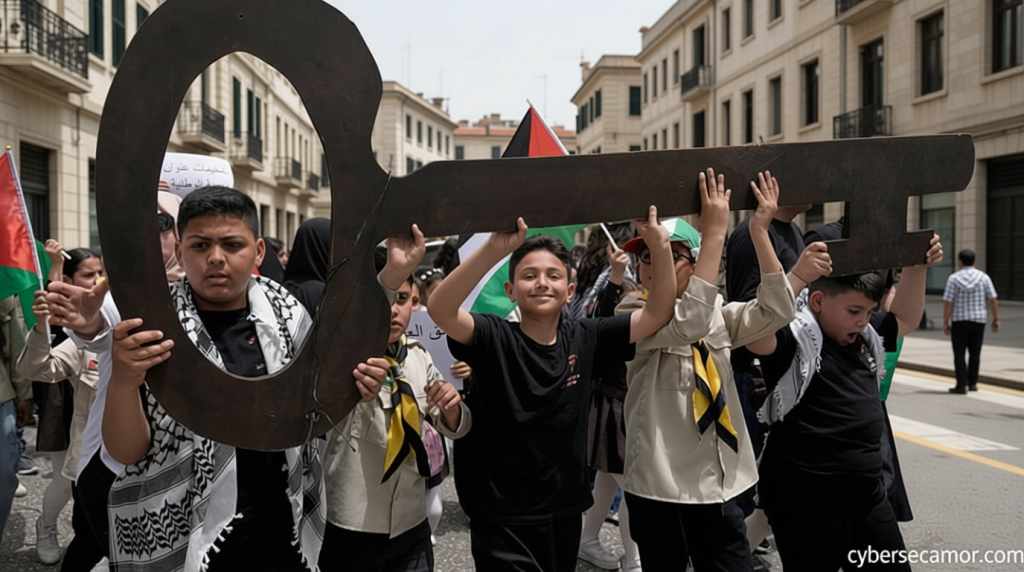
Palestinians Gather to Mark 78th Anniversary of the Nakba and Call for ‘Right of Return’
Palestinians gather to mark 78th anniversary – In the heart of Ramallah, the administrative hub of the Palestinian Authority, a significant number of Palestinians converged in the central district to observe the 78th anniversary of the Nakba. Simultaneously, mosques throughout the city resonated with a 78-second siren, symbolically marking the event. The ceremony featured a procession that commenced from the resting place of the late Palestinian leader Yasser Arafat, proceeding toward Manara Square. During this journey, participants waved Palestinian flags and played drums, while traditional music, including scout tunes and bagpipe melodies, echoed through the throngs of people.
The streets were adorned with Palestinian flags, and attendees displayed victory gestures, underscoring their solidarity with the movement’s goals. As the march unfolded, crowds moved through the city, carrying a massive Palestinian flag that symbolized collective resilience. In symbolic acts, protesters held large keys, representing the ‘right of return’ as a core demand. Banners declaring the aspiration to reclaim ‘historic Palestine’ were also prominently displayed, highlighting the steadfastness of Palestinians in their pursuit of self-determination.
Nakba Day as a Pillar of Palestinian Identity
The commemoration, which drew large crowds, served as a reminder of the national tragedy that shaped the Palestinian narrative. Participants emphasized that the Nakba remains a deeply felt wound in their collective memory, asserting that displacement and dispossession have persisted over decades. For many, the day is not merely a historical event but a living testament to their ongoing struggle for justice. The symbolic repetition of key elements during the festivities, such as the key and banners, underscores the continuity of this cause across generations.
“This day first reminds us of a national tragedy that befell the Palestinian people many decades ago, and the right of return must be restored to its rightful owners, and justice must be achieved for the Palestinian people by returning to the homes from which they were displaced,” said Abdel Kareem Abu Arqoub, a Palestinian attendee at the gathering in Ramallah.
Another participant, Jihad Dar Ali, echoed these sentiments, framing the ‘right of return’ as a sacred entitlement. “This right is not bound by time; it is a legacy that must be upheld,” he stated. Dar Ali specifically attributed the Nakba to the actions of Britain, which he claimed played a pivotal role in the displacement of Palestinians. “The United Kingdom, a Western colonial power, gave our homeland, Palestine, the land of our ancestors to the Jewish people,” he said, calling for moral and material compensation from Britain for the years of loss and upheaval it caused.
Historical Roots of the Nakba
The Nakba, or ‘catastrophe,’ traces its origins to 1917, when British Foreign Secretary Lord Balfour issued a declaration promising Palestine as a national home for the Jewish people. This pledge, known as the Balfour Declaration, laid the foundation for the eventual creation of the state of Israel. Following the collapse of the Ottoman Empire, the British mandate over Palestine was established, and the promise was further solidified through policies that favored Jewish immigration and land acquisition. These actions set the stage for the broader conflict that would culminate in the 1948 establishment of Israel.
The 1947 United Nations Partition Plan divided Palestine into separate Jewish and Arab states, allocating more than half the territory to the Jewish population. Palestinians and Arab nations rejected the plan, viewing it as an imposition that would strip them of their homeland. As the British mandate ended and Israel declared independence in May 1948, a wave of violence and displacement swept across the region. Over seventy documented massacres of Palestinian civilians, including the infamous Deir Yassin and Tantura, followed, resulting in the forced expulsion of approximately 750,000 Palestinians from their homes.
The conflict escalated as Arab armies from Egypt, Syria, Jordan, Lebanon, Saudi Arabia, and Iraq entered the Palestinian territories to halt the Israeli military advance. However, these efforts were met with defeat, allowing Israel to expand its control beyond the territory outlined in the UN partition plan. This marked the beginning of a prolonged occupation and the displacement of millions, with the Nakba becoming a defining moment in Palestinian history.
The UN’s Role and Unfulfilled Promises
In December 1948, the UN General Assembly passed Resolution 194, which recognized the right of Palestinian refugees to return to their homes “as soon as possible.” The resolution also called for compensation for those who could not return or suffered damages. Despite its significance, Resolution 194 has not been fully implemented, and Israel continues to block the return of refugees to their original lands. This has left the ‘right of return’ as a central demand in the Palestinian struggle, a principle passed down through families and generations.
“The Nakba remains an open wound in our memory, and its effects have not faded with time,” said one attendee at the Ramallah event. “The displacement of our people has shaped our identity, and until we reclaim what was taken, our story will not be complete.”
Nakba Day events are organized annually in the occupied West Bank and Gaza Strip, as well as in diaspora communities where millions of refugees reside. These gatherings serve as both a remembrance of past suffering and a reaffirmation of future aspirations. The 78th anniversary, in particular, highlights the enduring nature of the conflict and the unresolved quest for justice. As the Palestinian people continue to commemorate their history, they also draw attention to the global implications of their struggle, urging international recognition and support for their cause.
The right of return, a fundamental component of the Palestinian national identity, symbolizes the aspiration to reclaim ancestral lands and restore dignity to displaced communities. The event in Ramallah, with its vibrant displays of unity and resilience, exemplifies the unyielding spirit of the Palestinian people. By reaffirming their demands, they not only honor the past but also lay the groundwork for a future where the Nakba’s legacy is addressed through tangible actions and international accountability.

