NY woman arrested in connection with ISIS plot to bomb state Capitol

Daftar Isi
Albany Plot: Woman Charged Over Plan to Detonate Bomb at New York State Capitol
Cybersecarmor.com – Federal prosecutors on Thursday, Aug. 20, revealed that a 35-year-old New York woman had been taken into custody on suspicion of orchestrating an ISIS-inspired scheme to blow up the state Capitol in Albany before slipping across the Atlantic to Syria. The arrest, carried out on Aug. 19, marks one of the most recent examples of domestic terror plots aimed at American government buildings and underscores how federal agencies continue to monitor encrypted communications for signs of coordinated attacks.
The Accused and the Alleged Scheme
Jessica Bowie, of New York, faces federal charges tied to what prosecutors describe as a deliberate plan to assemble a homemade explosive device, detonate it inside or near the New York State Capitol, and then travel to Syria. Department of Justice materials include photographs that allegedly capture Bowie purchasing construction and hardware supplies at a Home Depot location — items consistent with building a non-standard bomb — as well as images of her photographing the Capitol’s exterior and surrounding areas in what appears to be a reconnaissance effort.
Bowie made her first appearance before a federal judge in New York on Aug. 20, one day after her arrest. She could not be reached for comment ahead of the hearing.
How Investigators Tracked the Plot
According to court filings, the case grew out of roughly a month of back-and-forth exchanges between Bowie and an FBI confidential informant who was operating under the cover of an ISIS associate. The two communicated through an encrypted messaging application that was not identified by name in the charging documents. During those conversations, Bowie reportedly asked the informant for guidance on constructing an explosive, expressed a desire to make the Capitol her target, and used language and rhetoric aligned with ISIS messaging.
Prosecutors quoted Bowie describing her intended outcome in blunt terms:
“I want to destroy as much of the building as possible and kill the senators while they are meeting. I want them to lose a lot of important documents as well. I want it to have a affect on the American system.”
The specificity of those remarks — naming senators, documents, and a broader systemic goal — gave investigators a concrete picture of intent and helped shape the federal charges now pending.
Prosecutorial Framing
John A. Sarcone III, first assistant U.S. attorney for the Northern District of New York, issued a public statement situating the case within a wider ideological conflict:
“The American people represent an undying spirit of life, liberty, and the pursuit of happiness — values fundamentally opposed by foreign terrorist organizations such as the one this defendant allegedly pledged her support to.”
The language echoes statements made in prior ISIS-linked prosecutions, where federal attorneys have drawn explicit contrasts between constitutional principles and the stated goals of jihadist groups.
State-Level Response
New York Governor Kathy Hochul issued a brief public note thanking the agencies involved in the investigation. Those agencies included the FBI, the U.S. Secret Service, the New York State Police, and the Albany Police Department — a multi-layered response that reflects the standard protocol whenever a plot touches a statehouse or other high-profile public building.
“While there is no immediate threat at this time, we will continue working closely with our law enforcement partners to protect New Yorkers and keep our communities safe,” Hochul said.
Context and Implications
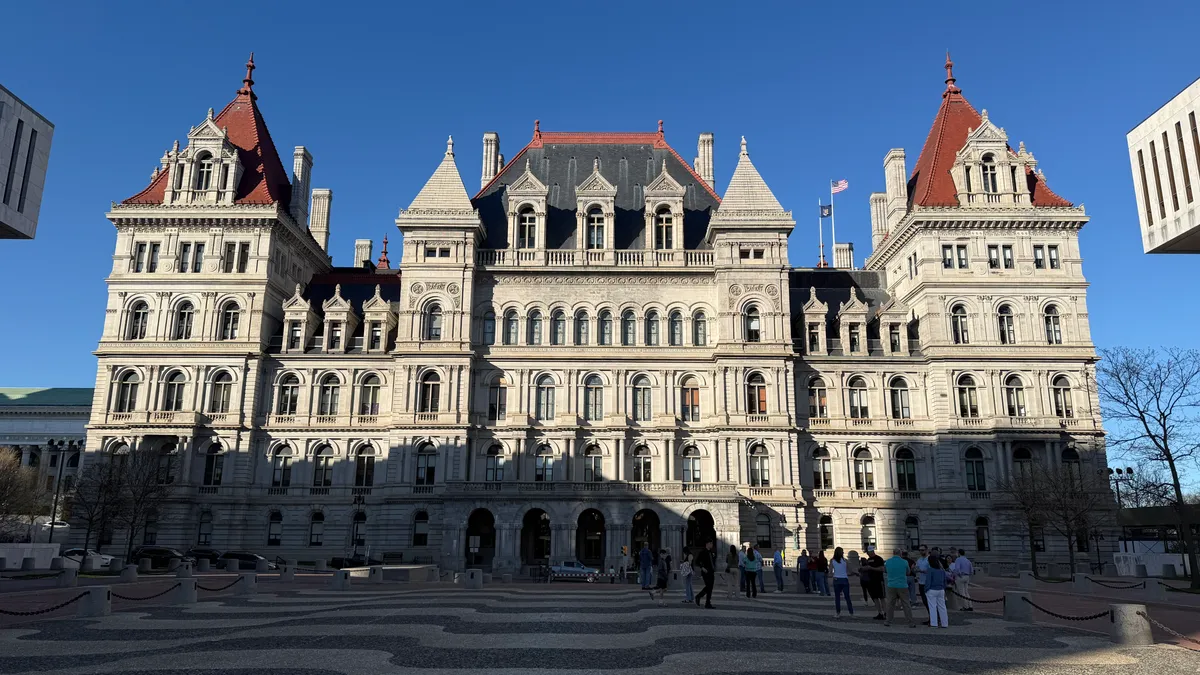
The New York State Capitol in Albany, a Greek-revival structure completed in 1899, serves as the seat of the state legislature and houses offices for the governor, lieutenant governor, and other statewide officials. Targeting such a building would place state lawmakers, executive-branch staff, and visitors within the blast radius, and the alleged plan to follow the explosion with a flight to Syria suggests the accused intended to avoid a domestic trial altogether.
Plots to strike state capitols or other sub-federal government buildings have appeared periodically in the United States, often surfacing through FBI informant operations that test whether a subject will act on stated intentions. The use of an encrypted messaging platform — common in cases where investigators suspect the subject may be aware of surveillance — adds a layer of complexity, because such platforms are designed to resist wiretapping and require court-authorized orders to intercept.
For Albany residents and state employees, the arrest prompted a temporary tightening of security around the Capitol complex, though officials emphasized that no ongoing threat existed at the time of the announcement. The case will now proceed through the federal docket in the Northern District of New York, where Bowie will face a series of procedural hearings before any trial date is set. If convicted on the charges as filed, she could face substantial prison terms under federal terrorism statutes.
The episode also highlights the continued role of Home Depot and other big-box retailers as incidental locations in domestic terror investigations, where purchases of wire, adhesives, containers, and other mundane hardware can later appear in evidence binders as the raw materials of a homemade device.
Related Reading
Frequently Asked Questions
What is NY woman arrested in connection?
NY woman arrested in connection is the main topic of this guide. The article explains the context, practical details, and next steps readers should understand.
Why does NY woman arrested in connection matter?
NY woman arrested in connection matters because readers are looking for a useful answer, not just a short summary. Good content should match search intent and help them decide what to do next.