‘The streets are empty’: How Miami’s Little Haiti reacted to losing TPS

Daftar Isi
When the Streets Fall Silent: Little Haiti’s Quiet Crisis After TPS Ends
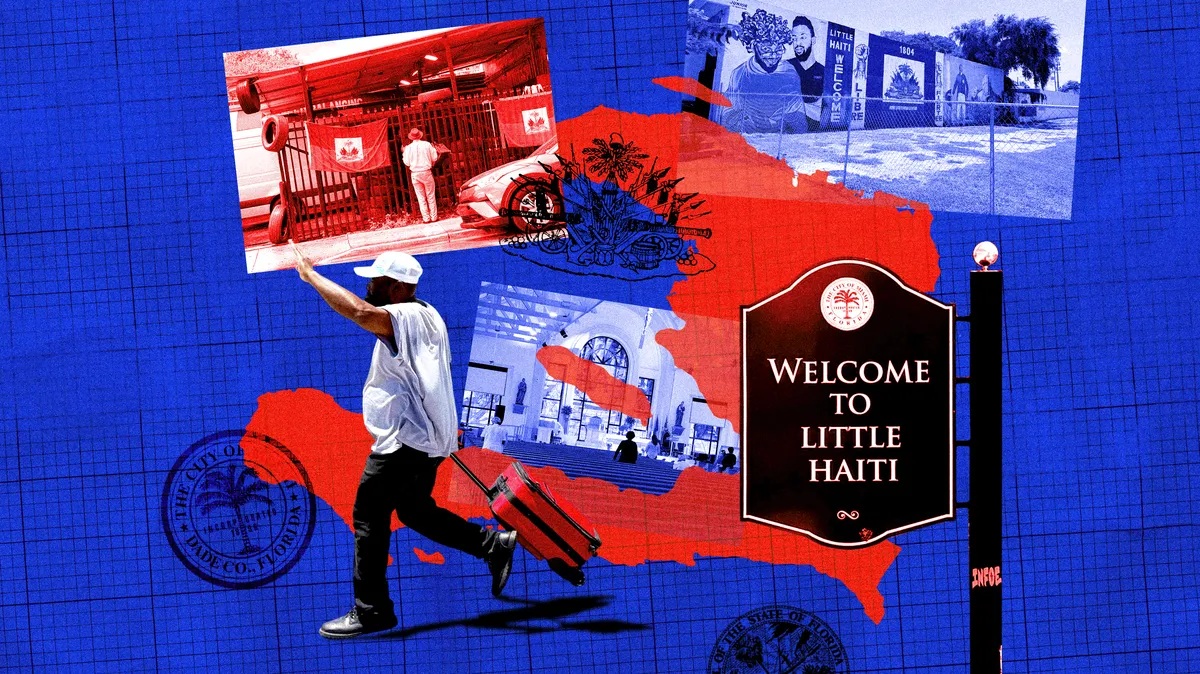
Cybersecarmor.com – The first thing visitors notice now is what is missing. The murals that once blazed with Caribbean color along Little Haiti’s commercial corridors still read “Help! Haiti is being strangled,” but the crowds that used to fill the sidewalks on a Tuesday afternoon have thinned to a trickle. Shopkeepers keep their metal gates raised only long enough to let in a trusted regular. The Toussaint Louverture elementary school, named for the leader of the slave revolt that freed the island nation, opened its new academic year on Aug. 13 in Miami-Dade County with noticeably fewer children at the gates.
The silence traces back to a single administrative decision: on Aug. 5, the Trump administration terminated Temporary Protected Status for Haitian nationals residing in the United States. For nearly half of the roughly 330,000 Haitian TPS recipients across the country — most concentrated in South Florida — that date marked the end of legal work authorization and the beginning of an uncertain, often terrifying, limbo.
A Neighborhood Built on Flight
Little Haiti has functioned as a sanctuary since the 1970s, absorbing waves of Haitians escaping dictatorships, coups, and political upheaval. The enclave survived the 2010 earthquake that leveled Port-au-Prince, the 2021 assassination of President Jovenel Moïse, and the subsequent collapse of state authority into gang warfare. Through each crisis, the neighborhood’s cultural complex — modeled on a turn-of-the-century Haitian gingerbread house and painted in vivid Caribbean yellow and teal — remained a fixed point of identity and continuity.
Next to the complex sits Libreri Mapou, a bookstore stocked with titles printed in Creole and French. Its owner, Jean-Marie Denis, known locally as Jan Mapou, has operated the shop for decades and watched generations of Haitian families settle within walking distance. Nearby stand a Haitian Christian church, the restaurant Piman Bouk, and a dense web of murals, bakeries, and tailors that together form the daily infrastructure of a diaspora community.
“They just don’t want to expose themselves,” Denis said of his former customers. “They don’t go out.”
The Economic Shockwave
In the greater Miami metro area, an estimated 52,000 Haitian TPS holders had been employed across construction, hospitality, domestic work, and small commerce. Their sudden loss of work authorization sent shockwaves through industries that depended on their labor. Restaurants, cleaning services, and construction crews all felt the contraction within weeks.
Chef Wilkinson “Ken” Sejour, who has lived in Miami since 1974 and operates seven Chef Creole locations, lost 14 staffers the moment their authorization lapsed. He scrambled to keep every location open while his regular clientele — Haitian families who had lost their own TPS — stopped dining out, unable to afford meals and unwilling to risk a public encounter with federal agents.
Sejour, the son of Haitian parents born in the Bahamas, moves fluidly between Creole, Spanish, and English as he coordinates kitchens preparing griot fried pork, conch fritters, and plantains. A sign across from his thatched-roof dining patio carries his long-running catchphrase: “This Haitian can cook!”
He voted for Trump in the last election and now says he regrets it.
“I’m not saying to break the law. But at least say … let’s take our time and really figure out a pathway. They’ve been rooted here. They’ve been here for a while … It’s not fair just to uproot them overnight.”
Churches, Schools, and the Fear of ICE
Santra Denis, a member of the Haitian American Professionals Coalition, described the neighborhood’s condition in blunt terms:
“Our businesses are empty. Churches are empty. The streets are empty. People have completely gone underground. It’s quite devastating.”
Father Reginald Jean-Mary, who has led Little Haiti’s Notre Dame d’Haiti Catholic Church for 25 years, called the moment historic in its severity.
“It is one of the most difficult moments in our history. I have never witnessed such a negative impact of immigration policy on the Haitian community.”
The fear is not abstract. Families weigh whether to send children to school, whether to drive to a doctor’s appointment, whether to step outside at all. The prospect of an ICE encounter — even a routine traffic stop — has become a daily calculation for thousands of households.
Government Responses and the Impossible Calculus
The Department of Homeland Security declined to confirm whether Immigration and Customs Enforcement agents would specifically target Haitians who lost TPS. It did announce that those who depart voluntarily can receive a $2,600 payment and a paid flight home. In describing the TPS program’s long run, the department called it a “de facto amnesty program despite Congress never intending it to be permanent.”
Meanwhile, the State Department has maintained a “Do not travel” advisory for Haiti, citing crime, terrorism, kidnapping, and ongoing unrest. That advisory complicates the very option DHS is promoting: returning to a country where basic state functions have collapsed.
For many in South Florida, the choices have become genuinely impossible. Haiti remains dangerous and unstable. Securing refuge in another country, such as Canada, is difficult enough without the added pressure of a looming U.S. deportation order. Staying means risking separation from American-born children, losing homes, and watching businesses shutter one by one.
The quiet that has settled over Little Haiti is not peace. It is the sound of a community holding its breath, waiting to learn what comes next.
Related Reading
Frequently Asked Questions
What is The streets are empty?
The streets are empty is the main topic of this guide. The article explains the context, practical details, and next steps readers should understand.
Why does The streets are empty matter?
The streets are empty matters because readers are looking for a useful answer, not just a short summary. Good content should match search intent and help them decide what to do next.