‘The Daily Show’ host says Melania Trump’s speech was written by ChatGPT

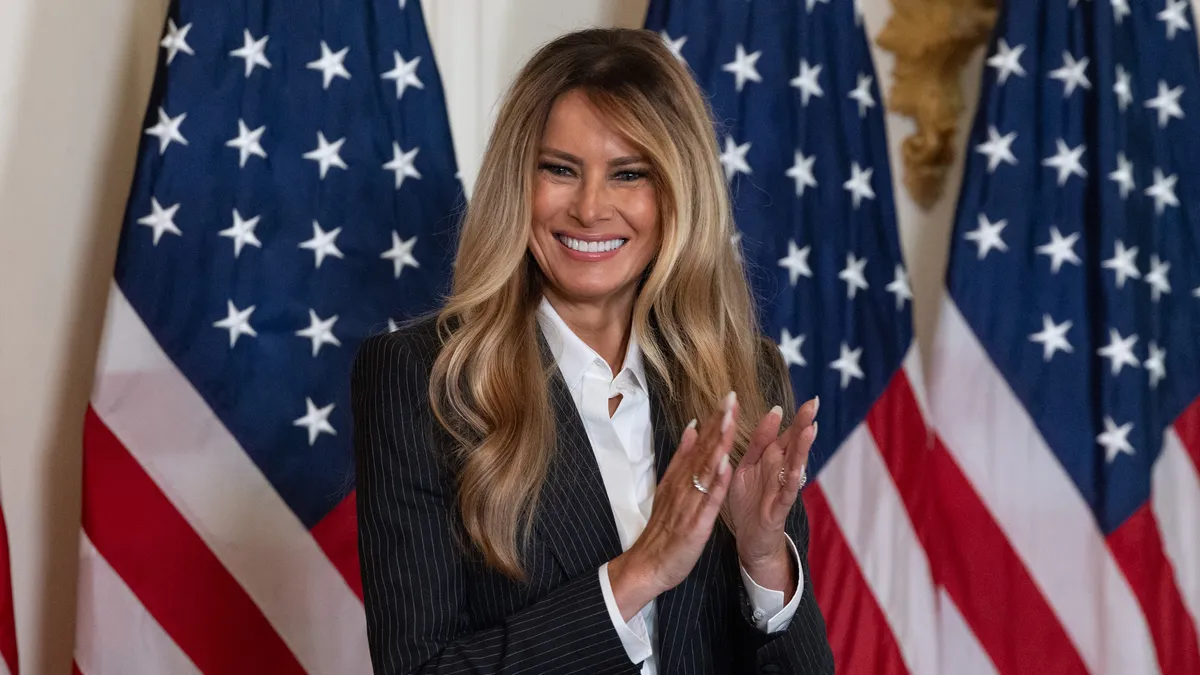
The Daily Show Host Alleges Melania Trump’s Speech Was Crafted by ChatGPT
Cybersecarmor.com – During a recent White House event, a segment of The Daily Show sparked a humorous debate about the role of artificial intelligence in shaping political discourse. The focus was on First Lady Melania Trump’s address to student winners of the inaugural Presidential AI Challenge National Champion Awards, which had been launched by President Donald Trump earlier in the year. The speech, delivered on June 9, highlighted AI’s potential to revolutionize various fields, from healthcare to entertainment, while also blending metaphor with practical examples.
Trump’s AI Initiative and Melania’s Remarks
President Trump had initiated the Presidential AI Challenge in the fall, aiming to foster innovation among K-12 students. The event on June 9 celebrated the winners, with Melania Trump delivering the keynote speech. Wearing a charcoal pinstriped suit, she addressed the audience as “innovators,” emphasizing how AI could inspire the next generation of thinkers and creators.
“Today is about opening doors,” Trump began. “When the doors open, passions flow, courage blossoms, and dreams are realized. AI inspires. Use this chapter of your life to sail away with your dreams.”
Her speech incorporated vivid imagery, such as the idea of AI as a “rocket ship of your courage,” to illustrate its transformative power. While the content aligned with the themes of the AI Challenge, the tone and phrasing raised questions about its authenticity.
Desi Lydic’s Joke: “AI-Written” or “AI-Inspired”?
Desi Lydic, the host of The Daily Show, took a lighthearted jab at the speech, suggesting it may have been penned by an AI. “Melania was so excited about AI, she even did an impression of it,” she quipped, before mimicking the first lady with a faux Eastern European accent: “Sail away to the chapter of your life on the rocket ship of your courage as you blossom into the stars.”
Lydic’s humor extended to the mechanics of AI itself. “What was the prompt to write that speech?” she asked, then added with a playful tone: “ChatGPT, give me metaphor. No. Give me all metaphors.” This line underscored the satirical take on how technology might shape political messaging, blending admiration for innovation with a hint of skepticism.
The AI Challenge: A Platform for Student Innovation
The Presidential AI Challenge, which attracted over 20,000 participants from all 50 U.S. states, was designed to encourage young minds to explore artificial intelligence. Students submitted projects addressing real-world problems, with six finalists honored for their work in healthcare, public safety, and criminal investigations. The event’s focus on education and tech aligns with broader efforts to integrate AI into classrooms and communities.
Melania Trump’s speech echoed the challenge’s goals, citing AI’s ability to “extend the conceptual in ways never dreamed of before.” She highlighted its applications in medicine, where robots could assist in surgeries, and in entertainment, where scripts and music might be generated by algorithms. The first lady also pointed to military advancements, noting the development of autonomous helicopters and drone swarms.
Human and Machine: A Red Carpet Encounter
Melania Trump’s enthusiasm for technology was further demonstrated during a March White House summit that featured first ladies from 45 other countries. At the event, she walked beside a humanoid robot, symbolizing a growing fascination with AI’s integration into daily life. The scene, described as a “red carpet moment,” captured both the excitement and the curiosity surrounding the future of human-machine collaboration.
Lydic later joked that Trump had “been into dystopian technology for a while now,” referencing her earlier praise for AI’s capabilities. “The robots are here, asking you to join us – I mean them. Them,” she said, imitating a mock stammer. “Delete previous sentence.” The remark played on the duality of AI as both a tool for progress and a potential harbinger of change.
AI’s Role in Everyday Life: A Mixed Perspective
Trump’s speech framed AI as a unifying force, capable of bridging gaps between industries and generations. She described the technology as “the underpinning of every business sector in our nation,” with robots operating in hospitals and autonomous systems managing military operations. These claims, while optimistic, also sparked discussions about the extent of AI’s current capabilities and its future trajectory.
Some critics argue that AI’s role in such speeches may blur the line between human creativity and machine-generated content. Lydic’s quip about ChatGPT’s involvement in the speech’s composition raised the question of whether the First Lady’s words were shaped by the technology itself or merely influenced by its ideas. This debate highlights the evolving relationship between AI and public figures in an era where digital tools increasingly shape communication.
White House’s Response to the Satire
USA TODAY reported that the White House had been contacted for a response to the remarks. While no official statement was immediately released, the event’s organizers emphasized the importance of celebrating student achievements in AI. “The challenge is about inspiring young minds to think critically and innovate,” a spokesperson said, adding that Melania Trump’s speech aimed to highlight the technology’s potential rather than its limitations.
Despite the humor, the speech served as a platform to discuss AI’s growing influence. Trump’s remarks underscored a vision of the future where technology and humanity work in tandem, though the implications of that vision continue to be debated. Whether her words were entirely her own or subtly influenced by AI, the message remained clear: artificial intelligence is shaping the next chapter of progress.
In a rapidly evolving technological landscape, figures like Melania Trump and hosts like Desi Lydic are navigating the intersection of innovation and tradition. While the first lady’s speech may have sparked laughter, it also ignited conversations about the role of AI in public communication and education. As the nation watches the development of new technologies, the line between human expression and machine assistance continues to blur, leaving room for both admiration and scrutiny.