Who will replace Karoline Leavitt? Buzz for Trump’s next press secretary begins.

Daftar Isi
Trump’s Press Secretary Vacancy Sparks Name Game Among Potential Successors
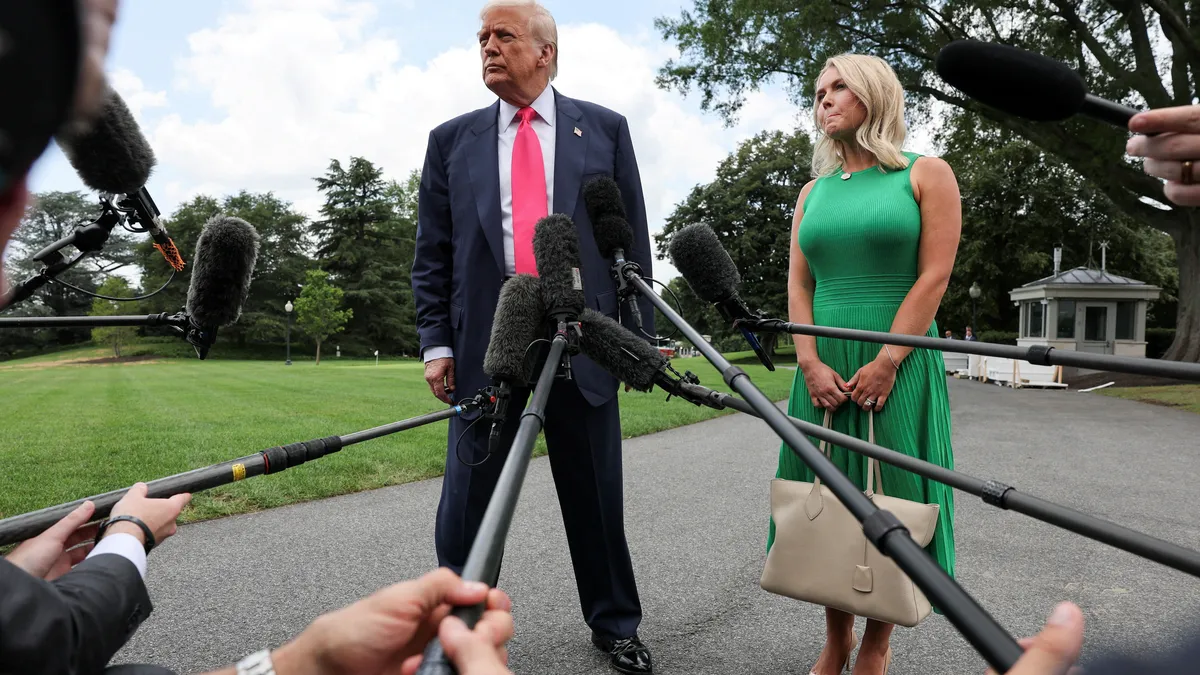
Cybersecarmor.com – President Donald Trump’s administration is bracing for a significant transition as Karoline Leavitt prepares to leave her role as White House press secretary. Her recent announcement regarding her departure has ignited considerable discussion about who might assume one of the most visible positions in the executive branch.
Leavitt, who has served as the administration’s primary spokesperson, indicated she wishes to dedicate more time to raising her two young children. Her official exit is scheduled for the conclusion of August, creating an opportunity for Trump to select a successor who can maintain the energetic communication style that has characterized her tenure.
What Trump Looks For in a Press Secretary
The White House press secretary position demands someone comfortable addressing reporters from behind the briefing room lectern. Leavitt distinguished herself through a combative approach that helped establish the administration’s messaging priorities and counter criticism from political adversaries.
Trump frequently considers what he describes as “central casting” when selecting White House personnel and Cabinet members. The president values candidates who possess strong television presence and project confidence—qualities essential for the highly public press secretary role.
Historical patterns suggest Trump may continue his preference for female press secretaries. Five of the six individuals who held the position across both of Trump’s presidential terms were women. Additionally, Trump has demonstrated openness to unconventional choices, as evidenced by selecting Leavitt at just 28 years old, making her the youngest press secretary in White House history.
Leading Candidates Emerge
While Trump has not publicly identified his preferred replacement, several names have gained traction in political circles and betting markets as potential successors.
Alina Habba represents a strong possibility given her extensive work with the president. A former personal attorney for Trump, she achieved widespread recognition in 2024 as his defense counsel during legal proceedings in New York. Her frequent television appearances on behalf of the president showcased her media capabilities.
Following Trump’s 2024 electoral victory, Habba received the appointment of counselor to the president. Trump subsequently nominated her to serve as the top federal prosecutor in New Jersey. However, in December, she stepped down from that position after a federal appeals court determined she had been serving unlawfully due to lacking congressional confirmation.
Conservative commentator Scott Jennings has also emerged as a contender. Known for his energetic debates with Democratic figures during his time as a senior political contributor for CNN, Jennings has accumulated viral video clips that may have caught Trump’s attention.
The Kentucky native hosts a radio program and authored a favorable book about the president titled “A Revolution of Common Sense: How Donald Trump Stormed Washington and Fought for Western Civilization.” His public profile and alignment with Trump’s messaging make him an attractive candidate.
Anna Kelly currently works within the White House press office as principal deputy press secretary under Leavitt. The administration has increasingly utilized Kelly for media appearances, particularly with Fox News, where she has discussed the U.S. conflict with Iran and other international matters. At 29 years old, Kelly’s age places her in a similar generation to Leavitt.
Katie Miller brings considerable experience to the position. As the former press secretary for Vice President Mike Pence and spouse of Deputy Chief of Staff Stephen Miller, she remains well-known within Trump’s inner circle.
Miller served as a senior aide for the Department of Government Efficiency, an initiative directed by technology executive Elon Musk. She departed her government role last August to establish her own podcast, which regularly features interviews with prominent Trump administration officials including Vice President JD Vance and Secretary of State Marco Rubio.
Matthew Boyle, who serves as Washington bureau chief for the conservative publication Breitbart, could appeal to Trump if he desires someone with deep connections to conservative media outlets.
Boyle has conducted multiple interviews with Trump, including a notable Oval Office conversation in June. The New York Post identified Boyle as an early favorite for the position, noting that well-connected Trump allies appreciate his consistent and passionate presence within conservative journalism.
Steven Cheung offers the advantage of internal knowledge. A long-standing Trump communications aide recognized for his direct approach, Cheung currently serves as communications director in the administration’s second term.
While Cheung primarily operates behind the scenes, transitioning to press secretary would require him to assume a more visible public role. His familiarity with the White House operations could prove valuable during a period of transition.
Taylor Budowich, another experienced Trump adviser, departed the White House last September for opportunities in the private sector after serving as deputy chief of staff.
During his time in the White House, Budowich managed communications and Cabinet-related responsibilities. His administrative experience and relationship with the president position him as a credible candidate for the press secretary role.
As speculation continues, Trump’s decision will likely reflect his priorities for maintaining strong communication with both the media and the American public during his second term in office.
Related Reading
Frequently Asked Questions
What is Who will replace Karoline Leavitt Buzz?
Who will replace Karoline Leavitt Buzz is the main topic of this guide. The article explains the context, practical details, and next steps readers should understand.
Why does Who will replace Karoline Leavitt Buzz matter?
Who will replace Karoline Leavitt Buzz matters because readers are looking for a useful answer, not just a short summary. Good content should match search intent and help them decide what to do next.