
Εuronews report in Ayia Napa: Tourist traffic in Cyprus down 30-40% but with signs of recovery
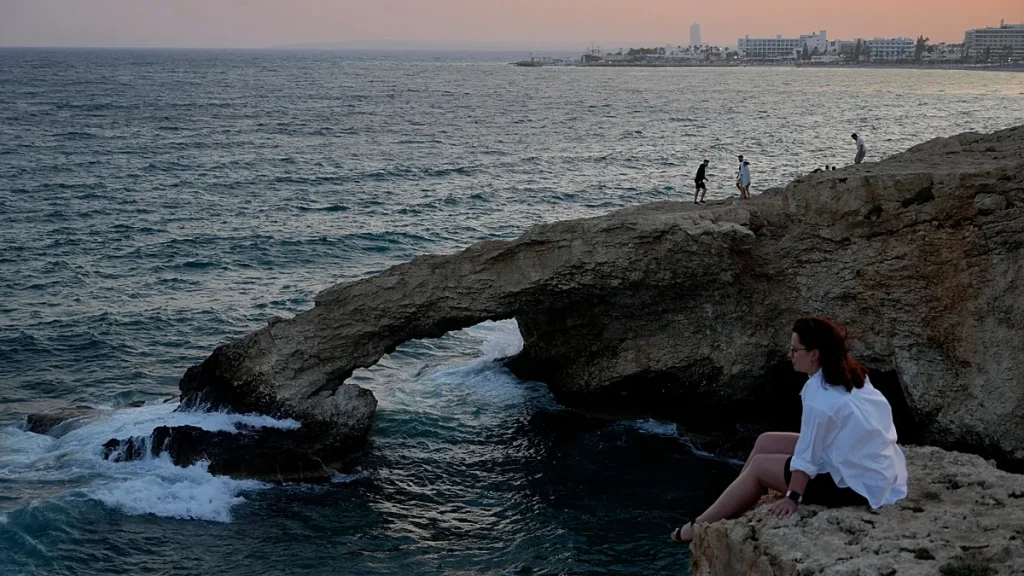
Euronews report in Ayia Napa: Tourist traffic in Cyprus down 30-40% but with signs of recovery
Εuronews report in Ayia Napa – Recent data from Cyprus suggests a significant drop in visitor numbers this year, raising alarms among local stakeholders. The war in Iran has contributed to a decline in tourist arrivals, with figures for April and early May indicating a reduction of between 30% and 40% compared to previous years. This slump has led to concerns about the future of the tourism sector, which is a cornerstone of the island’s economy. Euronews recently visited Ayia Napa, a popular tourist destination, and observed the quiet atmosphere that has taken over the usual vibrant scene. Business operators there reported a noticeable absence of visitors, marking a stark contrast to the bustling summer months.
Local entrepreneurs, including those in the hospitality and entertainment industries, have noted the impact of the Middle East conflict on tourism. The resort town, once a hotspot for international travelers, now faces challenges as fewer tourists flock to its shores. Sukan Samnice, a boat rental operator in Ayia Napa, described the current season as vastly different from the record-breaking period of the previous year. “Typically, the boats, hotels, and restaurants are packed during this time,” he said. “Last year, every hotel had full occupancy, but this year, visitor numbers have dropped by about 30–40%.” His comments reflect a broader sentiment among local businesses, which are adjusting to the new normal of reduced foot traffic.
“Compared with last year, mobility is down by about 35–40%,” said Christos Zannetou, the mayor of Ayia Napa. “Yet, this gap is narrowing day by day. It is also important to remember that 2025 was the best tourism season for Cyprus – especially for Ayia Napa – since 2019. So any numerical comparison should take that into account.”
Zannetou highlighted the resilience of the tourism sector, noting that while the initial impact was severe, there are signs of gradual improvement. “Over the past two weeks, we have started to see recovery,” he added. “Visitors are beginning to recognize that Cyprus remains a safe and attractive destination, and bookings are showing renewed interest.” His optimism is shared by some in the industry, though the pace of recovery is still slower than anticipated.
Despite the overall decline, certain aspects of Cyprus’s tourism landscape are holding up. Tourist arrivals through Cypriot airports experienced a 16% drop in April, but recent trends indicate a shift. Flights from the UK, for instance, are currently showing a 92% occupancy rate, suggesting that demand is slowly rebounding. Hermes Airports, which oversees the island’s air transport infrastructure, provided further insight into the situation. The statement revealed that April 2026 saw a 16% decrease in passenger numbers compared to April 2025, translating to approximately 95,000 fewer arrivals. Aircraft load factors averaged 76% across both airports, down from 83% in the same period last year.
The summer season, spanning April to October, has seen adjustments in flight schedules. Airlines have reduced overall seat capacity by no more than 5%, or roughly 600,000 seats, even as they plan for expanded programs in September. Despite this, passenger numbers for the summer period are expected to fall by around 9%, equivalent to 450,000 fewer visitors. However, Zannetou emphasized that there are encouraging signs, with arrival load factors improving to between 80% and 85% in recent weeks. Key markets such as the UK and Poland are showing strong performance, with load factors exceeding 90%.
Meanwhile, the island’s connectivity remains robust, with 54 airlines offering flights to 165 destinations across 42 countries. Most recent changes involve minor reductions in weekly flight frequencies rather than the cancellation of entire routes. This stability has helped maintain some level of tourism activity, even as the broader picture remains uncertain. For May, indicative figures reveal that major markets like the UK, Israel, Poland, and Germany are contributing to the recovery. The UK averages around 30 inbound flights per day with a 92% load factor, while Israel sees 20 daily flights at 60%, and Poland and Germany report nine and eight flights per day, respectively, with occupancy rates of 93% and 86%.
Some visitors, however, have expressed concern about the global climate. Klaus, a tourist from Germany, shared his perspective: “We really like it here,” he said. “Unfortunately, the global situation is quite tense at the moment, and we hope peace will prevail around the world as soon as possible.” His experience mirrors that of others who have chosen Cyprus as a safe haven amidst international uncertainty. Yet, for many, the island’s natural beauty and welcoming environment have proven irresistible.
Those who have arrived in Cyprus are generally positive about their experience. A Polish tourist remarked, “We decided quite a long time ago to come here.” He explained that several options were considered, but the decision was influenced by the island’s warm weather, sunny skies, and scenic landscapes. “The beautiful scenery inspired us to paint watercolours as souvenirs,” he added, highlighting the personal connection many travelers feel with the destination. These comments suggest that while the initial wave of visitors has diminished, the remaining ones are fully engaged with the island’s offerings.
The gradual return of tourists has not gone unnoticed by local authorities. Zannetou reiterated that the situation in the Middle East continues to affect the sector, but he is confident that the recovery is on track. “Cyprus’ connectivity remains strong, and the adjustments made by airlines are more about optimizing routes than cutting them entirely,” he said. This balance between challenges and opportunities is shaping the current outlook for the tourism industry, which is now focused on rebuilding momentum while maintaining its reputation as a reliable travel destination.

