
Where is the MV Hondius? Follow live the position of the hantavirus ship
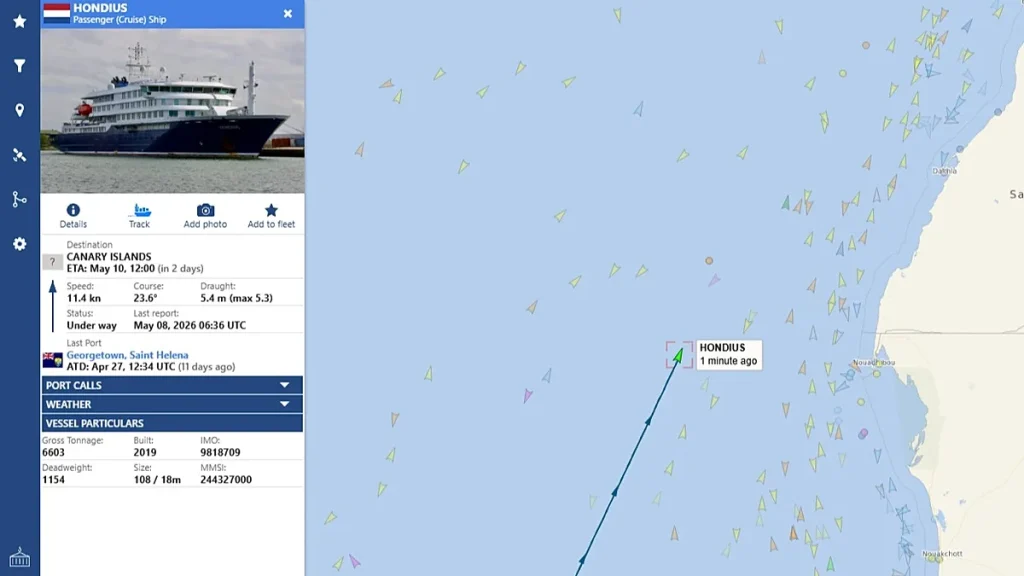
Tracking the MV Hondius: The Hantavirus Outbreak in the South Atlantic
Where is the MV Hondius Follow – The Dutch-flagged cruise ship MV Hondius has become a focal point for global health authorities as it continues its journey across the South Atlantic. With over 90 passengers from 23 different countries, the vessel is currently en route to Tenerife, part of the Canary Islands. This leg of the trip marks a critical phase in managing the outbreak of hantavirus that has claimed three lives and infected five individuals onboard. While the World Health Organization (WHO) has emphasized that the situation does not constitute a pandemic, the virus’s extended incubation period of up to six weeks has raised concerns about potential new cases emerging in the coming days.
Evacuation Plans and Quarantine Measures
As the MV Hondius approaches its final stop in Tenerife, preparations are underway to transfer its passengers to the island’s airport. The 144 travelers on board will disembark in boats, with the logistics of their onward journey meticulously planned. Notably, 14 Spanish passengers have been designated for immediate medical attention at Gómez Ulla Hospital in Madrid, where they will undergo a 45-day quarantine. The rest of the crew, meanwhile, will be repatriated to their home countries following health screenings. This coordinated effort aims to contain the spread of the virus and ensure the safety of both passengers and local populations.
The WHO’s latest assessment highlights the severity of the outbreak without overstating its implications. “It is not the next COVID,” the organization has stated, underscoring that while the virus remains a concern, it does not meet the criteria for a global pandemic. This reassurance comes as a relief to many, given the rapid transmission of the hantavirus and the potential for a widespread crisis. However, the confirmation of three fatalities aboard the MV Hondius has prompted increased vigilance in monitoring the health of all individuals involved in the journey.
The Outbreak’s Timeline and Spread
The MV Hondius departed Ushuaia, Argentina, on 1 April, embarking on a route that would take it across the South Atlantic. The initial symptoms of the hantavirus were first reported onboard on 11 April, when the first victim succumbed to the illness. His wife, who had disembarked on the island of St Helena earlier that week, later passed away in Johannesburg on 26 April, further complicating the timeline of the outbreak. More than 30 individuals have already left the ship at the same port, suggesting that the virus may have spread beyond the vessel before its arrival in Tenerife.
The third death was recorded on 2 May, involving a German woman who developed severe pneumonia linked to the hantavirus. Her condition deteriorated rapidly, highlighting the virus’s capacity to cause life-threatening complications in vulnerable individuals. The WHO’s warnings about the virus’s incubation period have proven prescient, as cases may surface weeks after initial exposure. This extended latency period has made it challenging to trace the exact origin of the outbreak, though the ship’s route from South America to the Canary Islands points to possible exposure during the transatlantic voyage.
Passenger Breakdown and Global Impact
The MV Hondius carries a diverse group of travelers, with the majority hailing from the Philippines, the United Kingdom, the United States, and Spain. Specifically, 38 Filipinos, 23 Britons, 17 Americans, and 14 Spaniards are among the passengers currently aboard. This international composition underscores the potential for the virus to spread across borders, though the WHO has ruled out large-scale global transmission at this stage. The Dutch government has been actively coordinating with health agencies to monitor the situation and implement necessary precautions.
Experts have noted that the hantavirus, primarily spread through rodent droppings, can pose significant risks in enclosed spaces such as cruise ships. The conditions on the MV Hondius, which includes shared living areas and common spaces, may have facilitated the virus’s spread among passengers. However, the exact source of the outbreak remains under investigation, with officials examining the ship’s sanitation protocols and potential exposure points during the voyage. The virus’s incubation period, which can range from a few days to six weeks, complicates efforts to pinpoint when infections began.
Global Response and Monitoring Efforts
In response to the outbreak, the MV Hondius has been placed under strict surveillance as it navigates toward its destination. Health teams are conducting onboard assessments to identify additional cases and evaluate the virus’s progression. The vessel’s route has been adjusted to ensure a safe arrival in Tenerife, where it will be docked for a brief period before passengers proceed to their respective destinations. The situation has also prompted a review of cruise ship safety standards, with an emphasis on rodent control and hygiene practices to prevent similar outbreaks in the future.
The WHO’s classification of the outbreak as non-pandemic is based on current data, which shows a limited number of cases concentrated on a single vessel. However, the organization has urged continued monitoring, as the virus’s incubation period may delay the full extent of the outbreak’s impact. Public health officials are closely tracking the 144 passengers, particularly those who have been identified as infected, to ensure they receive appropriate care and do not inadvertently spread the virus to others. The 45-day quarantine period for the Spanish passengers in Madrid is designed to mitigate this risk, providing time for symptoms to manifest and for health professionals to conduct thorough evaluations.
As the MV Hondius nears its arrival in Tenerife, the focus remains on managing the outbreak efficiently while minimizing disruption to the passengers’ plans. The ship’s captain and crew are working alongside health authorities to provide regular updates on the virus’s status and the ship’s position. This live tracking effort aims to reassure the public and maintain transparency about the situation. The WHO’s reassurance that the hantavirus outbreak is not on the scale of the COVID-19 pandemic has provided some relief, but the three confirmed deaths serve as a stark reminder of the virus’s dangers.
Meanwhile, the broader implications of the outbreak are being discussed by health experts. While the hantavirus is not as contagious as SARS-CoV-2, its potential to cause severe respiratory illness in certain populations makes it a significant public health concern. The MV Hondius incident has highlighted the importance of rapid response in contained outbreaks, especially in environments where close contact is inevitable. As the ship docks in Tenerife, the world watches to see how this situation develops and what lessons can be learned for future global health threats.

