
Newsletter: Another Trump ultimatum, another fragile trade truce for the EU
Newsletter: Another Trump Ultimatum, Another Fragile Trade Truce for the EU
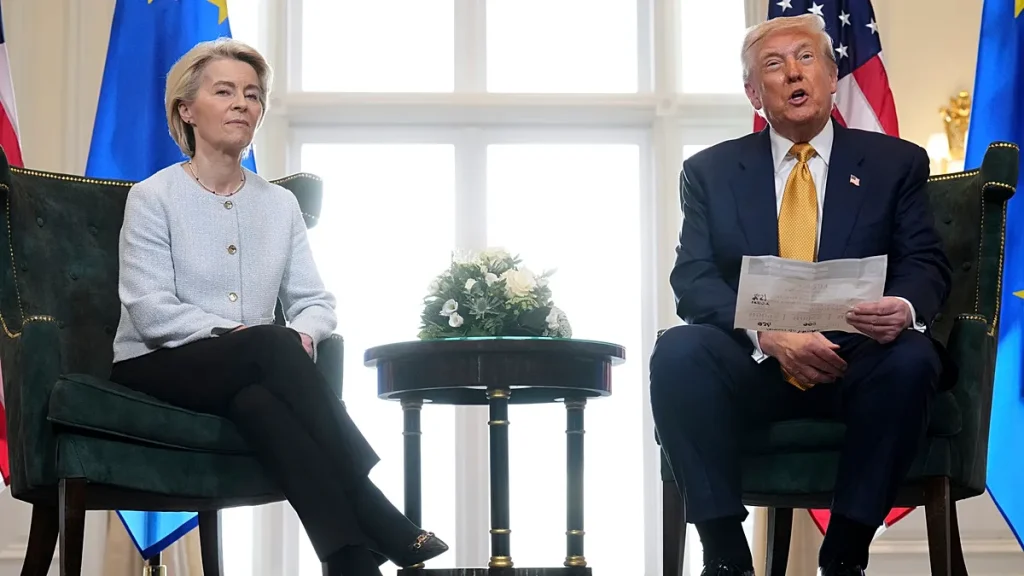
Newsletter – Good morning. This week’s concluding edition features contributions from Maïade La Baume and Angela Skujins, who are collaborating on the latest update. While you were asleep, the US president, Donald Trump, reignited his signature strategy—leveraging threats—to pressure the European Union. Following a conversation with Commission president Ursula von der Leyen on Thursday evening, Trump announced that the EU has until 4 July to fully implement its trade agreement or face escalated tariffs. The announcement comes as the EU navigates a precarious balance between economic diplomacy and retaliatory measures.
Trade Deal Pressure and Tariff Threats
Trump’s social media post emphasized the significance of the Turnberry, Scotland, agreement, which he claims is the most substantial trade pact in history. He stated that the EU had pledged to eliminate tariffs, a commitment he now insists must be fulfilled by the 250th anniversary of the US. “I agreed to give her until our country’s 250th birthday or, unfortunately, their tariffs would immediately rise to much higher levels,” he wrote, tying the deadline to the Fourth of July. This ultimatum, however, slightly softens his earlier warning about a 15% to 25% increase in tariffs on EU cars, which was set for later this week. The delay provides a brief reprieve but doesn’t eliminate the looming risk.
“A promise was made that the EU would deliver their side of the deal and, as per agreement, cut their tariffs to zero!”
Despite the current ceasefire, the stakes remain high. The EU’s automotive sector, particularly Germany, faces an existential challenge if the tariffs are enforced. According to Stefan Grobe’s report on Europe Today, the 25% rate could accelerate the migration of industrial operations out of the bloc, threatening jobs and economic stability. Meanwhile, the European Parliament and member states are racing to finalize legislation that would eliminate the tariffs entirely. Although negotiations on Wednesday evening concluded without a binding agreement, lawmakers indicated tangible progress toward a May 19 deal. Von der Leyen, in her own social media statement, expressed optimism that the necessary approvals will be secured before the deadline.
Defense Unity and Strategic Loans
Amid the trade tensions, the EU has also prioritized strengthening its defense capabilities. European Commissioner for Defence Andrius Kubilius and European Commissioner for Budget Piotr Serafin are set to visit Poland and Lithuania on Friday to seal loan agreements for frontline states. The initiative underscores the bloc’s commitment to collective security, particularly in light of escalating threats from Russia. Poland has received €43.7 billion under the Simple Agreement for Future Equity (SAFE) scheme, while Lithuania has been allocated €6 billion. Kubilius highlighted the symbolic choice of starting with Warsaw, noting, “Poland is a country which is taking the biggest responsibility on the biggest amount of those loans.”
“Showing really that we’re ready to deter and to defend ourselves, and it’s again very symbolic that we are doing that just before Europe’s Day, because this mechanism of safe loans is really based on basic principles of the European Union, on solidarity principles.”
The funds will support Poland’s four flagship programs, ranging from enhancing anti-drone defenses to reinforcing its eastern border. Lithuania’s allocation will focus on bolstering land forces through the acquisition of firepower, including ammunition and mines. The timing of these approvals aligns with Victory Day, a Russian observance that Kubilius argues is used to justify its ongoing conflict in Ukraine. “This is a strategic move to demonstrate unity and resolve,” he explained, emphasizing the importance of solidarity in European defense policy.
Responding to the Hantavirus Outbreak
Meanwhile, the European Commission has intensified its coordination with member states to address the hantavirus outbreak on the MV Hondius, a Dutch luxury cruise ship bound for Spain. The outbreak has raised concerns about public health, prompting emergency measures. Eva Hrncirova, the Commission’s health spokesperson, reiterated that the risk to Europe’s population remains “low” based on current evidence. “As the evidence stands, according to the current situation, there is no cause for concern at the moment,” Hrncirova stated, reflecting the Commission’s confidence in managing the crisis.
“The risk for the public in Europe, the risk for the Europeans, is low. The health of the citizens in Europe is our absolute priority, and this obviously applies in this case.”
The response began with a Health Security Committee meeting in Brussels on Wednesday, where healthcare representatives from across the EU collaborated to assess the situation. Subsequent meetings with Dutch and Spanish authorities, along with broader consultations with affected member states, aimed to ensure a unified approach. Hrncirova stressed the importance of timely coordination, stating, “This mechanism of safe loans is really based on basic principles of the European Union, on solidarity principles.”
While the immediate threat of the virus appears manageable, the Commission acknowledges that vigilance is critical. The outbreak serves as a reminder of the interconnectedness of European nations and the need for rapid, collaborative action. Poland and Lithuania’s defense funding, meanwhile, signals a broader shift toward economic resilience and military preparedness. The EU’s dual focus on trade and security highlights its efforts to navigate external pressures while maintaining internal cohesion.
Looking ahead, the success of the trade truce will depend on the EU’s ability to meet Trump’s demands by the deadline. If the legislation is approved, it could avert a tariff war and stabilize economic relations. However, if the EU fails to act swiftly, the consequences could ripple across industries, including Germany’s automotive sector, which is a cornerstone of the European economy. On the defense front, the loans represent a tangible step toward greater unity, though challenges remain in ensuring all member states participate at the required pace.
The hantavirus situation, though less urgent, also illustrates the Commission’s proactive stance in addressing public health emergencies. By convening experts and engaging directly with affected countries, the EU aims to mitigate risks and reinforce its reputation as a reliable partner. These efforts, combined with the defense initiatives, demonstrate a multifaceted strategy to secure both economic and political stability in an increasingly volatile global landscape.
As the EU continues to juggle these priorities, the outcomes of the upcoming May 19 negotiations will be pivotal. The interplay between trade diplomacy and defense cohesion underscores the complexity of European integration. With Trump’s threats still hanging over the bloc and Russia’s military actions persisting, the EU’s ability to deliver on its promises will be tested. Yet, the collaborative spirit evident in both trade and defense initiatives offers a glimmer of hope that the continent can withstand these challenges through unity and determination.

