El-Sayed won. Now a complicated path awaits Dems in must-win Michigan

Daftar Isi
El-Sayed’s Primary Triumph Sets Stage for Challenging Michigan Senate Race
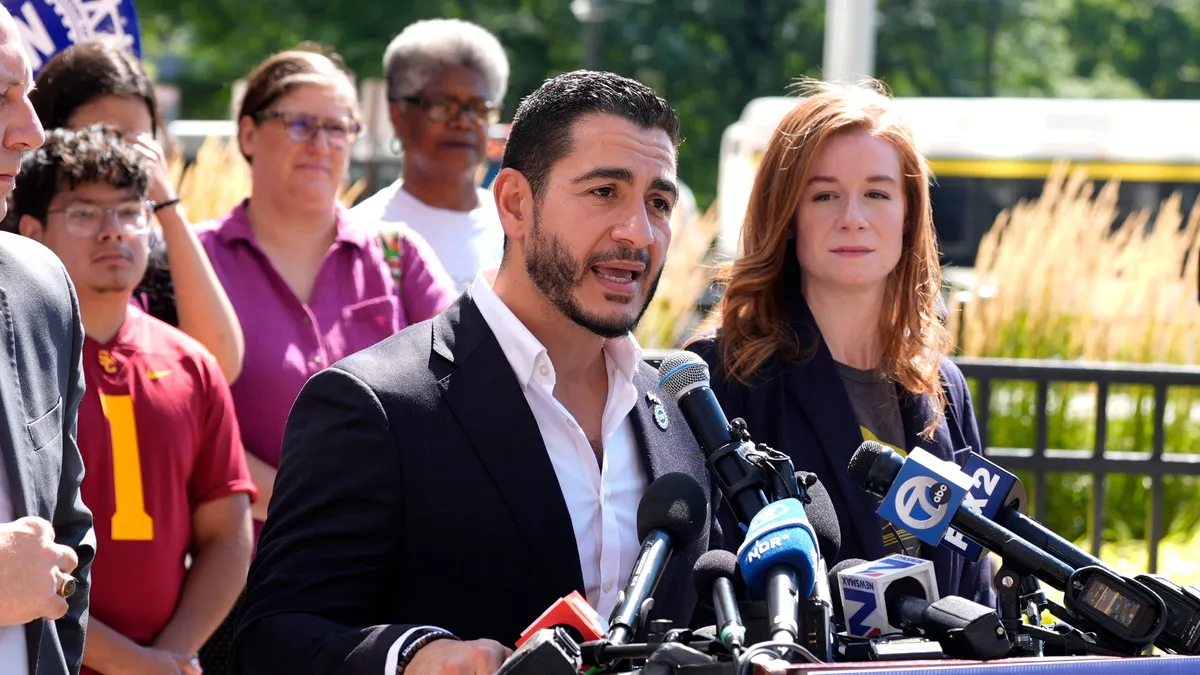
Cybersecarmor.com – Abdul El-Sayed’s victory in Michigan’s Democratic Senate primary has created both opportunity and complexity for the party. The progressive former public health official secured the nomination by mobilizing college-educated voters, a demographic that has traditionally leaned Republican in the state. His win represents a significant shift in Michigan’s political landscape, but the road to November remains steep.
El-Sayed, who has long positioned himself as an anti-establishment figure aligned with Senator Bernie Sanders of Vermont, must now bridge divides within his own party. While he energized younger voters and white college graduates in communities like Ann Arbor and Grand Rapids, he faces the challenge of winning back older Black voters who supported his primary opponent, Representative Haley Stevens.
A Critical Seat for Democratic Hopes
The Michigan Senate seat, currently held by outgoing Senator Gary Peters, sits at the center of Democratic strategy for regaining chamber control. With Republicans maintaining a 53-47 advantage, Democrats cannot afford to lose any seats they currently hold while simultaneously flipping Republican-held positions in Maine, Texas, and North Carolina.
Even if Democrats succeed in those three additional races, losing Michigan would effectively eliminate their path to majority control. This makes the November contest one of the most consequential down-ballot races in the country.
“We have to recognize that there has not been a politician that’s Bernie-adjacent — that’s sort of in Bernie’s camp, in Bernie’s loose world — who has won in a battleground gubernatorial race, Senate race or House race in recent elections. They’ve won in deep blue areas,” said longtime Democratic strategist Simon Rosenberg on his podcast.
Progressive Momentum Meets Reality
The 2026 midterm cycle has seen progressive candidates achieve notable victories across the country. Democratic socialists have captured mayoral offices and won primaries from New York to Colorado. However, El-Sayed’s candidacy tests whether left-wing politics can succeed in a traditionally competitive state like Michigan.
Rosenberg acknowledged the statistical headwinds facing the Democratic nominee. El-Sayed currently polls lower than any other Democratic candidate in battleground Senate races this cycle. Yet the strategist also pointed to broader trends that could benefit Democrats in November.
“It’s an experiment, and we’ll see it how it goes,” Rosenberg noted. “We should be a little worried that this politics has no track record of winning in places like Michigan or in competitive House races, but we need it to win this time.”
El-Sayed’s Platform and Background
A charismatic figure who served as Detroit’s health director, El-Sayed built his campaign around expanding Medicare for all and implementing taxes on billionaires. Unlike some progressive rivals, he avoids the socialist label while maintaining left-leaning positions on economic and foreign policy issues.
His primary victory came through strong performance among younger voters and college-educated liberals. These demographics, particularly white voters with university degrees, provided the margin of victory in what was El-Sayed’s first electoral win as a candidate.
Meanwhile, his primary opponent Haley Stevens, a moderate representative, consistently outperformed El-Sayed in head-to-head polling against Republican nominee Mike Rogers. Stevens won Detroit, the state’s largest Democratic stronghold and a community with significant working-class Black voters who may prove difficult for El-Sayed to win back.
Republican Strategy Takes Shape
Republicans have quickly identified opportunities in El-Sayed’s nomination. Matt Grossman, a political science professor at Michigan State University, observed that the GOP sees both ammunition and internal Democratic divisions.
“Mike Rogers is definitely happy,” Grossman said, adding that Republicans believe El-Sayed’s candidacy has exposed the party’s inner-party rift over Israel and Gaza. El-Sayed, a vocal critic of Israeli policy, has described the Israeli government as “evil.”
The National Republican Senatorial Committee wasted no time launching attack advertisements. Within hours of the primary results, the committee released a thirty-second spot characterizing El-Sayed as “the most radical Senate candidate in America.” The advertisement notably used his full name, Abdulrahman Mohamed El-Sayed, emphasizing his Muslim identity in a political climate where religious affiliation can influence voter perception.
Republican strategist Mark Bednar, a former House leadership aide, described the nomination as a gift for Republicans. He suggested that El-Sayed’s progressive positions could energize Democratic base voters while simultaneously providing Republicans with clear attack lines on economic and foreign policy issues.
Broader Political Context
The Michigan contest unfolds against a backdrop of Democratic overperformance in special elections and off-year races throughout the past year. These results have generated optimism about a potential blue wave in November, though analysts caution against overextrapolation.
President Donald Trump’s approval rating has remained below forty percent for several months, with voters expressing consistent dissatisfaction regarding both economic conditions and the ongoing U.S. military involvement in Iran. These national trends could either help or hinder El-Sayed depending on how voters prioritize issues in the final weeks of the campaign.
As the race progresses, El-Sayed must demonstrate that his progressive credentials can coexist with electability in a purple state. His ability to build a coalition spanning college-educated moderates, working-class Black voters, and younger progressives will determine whether Michigan becomes another progressive victory or a cautionary tale for Democrats nationwide.
Related Reading
Frequently Asked Questions
What is El Sayed won Now a complicated?
El Sayed won Now a complicated is the main topic of this guide. The article explains the context, practical details, and next steps readers should understand.
Why does El Sayed won Now a complicated matter?
El Sayed won Now a complicated matters because readers are looking for a useful answer, not just a short summary. Good content should match search intent and help them decide what to do next.