
Spain ‘more convinced of its own position’ on the US than the EU is, Jaume Duch tells Euronews
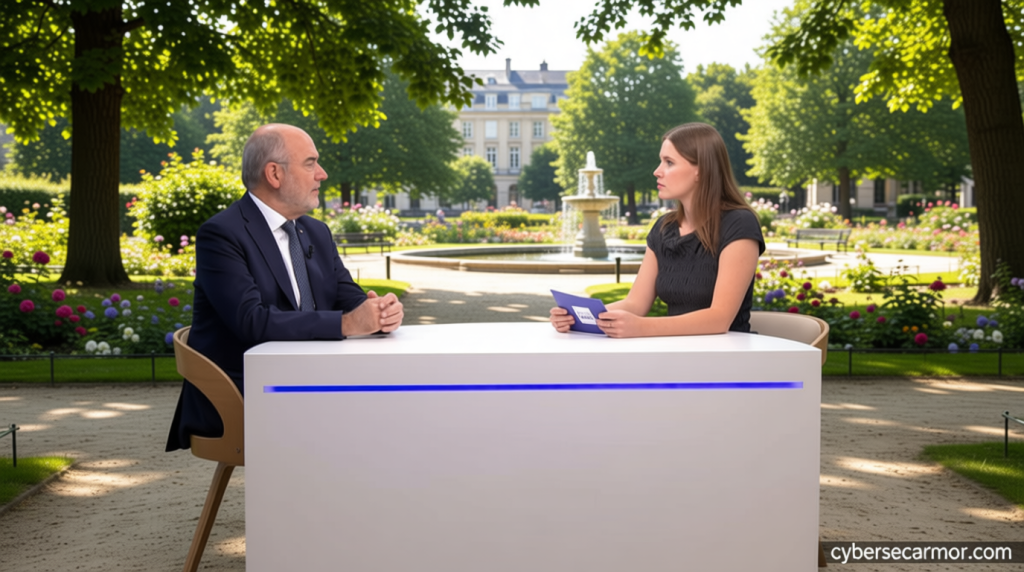
Spain ‘more convinced of its own position’ on the US than the EU is, Jaume Duch tells Euronews
Spain more convinced of its own position – Jaume Duch, the Catalan Minister for the European Union and Foreign Action, recently shared his perspective with Euronews, emphasizing that Spain’s approach to its relationship with the United States has shown greater consistency than that of the broader European Union. Duch, who serves as a key liaison between Brussels and Barcelona, highlighted how Madrid has managed to maintain its strategic stance despite mounting pressure from the White House and other international actors. This has, in his view, made Spain more resolute in its decisions compared to the EU as a whole.
Spain’s assertive position on US policy
Duch pointed to the recent tensions with Iran as a pivotal moment in demonstrating Spain’s commitment to its own foreign policy. Just days after the conflict erupted, Prime Minister Pedro Sánchez became the sole European Union leader to openly question the U.S. military action. “This was a defining moment,” Duch said. “It showed that Spain was willing to take a stand, even when others hesitated.” He noted that while the EU initially lagged, the position eventually gained traction across the bloc, with a majority of member states aligning with Madrid’s firm stance. “This means that we were more convinced of our own positions,” Duch explained, underscoring the shift in confidence among European nations.
“In the following weeks, this position was also adopted by a majority of EU member states. This means that we were more convinced of our own positions,” Duch said.
Spain’s critical posture toward the U.S. has not gone unnoticed. The Trump administration, Duch revealed, has frequently targeted Madrid for its resistance to American policies, most notably in the context of the Iran war. A recent Pentagon email even suggested suspending Spain’s NATO membership as a form of retribution for refusing to support military operations against Iran. Duch, however, dismissed such criticisms, citing the endorsement from NATO Secretary General Mark Rutte, who affirmed that Spain fulfills its commitments within the alliance.
Rebalancing NATO: Catalonia’s vision
As a representative of Catalonia, Duch has also been vocal about the need to reshape NATO’s role in Europe. He proposed a “Europeanised” version of the alliance, one that reduces dependency on the United States while enhancing the EU’s autonomy. “The discussion in Brussels is still very open,” he remarked. “It will depend on how the U.S. behaves in the future whether it remains a central player in the alliance.” Duch highlighted the recent U.S. decision to withdraw approximately 5,000 troops from Germany as a sign that the administration is shifting its focus, which he sees as a call for European nations to strengthen their own capacities.
“The announcement that the US is set to withdraw around 5,000 troops from Germany ‘tells us that we need to be prepared ourselves, that we need to be more autonomous.'”
This move, Duch argued, underscores the importance of regional governments in driving European integration. While Madrid maintains a central role in shaping Spain’s foreign policy, he emphasized that Catalonia has been working to bring its voice into the conversation. “Regions are closer to the citizens than central governments,” he said. “This is what we are trying to do. To influence decisions and also help people to understand the importance of being Europeans.”
Catalan identity and EU recognition
Despite Spain’s unified foreign policy, Duch acknowledged the complexities of Catalonia’s relationship with both Madrid and Brussels. He noted that the Catalan people feel a strong European identity, yet a significant divide persists between the region and the EU institutions. “There is a need to have answers from Brussels regarding the real difficulties people face, be it housing, social problems, or climate change,” Duch said. “We need to narrow the distance between the European institutions and the citizens.”
“We need to have answers from Brussels regarding the real difficulties people face, be it housing, social problems, or climate change. We need to narrow the distance between the European institutions and the citizens.”
Catalonia’s aspirations for greater autonomy have also extended to language rights. Duch emphasized that the Catalan language, spoken by 10 million people across Europe, deserves official recognition within the EU. “Catalan is the 13th most spoken language in the EU, which obviously means that we Catalans also have the right to see this language become an official one,” he argued. This goal has been a focal point of the region’s political strategy, particularly since the 2023 elections, where pro-independence parties lost their majority. Duch noted that the current governing coalition in Catalonia now prioritizes integration with Spain while advocating for the highest level of self-rule.
EU’s evolving stance and internal challenges
Duch also reflected on the EU’s transformation in recent months, suggesting that the bloc has undergone significant change in its approach to U.S. influence. He cited the U.S. efforts to secure control over Greenland as a turning point. “This opened the eyes of many governments on this continent, and since then, the positions have changed,” he said. Duch’s remarks highlight a broader trend of European skepticism toward American leadership, driven by concerns over geopolitical strategy and economic reliance.
Spain’s assertive position has not only influenced EU dynamics but also reignited debates about the role of regional governments in shaping European policy. Duch, representing Catalonia, has become a bridge between the region’s aspirations and Madrid’s broader objectives. His presence in Brussels signals a shift in how Catalonia views its place within the EU, moving from a focus on independence to a more cooperative stance while maintaining its unique identity.
A dialogue between Brussels and Barcelona
While the EU and Spain have aligned on certain issues, Duch stressed that the relationship is not without challenges. “There is still a big gap between Barcelona and Brussels,” he admitted. This gap, he explained, is rooted in the differing priorities of regional governments versus the central EU institutions. “Catalans feel they belong in Europe, but their concerns about local governance and language recognition remain unmet,” he said. Duch believes that regions like Catalonia can act as mediators between the EU and its citizens, translating complex policies into actionable solutions.
“In my opinion, it will depend on how the United States behave in the future whether it will still be a very engaged member.”
He further argued that the success of European unity hinges on the collaboration between decision-makers in Brussels and implementers on the ground. “Many of the decisions taken in Brussels […] have to be applied by the regional governments, from agriculture, fisheries, housing,” Duch said. “This means that, in reality, what you need is a very good relationship between those who are deciding here in Brussels and those who are implementing the rules in Catalonia.”
Duch’s role in Brussels has also brought attention to the evolving political landscape in Catalonia. A few years ago, the idea of a Catalan minister discussing geopolitics rather than independence would have seemed unlikely. Today, however, the region’s integration into EU affairs has become a reality. Duch attributed this shift to the 2023 regional elections, which saw the pro-independence movement lose its majority. “The parties in power now think Catalonia belongs in Spain, but at the same time, want to fight for the highest possible level of self-government,” he said.
Despite these challenges, Duch remains optimistic about Catalonia’s future. “We are optimistic,” he concluded. “We believe that by addressing local concerns and fostering dialogue, Catalonia can strengthen its position within the EU and contribute to a more unified European vision.” His words reflect a cautious but determined approach to balancing regional identity with broader European collaboration, a strategy that may shape the future of Spain’s role in both domestic and international affairs.

