
Saydnaya residents demand links between notorious Syrian prison and holy city must end
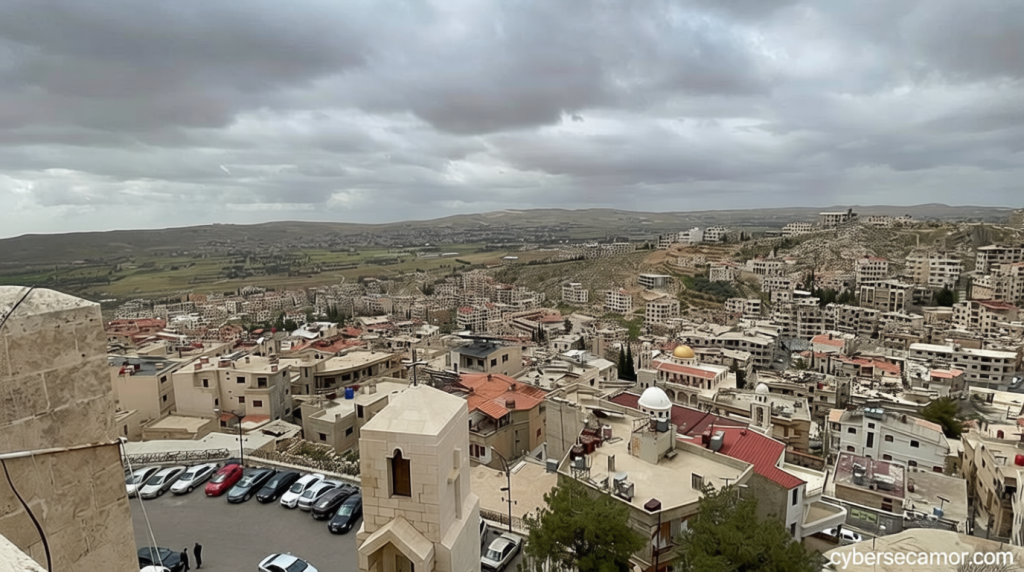
Saydnaya Residents Demand End to Misleading Association with Military Prison
Saydnaya residents demand links between notorious – Residents of Saydnaya, a historic city nestled in the Qalamoun Mountains north of Damascus, have launched a campaign urging media outlets and government entities to cease referring to the nearby military detention facility as “Saydnaya Prison.” They argue that this label not only misrepresents the city’s geographical boundaries but also perpetuates a damaging link between the site of brutal treatment and the sacred urban center, which has long served as a key Christian pilgrimage destination.
The Controversy Over Naming
The prison in question, officially known as the First Military Prison, is situated 30 kilometers north of Damascus, along the route connecting to Saydnaya. Despite its proximity, it lies outside the city’s administrative limits, a detail that residents say has been overlooked by the media. “Calling it Saydnaya Prison is a distortion of reality,” stated Bassam Habib Andraos, mayor of one of the city’s neighborhoods. “The name is geographically incorrect and has unfairly tainted our city’s reputation.”
Andraos emphasized that the facility’s moniker should be corrected to reflect its true identity as a military installation. He criticized the tendency of international outlets to equate the prison with the town, creating a narrative that frames Saydnaya as a symbol of suffering rather than a place of spiritual and cultural significance. “It’s as if the entire city is synonymous with torment,” he said. “That’s not just inaccurate—it’s unjust.”
A Legacy of Torture and Historical Context
The First Military Prison, a complex under the control of the Syrian Ministry of Defence, was constructed during the rule of Hafez al-Assad and later expanded under his son Bashar. At its peak, it housed approximately 10,000 to 20,000 detainees, becoming infamous for its harsh conditions and systematic abuse. Its reputation as a site of terror grew during the conflict, with reports of extreme physical and psychological torment circulating globally.
After the fall of Bashar al-Assad’s regime in December 2024, opposition forces seized the facility. During this period, international media consistently referred to it as “Saydnaya Prison,” a practice that locals say has been ongoing for years. “For years, we’ve been trying to correct this misnomer,” said Mahmoud Pasmana, another Saydnaya resident. “People are tired of being associated with a place that has no connection to our city.”
The Sacred Site and Its Spiritual Importance
Located more than 1,400 meters above sea level, Saydnaya is home to the Monastery of Our Lady of Saydnaya, a 7th-century religious landmark revered by many Christians as the second most significant pilgrimage destination after Jerusalem. The city’s name is deeply intertwined with its spiritual heritage, a contrast to the image imposed by the prison’s name. “This is a place of peace and devotion,” said Jamil Daher, a local community member. “The prison is a separate entity, and its name should not overshadow our history.”
Residents of Saydnaya, a city with a diverse population of Christians and Muslims, have long prided themselves on coexistence and shared traditions. The monastery, a UNESCO World Heritage site, has historically drawn pilgrims and scholars from across the region. “Our city has always been a symbol of unity,” Daher added. “But now, it’s being reduced to a synonym for suffering.”
Economic Pressures and the Weight of History
The naming dispute adds to the challenges faced by the city’s inhabitants, who are already grappling with severe economic hardship. Electricity bills, for instance, have surged to 600% of pre-war levels, while public-sector salaries remain around $100 per month. “The cost of living has made it hard for families to survive,” said Daher. “Every hardship is compounded by the stigma of being linked to this prison.”
He pointed out that the facility’s proximity to Saydnaya has led to unintended consequences, such as the misattribution of the city’s cultural identity to the prison. “Saying the prison is part of Saydnaya is like blaming a whole civilization for the sins of a single building,” Daher explained. “This is a misrepresentation that needs to be addressed.”
Voices from the Community and Institutional Responses
George Murad, head of the Saydnaya municipal council, acknowledged the residents’ concerns. He noted that the city’s churches, mosques, and schools associated with the monastery serve a multicultural population, including refugees from surrounding areas. “Religious tourism was once a pillar of our economy,” Murad said. “But the war has drastically reduced visitors, and the prison’s name has only worsened this decline.”
Samaan Maamar, a leader at the Church of Our Lady of the Assumption, highlighted the ongoing religious significance of the city. “Believers still come here to see the miraculous icon of John the Baptist,” he said. “Saydnaya’s name is not just local—it’s global. We need to protect its legacy from being overshadowed by the prison.”
Residents have pressed their case with Syria’s transitional authorities, according to Andraos. A delegation met with the new governor of Rural Damascus, Amer al-Sheikh, to discuss the prison’s future and its name. The government has suggested repurposing the facility into a museum or a hospital, but Andraos stressed that the primary condition must be the removal of the “Saydnaya” label. “Until we get that name corrected, we won’t rest,” he said. “This is about restoring our city’s dignity and history.”
Unity in the Face of Adversity
Despite the challenges, the community of Saydnaya remains resilient. Daher described the city as a place where people from different backgrounds come together. “Our ancestors built this city as a haven for all faiths,” he said. “That spirit of coexistence should not be erased by a name that causes confusion.”
Local leaders argue that the prison’s association with the city has created a lasting perception of guilt. “We are not responsible for the suffering of those detained there,” said Andraos. “The prison is a separate entity, and its name should reflect that.”
As the city continues to recover from the war’s impact, residents hope the transition authorities will recognize their plight and take steps to rectify the mislabeling. “Saydnaya is more than just a place on a map,” Daher concluded. “It’s a symbol of our shared heritage, and we deserve to be associated with that, not with a site of terror.”
The ongoing struggle underscores a broader issue: how language and perception shape public understanding of conflict zones. For Saydnaya, the fight is not only about geography but also about reclaiming a narrative that honors its history and the resilience of its people.

