
Iran should ‘do the smart thing’ and reach a peace deal with US, Donald Trump says
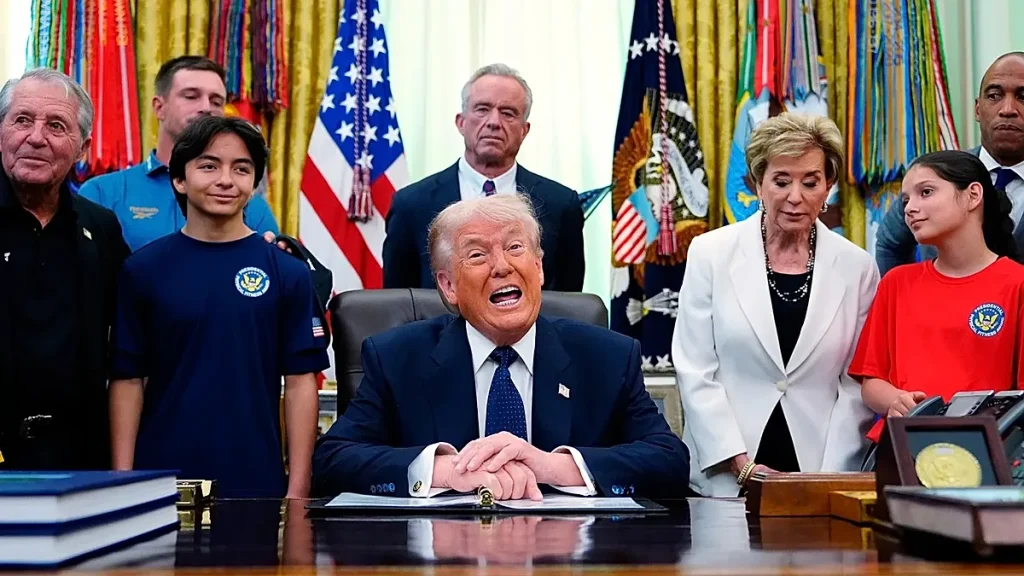
Donald Trump Urges Iran to Make Smart Move in US-Iran Peace Talks
Iran should do the smart thing – On Tuesday, US President Donald Trump called for Iran to “make the smart move” and negotiate a peaceful resolution with the United States, aiming to prevent further escalation. During a press conference in the Oval Office, Trump emphasized the administration’s goal of avoiding additional casualties, stating, “They should make the smart move because we don’t want to go in and kill people. Really don’t,” he added, signaling a shift in strategy. This appeal for diplomacy followed a period of heightened tensions, with the current ceasefire facing increasing pressure from both sides.
US and Iran Clash Over Strategic Maneuvers
Trump’s diplomatic overture contrasted with his Defense Secretary, Pete Hegseth, who had previously warned of a severe US retaliation against Iranian attacks on commercial shipping. Hegseth stressed that Iran’s actions in the Strait of Hormuz could not be tolerated, asserting that “any attack on American forces or innocent vessels will result in overwhelming American power.” This stance highlights the Pentagon’s readiness to act, though it does not negate the administration’s efforts to de-escalate the situation.
Meanwhile, General Dan Caine, a senior US military official, reiterated the military’s preparedness to engage Iran if necessary. “Our restraint does not mean we lack resolve,” Caine noted, underscoring the balance between diplomatic pressure and military readiness. Despite these warnings, both sides have acknowledged the current ceasefire as stable, with the US maintaining that the situation remains controlled and Iran citing its defensive stance as a key factor in preserving the truce.
Strait of Hormuz as a Critical Frontline
The Strait of Hormuz, a vital maritime corridor for global oil exports, has been a focal point of the dispute. Iran’s earlier closure of the strait in response to the US-Israeli campaign on 28 February disrupted energy supply chains, prompting the US to impose its own port blockade. The strategic maneuvering has since intensified, with each nation seeking to assert dominance over the waterway and its economic significance.
Trump’s decision to extend the ceasefire indefinitely reflects his broader effort to foster diplomatic dialogue. However, the conflict’s economic consequences continue to impact international markets, with energy prices fluctuating due to the standoff. The US has framed its actions as a necessity to safeguard commerce, while Iran argues its measures are justified in response to Western aggression, particularly the recent attacks on its vessels.
Recent Attacks and Iran’s Response
Recent assaults on commercial ships in the Strait of Hormuz have reignited concerns of a full-scale conflict. US military reports confirmed that Apache and Seahawk helicopters successfully intercepted six Iranian boats, preventing them from endangering international trade routes. These defensive operations were accompanied by missile and drone strikes that were repelled, showcasing American preparedness. However, the UAE reported fresh Iranian attacks on its territory, heightening the stakes of the ongoing standoff.
Iran’s chief negotiator, Mohammad Bagher Ghalibaf, also the parliament speaker, issued a warning against further US escalation. “We are aware that the status quo is unsustainable for America, even before it has begun,” he stated on X, emphasizing Iran’s resolve to protect its interests. Ghalibaf accused the US of targeting civilian ships, though Iran denied involvement in the attacks, insisting its actions were purely defensive.
The conflict has evolved into a dual challenge: Iran’s control of the strait and the US’s blockade of Iranian ports. Both sides have criticized each other’s measures, with the US positioning its efforts as a shield for global trade and Iran framing its actions as a response to Western aggression. Israel’s role as a key ally in the US-led campaign adds another layer of complexity to the diplomatic process.

