
Arson attack at Skopje synagogue linked to so-called Islamic State, officials say
Arson attack at Skopje synagogue linked to so-called Islamic State, officials say
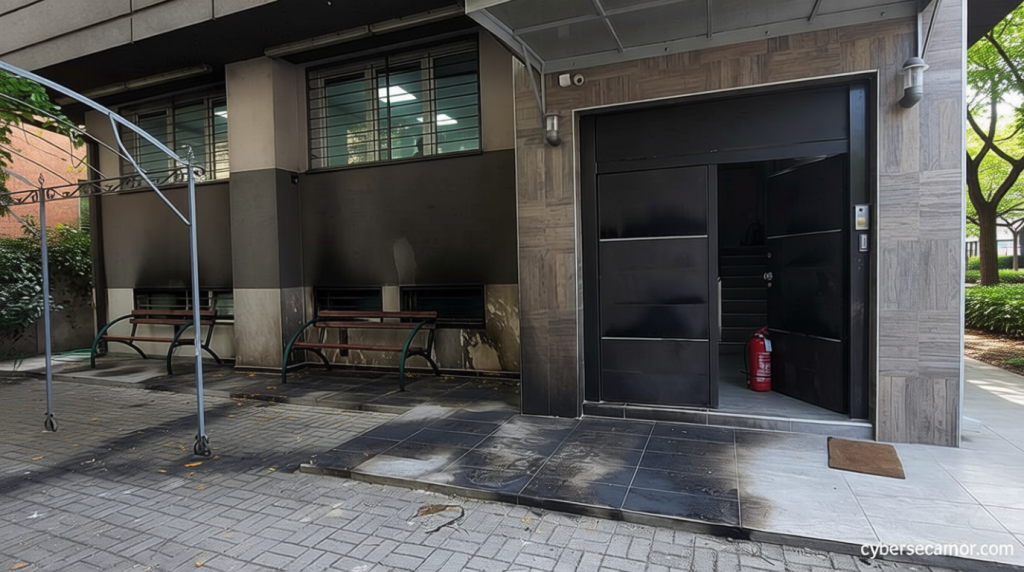
Arson attack at Skopje synagogue linked – During the recent Orthodox Easter celebrations, a fire broke out at a synagogue in Skopje, the capital of North Macedonia. The country’s intelligence agency confirmed that the incident is connected to the Islamic State group, stating that the attack was part of a coordinated effort by extremists aligned with the global network of the so-called Islamic State. No casualties were reported in the incident, which occurred on April 12, though the building’s entrance was severely damaged by flames.
According to the Agency for National Security, law enforcement conducted raids on several properties linked to the suspected group. Seven individuals were detained as part of this operation, with authorities believing they were affiliated with a radical organization sharing ideological ties with the Islamic State. The police revealed that two of the arrested individuals, aged 21 and 38, have been formally charged with terrorism-related crimes. “The individuals have been held for further proceedings,” said Goce Andreevski, a police spokesperson, in a video statement.
Surveillance footage provided by the Israeli embassy appears to capture the attack’s unfolding. The video allegedly shows two men wearing motorcycle helmets scaling a fence before dousing the building with fuel and igniting the front courtyard. The footage has been shared widely, offering a clear visual account of the extremists’ actions. Intelligence officials cited this evidence as critical in establishing a connection between the attack and the Islamic State group. “The footage highlights the meticulous planning and ideological motivation behind the act,” a statement from the Agency for National Security noted.
The local Jewish community expressed relief that the damage was limited, though they emphasized the symbolic impact of the attack. A representative from the community stated in a press release that the synagogue, a historic site, had sustained only minor structural damage. “While the physical harm is not extensive, the psychological effect on our community is profound,” the statement read. This sentiment was echoed by Israeli Foreign Minister Gideon Sa’ar, who praised the North Macedonian authorities for their swift response. “Their decisive actions to apprehend those responsible demonstrate a strong commitment to protecting Jewish communities across Europe,” Sa’ar wrote on X.
Following the incident, the Agency for National Security expanded its investigation, identifying a network of individuals actively promoting IS’s extremist agenda. These suspects are believed to have targeted religious sites to instill fear and disrupt social cohesion. The police’s raids uncovered evidence of premeditated planning, including maps of the city and communication records linking the group to IS’s broader operations. “This is not an isolated event but part of a larger strategy to intimidate minorities,” said an intelligence official during a press briefing.
The attack has reignited discussions about the threat posed by Islamic State affiliates in Europe. While the group has rarely launched direct attacks on Jewish communities in the Middle East, its ideology casts Judaism as a key adversary of Islam. This perspective has driven calls for targeted assaults on Jewish places of worship and individuals worldwide. The Skopje incident aligns with this pattern, as the extremists sought to demonstrate their influence beyond traditional hotspots like Syria and Iraq.
Officials highlighted the importance of early intervention in preventing larger-scale violence. “The arrest of these individuals underscores the necessity of proactive measures to counter radicalization,” remarked a senior government official. The police have pledged to intensify their efforts, focusing on dismantling networks that propagate IS’s message. “We will continue to investigate all possible links to ensure the safety of our citizens,” they added.
International reactions to the attack have been mixed but largely supportive. The Israeli embassy’s role in providing surveillance footage has been praised for its contribution to the investigation. Meanwhile, European Union officials have called for increased cooperation to address the spread of extremist ideologies. “This attack is a reminder that terrorism knows no borders,” stated a EU representative, emphasizing the need for unified action.
The Jewish community in North Macedonia has also called for public awareness campaigns to foster solidarity and resilience. “We hope this incident will strengthen our unity and encourage more people to support our cause,” said a community leader. Despite the threat, the community remains optimistic about the collaborative efforts between authorities and religious groups to safeguard their heritage.
Historically, Skopje has been a center of cultural and religious diversity, home to a significant Jewish population. The synagogue in question has served as a place of worship for generations, reflecting the city’s multicultural identity. The attack has stirred concerns about the erosion of this legacy, with some local activists urging greater protection for religious institutions. “Our synagogues are not just buildings; they are symbols of our shared history,” one activist explained during a public meeting.
The timing of the attack during Orthodox Easter has added a layer of symbolic meaning. As the Christian community celebrated the festival of resurrection, the extremists targeted a Jewish site, highlighting the broader conflict between religions. “This act was designed to provoke and to make a statement,” said an expert on religious extremism. The attack also coincided with a period of heightened political tension in the region, with some analysts suggesting it was a calculated move to exploit existing divisions.
Investigations into the attack are ongoing, with authorities examining potential motives and funding sources. The police have released additional details about the suspects’ backgrounds, indicating that some had ties to extremist groups operating in the Balkans. “These individuals were not only planning the attack but also coordinating with others to spread fear,” said the police spokesperson. The arrests have led to a renewed focus on monitoring radical activities in the country’s urban centers.
As the investigation progresses, the Agency for National Security has emphasized the need for continued vigilance. “We must remain alert to the tactics used by extremist groups to target religious minorities,” the agency stated in a recent report. The incident has also prompted a review of security measures at religious sites, with plans to enhance surveillance and emergency protocols.
In the broader context, the attack reflects the Islamic State’s strategy of spreading its influence through symbolic acts of violence. While the group has not launched large-scale attacks in Europe, its affiliates have been responsible for smaller incidents, including the targeting of mosques and cultural landmarks. The Skopje attack serves as a warning of the group’s global reach, underscoring the importance of international collaboration in countering extremism.
Religious leaders from various faiths have condemned the attack, calling for unity in the face of terrorism. “We must stand together to protect our communities and our shared values,” said a statement from the Christian, Muslim, and Jewish leaders in Skopje. This collective response is seen as a critical step in mitigating the impact of extremist ideologies and fostering a sense of solidarity among diverse groups.

