
Bank of England holds rates as Iran war sends oil prices to new highs
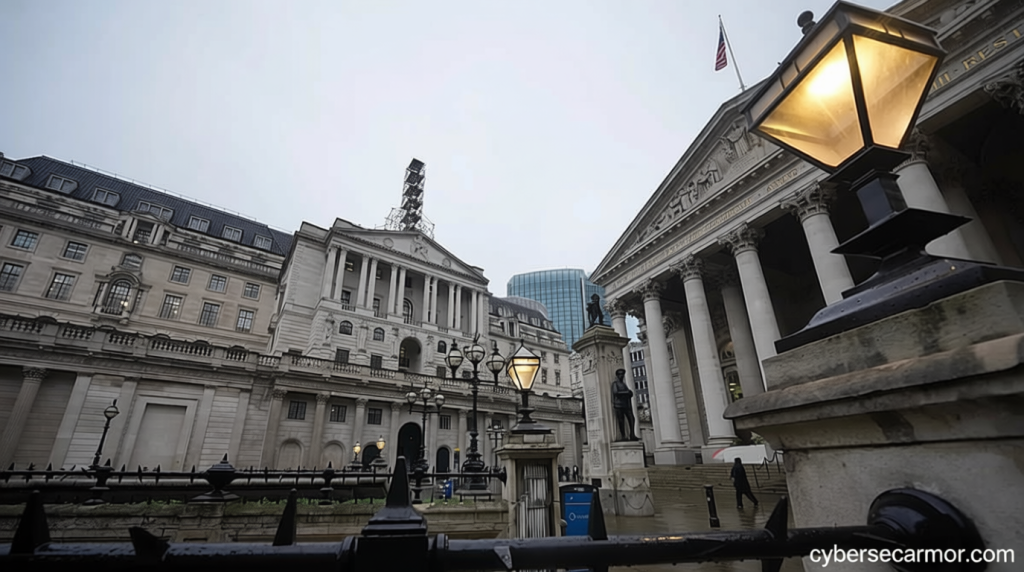
Bank of England Holds Rates as Iran War Drives Oil Prices to Record Levels
Bank of England holds rates as Iran – The Bank of England opted to maintain its benchmark interest rate at 3.75% during its latest meeting, a decision influenced by the escalating tensions in Iran and the strategic closure of the Strait of Hormuz by Tehran. This move came as a surprise to few, given the recent actions of the US Federal Reserve, which kept rates steady for the third consecutive time the previous day, and Japan’s central bank, which also held its rates unchanged earlier in the week. The decision underscores the growing uncertainty in global markets due to the conflict, which has disrupted supply chains and sent energy prices soaring.
Brent crude, the international standard for oil pricing, experienced a sharp rise during Thursday’s session, briefly surpassing $126 (€108) per barrel. This marked the highest level since the aftermath of Russia’s full-scale invasion of Ukraine, which had previously caused a spike in energy costs. Traders are now anticipating that the Strait of Hormuz, a vital chokepoint for global oil shipments, will remain closed for an extended period. With approximately a fifth of the world’s crude oil passing through this narrow waterway during peacetime, any prolonged disruption could have far-reaching consequences for energy markets and inflationary pressures worldwide.
Before the conflict erupted on 28 February, financial analysts anticipated a rate cut from the Bank of England as inflation appeared to be on a downward trajectory toward the 2% target. However, the situation has shifted dramatically. The war has created new economic challenges, leading to a sharp increase in energy prices and revising earlier projections. UK inflation, which had been expected to stabilize, has instead climbed to 3.3% in March, the highest level in three months. This surge is attributed to the rapid rise in fuel costs, which have intensified since the crisis began.
The Monetary Policy Committee (MPC), comprising nine members, is likely to have aligned on the decision to hold rates. However, there may be a minority of policymakers considering a preemptive increase of 25 basis points to counteract potential further inflation. Economists suggest the committee could signal future tightening if the Middle East conflict continues to drive prices higher, despite the fragile ceasefire currently in place. Sandra Horsfield, an economist at Investec, highlighted the ongoing impact of the conflict, stating that “the repercussions of the war are still evident, and the uncertainty surrounding its resolution persists at high levels.”
While the rate decision itself is significant, the Bank’s quarterly economic forecasts, released alongside the announcement, may carry more weight. These projections, the first since the US and Israel’s airstrikes on Iran, are expected to reflect heightened inflation expectations and revised growth forecasts. The data will be crucial for policymakers and investors, as it provides insight into the Bank’s outlook for the coming months. Governor Andrew Bailey’s press conference will further clarify the committee’s stance, emphasizing the balance between inflation control and economic growth.
The UK government, led by Chancellor Rachel Reeves, faces mounting pressure to adjust its cost-of-living strategies in light of the crisis. Reeves has indicated her willingness to intervene with support measures for households and businesses if necessary. This flexibility comes as the Middle East conflict has disrupted the initial plans for fiscal stimulus, forcing a reassessment of how to manage inflation and public spending. The chancellor’s remarks suggest a readiness to act, even if the Bank of England’s decision to hold rates signals a cautious approach.
Analysts are closely monitoring the interplay between energy prices and inflation, noting that the current situation could test the resilience of monetary policy. The sharp increase in oil prices has not only affected the UK but also global markets, where central banks are navigating similar challenges. The Federal Reserve’s decision to maintain rates has been seen as a sign of confidence in the economy’s stability, but the Bank of England’s choice reflects the unique pressures faced by the UK, including its heavy reliance on imported energy and the vulnerability of its supply routes.
Historically, the Strait of Hormuz has been a focal point for energy security, with its strategic location enabling the transport of roughly 20% of the world’s crude oil. The closure of this passage during the conflict has amplified fears of supply shortages, prompting traders to adjust their risk assessments. While the immediate impact of the blockade is clear, the long-term implications remain uncertain. This uncertainty has kept energy markets volatile, with prices fluctuating in response to geopolitical developments and supply chain adjustments.
The Bank of England’s rate decision is part of a broader trend in global monetary policy, where central banks are balancing inflation concerns against economic slowdown risks. The war in Iran has added an extra layer of complexity, forcing policymakers to consider not just domestic factors but also international ones. As energy costs continue to climb, the UK’s inflation rate may face further upward pressure, potentially influencing the Bank’s next steps. The MPC’s potential for future rate hikes depends on how the conflict evolves and whether energy prices stabilize in the coming weeks.
Meanwhile, the financial sector is bracing for the Bank’s quarterly forecasts, which could influence investor sentiment and market behavior. The release of these projections will provide a clearer picture of the Bank’s assessment of the economy’s trajectory, including its capacity to absorb higher energy costs. Analysts will be looking for signs of a more hawkish stance, as the committee aims to prevent inflation from rising beyond acceptable levels. The interplay between these factors will shape the UK’s economic landscape and determine the timing of any future rate adjustments.
Chancellor Rachel Reeves’ cost-of-living initiatives, which were designed to alleviate pressure on households, have been overshadowed by the sudden spike in energy prices. The government is now tasked with evaluating how to recalibrate its support programs in response to the crisis. This includes assessing the impact of higher fuel costs on consumers and businesses, as well as exploring additional fiscal measures to cushion the economy. Reeves’ statements indicate a commitment to adapt, but the scale of the response will depend on the duration of the conflict and its effect on global oil markets.
As the situation in the Middle East remains fluid, the Bank of England and other central banks must remain vigilant in their policy decisions. The potential for further inflationary pressures, combined with the uncertainty of geopolitical outcomes, means that monetary policy will continue to be a key tool in managing economic stability. The rate decision and associated forecasts will serve as a barometer for market confidence, signaling whether the UK is prepared to withstand the ongoing challenges posed by the conflict.
Ultimately, the Bank of England’s decision to hold rates reflects a delicate balancing act between addressing inflation and supporting economic growth. While the immediate focus is on stabilizing the current situation, the long-term outlook will depend on how the Middle East conflict unfolds and its impact on global energy prices. The coming weeks will be critical in determining the next steps for monetary policy, as well as the broader economic implications of the war in Iran.
“The conflict’s impact is still being felt acutely, and the unpredictability of its resolution adds to the inflationary risks,” said Sandra Horsfield. “This uncertainty will likely persist, influencing both consumer behavior and business investment decisions.”
With the oil price surge and the strain on supply routes, the Bank of England’s approach to inflation will need to adapt. The committee’s ability to anticipate and respond to these challenges will determine the effectiveness of its monetary strategy in the face of ongoing geopolitical instability. As the situation develops, the UK

