
Louis Arnaud, former French hostage in Iran, describes Evin prison as ‘the den of evil’
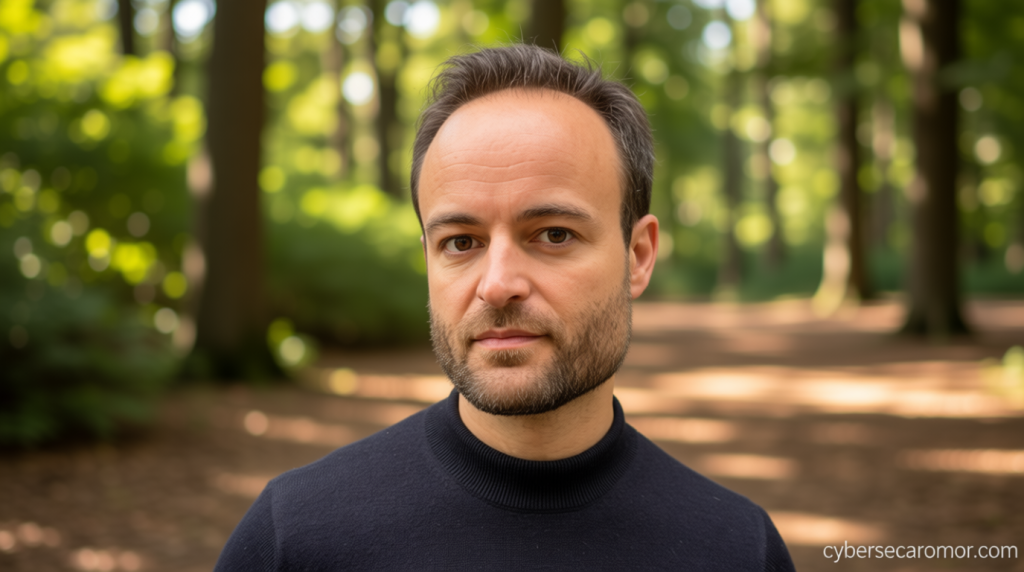
Louis Arnaud, former French hostage in Iran, describes Evin prison as ‘the den of evil’
Louis Arnaud former French hostage in Iran – Louis Arnaud, a 35-year-old French national, endured two years of detention in Tehran’s Evin prison, a facility long known for its brutal treatment of prisoners. His arrest by the Islamic Revolutionary Guards Corps (IRGC) occurred on 28 September 2022, marking the beginning of a harrowing experience that would leave lasting scars. In a recent interview with Euronews, Arnaud recounted his time in the prison, likening it to a place where “the den of evil” thrived. He highlighted the deplorable conditions in section 209, a section designated for political and foreign detainees, as a key factor in his mental and emotional struggle.
Incarceration and Accusations
Around the time of his arrest, Arnaud was on a global journey, only to have his travels abruptly halted. The charges against him were linked to the mass protests that erupted in Iran following the death of Mahsa Amini, a 22-year-old Kurdish-Iranian woman who lost her life in police custody. The protests, which were fueled by her tragic demise, led to widespread demonstrations against the regime’s strict enforcement of the hijab. Arnaud was accused of participating in these protests, though he has consistently denied the allegations. His case is emblematic of the broader crackdown on dissent that followed Amini’s death, as the government sought to quell unrest through incarceration.
Arnaud’s time in Evin was marked by an oppressive environment where prisoners were confined to windowless cells with minimal light. “The lights dissolve any notion of time passing; they constantly search your body,” he explained, describing the relentless surveillance that left no room for privacy. In these cells, detainees had to endure the physical and psychological toll of their surroundings. “In your cell, there’s nothing; it’s devoid of everything. You eat, you live, you sleep on the floor,” he said. The only respite was a weekly walk, blindfolded and accompanied by the sound of footsteps echoing through the corridors, offering a fleeting glimpse of fresh air and sunlight.
Prison Life and Psychological Toll
Arnaud’s ordeal was not limited to the physical hardships. He detailed how the prison’s methods were designed to break prisoners’ spirits. “All this dehumanisation and extreme pressure in prison never stopped, even when you were asleep,” he said. “The goal was to force out fantasy espionage confessions.” Despite his pleas of innocence before Iranian judges, the system seemed indifferent to his fate. His experience mirrored that of Cécile Kohler and Jacques Paris, the last French hostages officially held by the Iranian regime, who were released on 8 April 2026 after months of house arrest at the French embassy in Tehran.
Though all three were confined in the same prison, they never met in person. Arnaud shared a unique moment of connection during his final days behind bars. “On my last night in prison, I was thrown into a cell I’d never seen before, where I found a poem inscribed on the wall,” he recounted. The poem, attributed to French poet Gérard Nerval, was a silent message from Cécile, who had a degree in literature. “I knew straight away that she had written it,” Arnaud said. This discovery became a powerful symbol of resistance, as it reminded him of the creative spirit that could persist even in the most dire circumstances. “I told myself that she had to save herself through literature and poetry,” he reflected. “It was a particularly powerful moment because as I caressed the poem, it was as if she had left it there for a gate to open. It was as if I was with her at that moment.”
Symbolic Gestures of Resistance
The protests sparked by Mahsa Amini’s death had a ripple effect, even reaching the prison walls. “At first, the sentiment was ‘let’s protest, although we know it won’t achieve anything, we’ll lose anyway,’” Arnaud recalled. “Then there was this change of perspective, where people were saying, ‘It is actually possible, we can achieve a revolution, and we must have one.'” This shift in mindset was not limited to the outside world. Inside the prison, the spirit of rebellion lingered, with detainees expressing hope that their suffering might ignite a broader movement.
However, the regime’s response to the 2022 protests was swift and severe. In January 2026, the country once again experienced widespread unrest, driven by growing anger toward the authoritarian government and the worsening economic crisis. Human rights organizations reported that security forces had arrested at least 50,000 people and killed thousands in the process. Despite these efforts, Arnaud noted that the cycle of protests continued. “The revolution of 2022 failed and in January 2026, Iranians attempted to stage one again,” he said. “In any case, Evin remains not just a prison, but also a bastion of resistance.”
Resilience and Reflection
Arnaud’s survival in the prison was not just a matter of physical endurance but also a testament to his inner strength. In his book “La Résistance Intérieure,” he explores how the bonds formed with fellow detainees shaped his resilience. One particularly impactful encounter was with a prisoner who had participated in the 1979 revolution. “He is a man who, even today, is regularly arrested and told he will be killed,” Arnaud said. “Yet in prison, he was always smiling. It was as if everything slipped through his fingers, as if death threats had no hold on him.”
This interaction prompted Arnaud to reevaluate his own attitude within the prison. “I realised I was obedient, lowered my eyes and begged to call my family,” he admitted. “But then I understood even when you are in chains, even in the worst prison in the world, it’s still possible to refuse servitude, to refuse to be the victim that they want to impose on us.” This realization became a turning point for him, allowing him to reclaim his identity and resist the regime’s attempts to subdue him. “You don’t have to be a victim in life,” he concluded, emphasizing the importance of maintaining one’s dignity even in the face of adversity.
Legacy of Evin
Arnaud’s experiences in Evin have left a lasting impact, not only on himself but also on the broader narrative of resistance within Iran. His account serves as a reminder of the psychological warfare conducted by the regime, where the relentless search for confessions and the stripping of basic human rights became tools of control. The prison’s history as a site of torture and executions continues to resonate with those who have passed through its doors, shaping their perception of the Iranian government’s approach to dissent.
As the country faces new waves of protests and repression, Arnaud’s story remains relevant. His journey from a captor to a symbol of resilience highlights the enduring spirit of those who refuse to yield. The poem left behind by Cécile Kohler is a poignant example of how art and literature can thrive even in the darkest of places. “It was as if she had left it there for a gate to open,” Arnaud said, capturing the essence of a shared struggle that transcends borders and time. The legacy of Evin, therefore, is not just one of suffering but also of unwavering determination to resist oppression, even in the most challenging conditions.

