
Europe fuel prices before the Iran war and after the ceasefire: Where did they rise most?
Europe fuel prices before the Iran war and after the ceasefire: Where did they rise most?
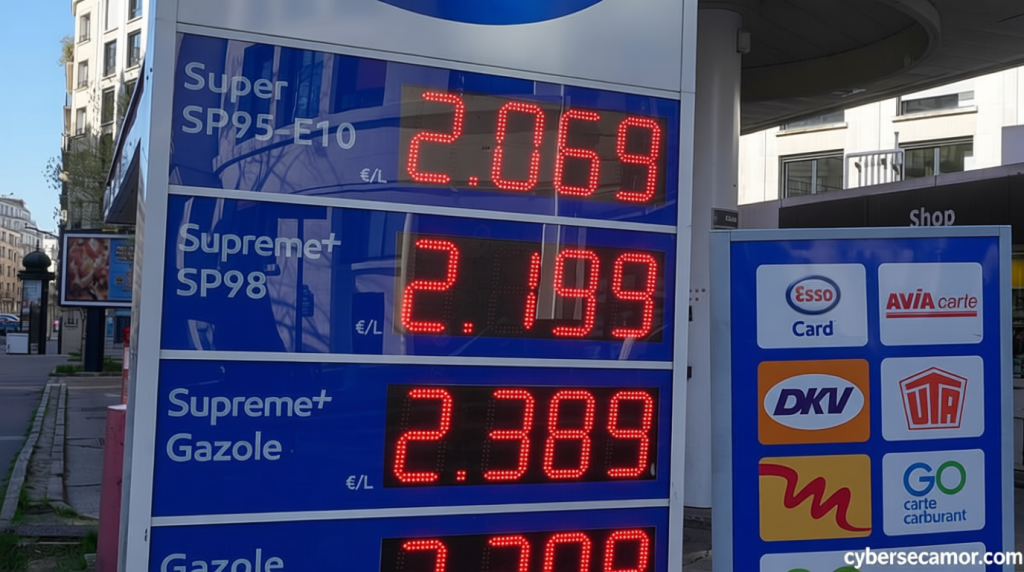
As of 20 April 2026, the EU’s average petrol price has climbed 12% since the U.S.-Israel strikes on Iran in late February. While a ceasefire was agreed between Washington and Tehran, fuel costs have not yet dipped back to their pre-conflict levels. The conflict triggered a surge in prices globally, with Europe witnessing significant increases. Prices stabilized slightly after the ceasefire, but remain elevated compared to earlier benchmarks.
Escalation and Ceasefire Impact
On 28 February 2026, the U.S. and Israel initiated a sequence of attacks targeting Iran. Tehran retaliated with coordinated strikes across the region, intensifying tensions. A temporary ceasefire was reached on 8 April, yet its durability remains uncertain. The turmoil drove oil prices to peak, followed by a modest decline, though the overall trend continues upward.
Regional Price Fluctuations
According to the European Commission’s Weekly Oil Bulletin, fuel costs varied across the EU. Petrol (Euro-super 95) prices rose from €1.64 to €1.83 per litre, reflecting a 12% surge. Belgium, Czechia, and Bulgaria experienced the sharpest gains, each climbing 22%. Among major economies, France saw an 18% increase, Germany 15%, while Italy and Spain recorded more moderate rises of 7% and 3%, respectively. Malta saw no change in petrol prices, highlighting its unique position.
Diesel Price Trends
Diesel (gas oil) prices climbed even more sharply, rising from €1.59 to €2.01 per litre — a 26% increase. Bulgaria led the rise with a 43% jump, followed by France (36%), Estonia (35%), and Belgium (33%). Cyprus, Croatia, and Latvia also faced diesel inflation exceeding 30%. In contrast, Spain reported a 27% rise, surpassing the EU average, while Malta remained stable at €1.21 per litre.
Price Rankings and Exchange Rates
As of 20 April, the Netherlands holds the highest petrol price in Europe at €2.28 per litre, closely followed by Denmark (€2.22), Germany (€2.11), Greece (€2.03), and France (€2.02). Malta is the cheapest at €1.34, with Poland and Bulgaria at €1.41 and €1.47, respectively. For diesel, the Netherlands leads at €2.30, with Finland (€2.25), France (€2.24), Denmark (€2.22), and Belgium (€2.19) rounding out the top five. Spain, however, is the sole major economy below the EU average for diesel prices.
Taxes and Market Dynamics
Taxes contribute substantially to fuel pricing in Europe. Eurostat data from 2024 shows that 67% of new car registrations were for petrol vehicles, 17% for diesel, and 14% for electric models. This distribution underscores the ongoing influence of taxation on consumer costs. Notably, exchange rate fluctuations may have distorted results in non-euro area nations.
Weekly data since the start of 2026 illustrates how the conflict accelerated fuel price inflation across the EU and its largest economies. Petrol prices climbed from €1.64 in early February to nearly €1.90 by late March, while diesel increased from €1.60 to over €2.06. Both fuels peaked in early April, with diesel briefly surpassing €2.10. Post-ceasefire, prices eased slightly, but remain well above pre-strike levels.

