
‘Nature has performed a factory reset’: Chernobyl has flourished into an unlikely wildlife refuge
‘Nature has performed a factory reset’: Chernobyl has flourished into an unlikely wildlife refuge
The Return of Wild Life
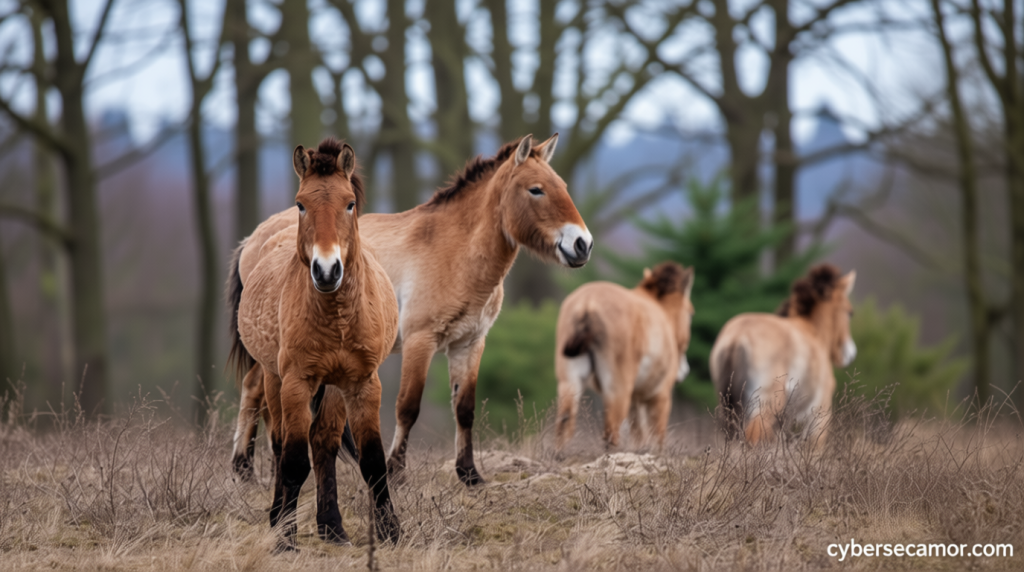
Forty years after the nuclear disaster, the Chernobyl exclusion zone—spanning an area larger than Luxembourg—has become a sanctuary for untamed species. Radiation levels, once lethal to humans, now allow animals to thrive in the region. Among them, Przewalski’s horses roam freely, their sand-coloured coats and stocky frames a stark contrast to the desolate surroundings.
The 26 April 1986 explosion at the Ukrainian plant displaced tens of thousands of people, forcing entire towns to evacuate. It was the most devastating nuclear incident in history. Yet, in the absence of human activity, the area has transformed into a haven for wildlife. Wolves prowl the forested expanse, while brown bears have reappeared after more than a century. Populations of lynx, moose, and red deer have rebounded, alongside stray dog packs that now roam the land.
A Species Reborn
Przewalski’s horses, native to Mongolia, were once on the brink of extinction. Their reintroduction to Chernobyl in 1998 was an experiment, but it has yielded surprising results. These horses, known as ‘takhi’ in their homeland (‘spirit’), possess 33 pairs of chromosomes, distinct from the 32 found in domestic breeds. The modern name originates from a Russian explorer who first documented them.
“The fact that Ukraine now hosts a free-ranging population is something of a small miracle,” says Denys Vyshnevskyi, the zone’s lead nature scientist. “Nature recovers relatively quickly and effectively.”
With human interference diminished, parts of the exclusion zone mirror the European landscapes of centuries ago. Trees now grow through abandoned structures, roads are overtaken by forest, and weathered Soviet signs stand beside overgrown wooden crosses in cemeteries. Hidden cameras capture the horses adapting in novel ways, using crumbling barns and deserted homes as shelters against harsh weather and insects.
Tracking these animals requires patience. Vyshnevskyi often spends hours driving alone, setting motion-sensitive cameras in camouflaged casings. Despite lingering radiation, scientists have not observed widespread animal deaths, though subtle genetic changes are evident. Frogs in high-radiation zones exhibit darker skin, and birds in those areas are more prone to cataracts.
War and the Environment
Russia’s 2022 invasion disrupted the peace, with troops advancing through the exclusion zone. Military activity sparked fires that spread across forests, and extreme winters took a toll on the ecosystem. Power grid damage left managed areas without resources, leading to increased instances of fallen trees and dead animals—casualties of both harsh conditions and hastily erected fortifications.
“Most forest fires are caused by downed drones,” explains Oleksandr Polischuk, who leads a firefighting unit in the zone. “Sometimes we have to travel dozens of kilometres to reach them.”
Fires release radioactive particles into the air, complicating the region’s ecological balance. While the exclusion zone was once an accidental refuge, it has evolved into a heavily monitored military corridor. Concrete barriers, barbed wire, and minefields now define the landscape, which some describe as possessing a haunting beauty.
Personnel rotate through the area to minimize radiation exposure. Chernobyl is expected to remain inaccessible for generations, a place too perilous for people yet teeming with life. For conservationists, the transformation is a testament to nature’s resilience. “This land was once heavily used—agriculture, cities, industry—but now it’s a living archive of what the wild once was,” Vyshnevskyi reflects.

