Trump overstates election weaknesses in primetime speech: 5 takeaways

Trump’s Election Security Claims Face Scrutiny Amid Midterm Preparations
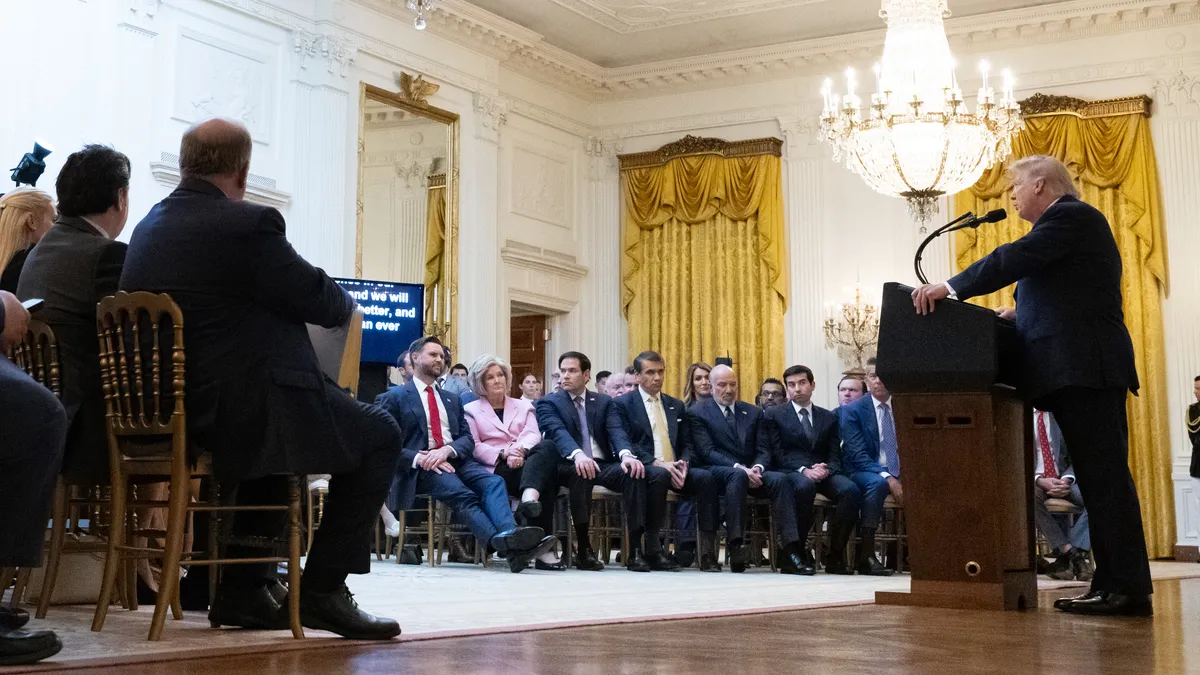
Cybersecarmor.com – As the 2026 midterm elections approach with only four months remaining on the calendar, President Donald Trump has intensified his focus on perceived vulnerabilities within America’s electoral framework. During a primetime address delivered on July 16, the president presented what he characterized as significant weaknesses in voting systems, while simultaneously pointing fingers at foreign adversaries, particularly China, for alleged interference in previous electoral cycles.
Allegations of Chinese Meddling
Central to Trump’s presentation was the assertion that China actively worked to undermine the 2020 presidential election, which he continues to contest despite official certification of his defeat to Joe Biden. The president cited a collection of declassified intelligence documents suggesting that Beijing attempted to compromise American voter databases, allegedly stealing approximately 220 million voter files in the process.
“Every American deserves to know that when they cast their vote, that vote will be counted accurately in a system, and that is to make that system secure ‒ one where cheating and interference are not just difficult, but virtually impossible,” Trump declared. “Unfortunately, the system we have today falls catastrophically short of that standard.”
According to the president’s claims, Chinese efforts extended beyond mere data theft. He suggested that Beijing also sought to influence American business executives and members of the press, attempting to shape public perception through multiple channels simultaneously.
Contradictory Intelligence Assessments
Despite Trump’s forceful presentation, many of the documents he referenced do not substantiate his more dramatic assertions regarding widespread electoral vulnerabilities. A significant portion of the information discussed during the address originated from reports that were already publicly available, revealing that voter files acquired by China consisted mainly of records that had been accessible to the general public.
Furthermore, Trump’s allegations stand in direct opposition to established intelligence community evaluations. In March 2021, Avril Haines, serving as director of national intelligence under the Biden administration, published a comprehensive assessment indicating that intelligence agencies possessed “high confidence” that China refrained from actively interfering with the 2020 election outcome.
“Those responsible for sounding the alarm instead kept the information secret and hidden,” Trump said in an accusation against his own intelligence community when he was president in 2020.
The March 2021 report from the Council on Foreign Relations further clarified that China ultimately determined neither a Trump victory nor a Biden win offered sufficient advantage to justify the risk of detection. However, the report did note a minority perspective expressed by the National Intelligence Officer for Cyber, which suggested China undertook certain measures to weaken Trump’s reelection prospects, primarily through social media platforms and public statements.
Legislative Priorities and Political Context
During his approximately 25-minute address, Trump emphasized the urgent need for congressional action on the SAVE America Act, legislation that would mandate proof of citizenship for voter registration. This bill has emerged as his primary legislative objective, particularly given the challenging political landscape facing Republicans heading into the fall elections.
Experts predict that Republican congressional majorities could face significant erosion, largely attributed to Trump’s approval ratings, which currently sit at approximately 37 percent. The president framed the passage of this voting legislation as essential to addressing what he described as a crisis in election security.
“Most importantly, addressing this crisis of election security demands that Congress must pass the Save America Act,” Trump stated. “How easy is that to do, unless you want to cheat,” he added. “The only reason you wouldn’t do it is you want to cheat because your policies are so bad and your candidates are so pathetic.”
Trump’s accusations regarding Chinese election interference arrive shortly after his May visit to China, where he met with President Xi Jinping, whom he has publicly characterized as both a “friend” and a “great leader.” This diplomatic engagement adds an interesting dimension to his current narrative about foreign interference in American democratic processes.
The president also claimed that elements within what he termed the “deep state” during his first term deliberately concealed evidence of Chinese meddling. He argued that government officials who should have alerted the public instead maintained secrecy regarding these alleged threats to electoral integrity.
As the nation moves closer to the 2026 midterms, Trump’s continued emphasis on election security and his persistent questioning of the 2020 results suggest that these themes will likely dominate political discourse for months to come. Whether his claims will resonate with voters or face continued skepticism from intelligence experts remains to be seen as the election season unfolds.