What happens when Senate returns Monday after Graham’s death?

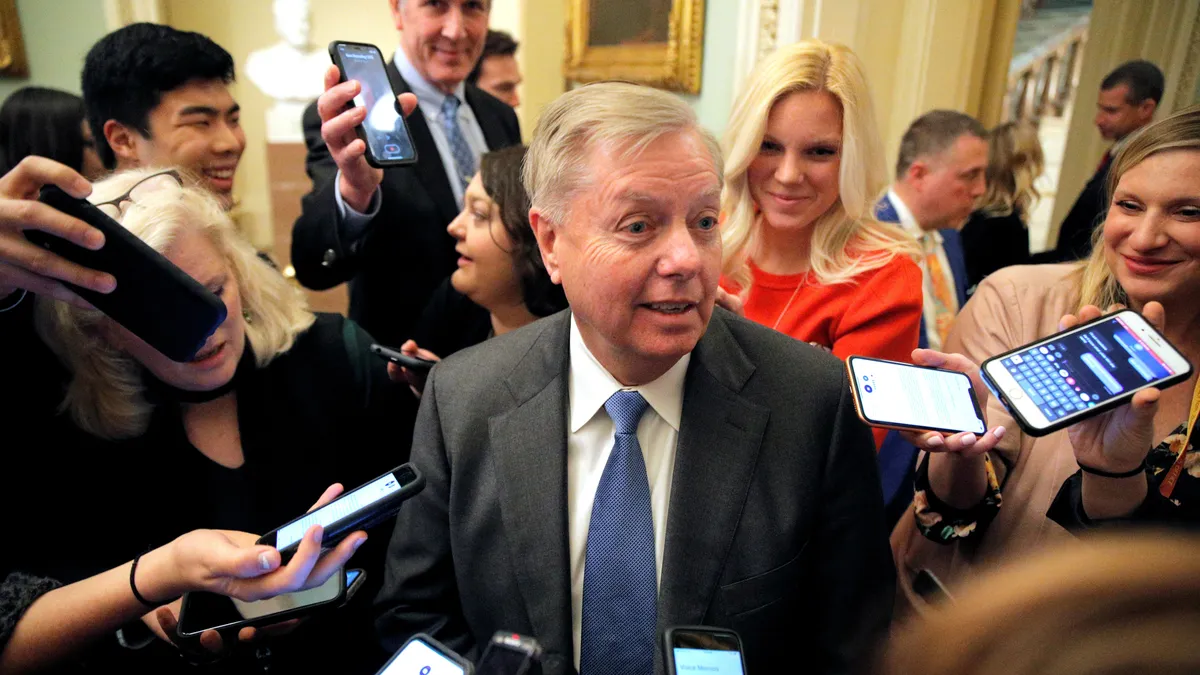
Senate Chamber Prepares to Honor Late Lindsey Graham Following His Passing
Cybersecarmor.com – The United States Senate is scheduled to reconvene on Monday, July 13, marking its first official session since the unexpected loss of Senator Lindsey Graham. This gathering will serve as a moment for lawmakers to pay tribute, reflect, and consider the lasting impact of one of the chamber’s most prominent Republican figures.
Graham passed away on July 11 at the age of seventy-one, following what his office described as a “brief and sudden illness.” Throughout his decades-long career, he established himself as a formidable presence in Washington, particularly known for his steadfast support of President Donald Trump and his expertise in areas ranging from foreign affairs to judicial appointments and defense matters.
“He’s a tough one to lose,” Trump told NBC’s “Meet the Press.” “He was great. He was unique in every way.”
The senator’s departure creates a void that extends well beyond simply filling an empty chair in the Capitol. His absence will be felt across multiple committees and in the broader political landscape.
Capitol Traditions and Mourning Procedures
One of the most immediate visual symbols of Graham’s passing will appear on the Senate floor. According to longstanding Senate custom, the desk belonging to a deceased member is adorned with black crepe bunting accompanied by floral arrangements. The chamber typically concludes each day’s proceedings with a moment dedicated to honoring the late senator.
Additionally, flags throughout the Capitol complex will be flown at half-staff, and fellow legislators will have opportunities to deliver remarks reflecting on Graham’s life, professional achievements, and public service. Federal legislation mandates that flags be lowered to half-mast following the death of any member of Congress, a requirement already being observed at both the White House and the U.S. Capitol.
South Carolina Governor Henry McMaster has similarly directed that the flag at the State Capitol in Columbia be lowered in tribute to his state’s former senator.
Committee Leadership and Legislative Impact
Monday’s session will also initiate discussions regarding the practical consequences of Graham’s death on Senate operations. As chairman of the Senate Budget Committee and a member of both the Judiciary and Appropriations committees, Graham occupied several of the chamber’s most consequential positions.
While formal succession arrangements have not yet been revealed, Republican leadership is anticipated to address questions concerning committee chairmanship and the timeline for selecting a replacement to fill Graham’s Senate seat.
One notable upcoming event involves Acting Attorney General Todd Blanche, President Trump’s candidate to head the Department of Justice. Blanche is scheduled to testify before the Senate Judiciary Committee this week—a hearing where Graham would have played a crucial role as a supportive voice.
Broader Context: McConnell’s Absence
Complicating matters further, Kentucky Senator Mitch McConnell, another senior Republican leader, announced on July 12 that he has been unable to attend Senate sessions for approximately one month due to a fall and subsequent pneumonia diagnosis.
The Senate’s return on July 13 represents the first formal assembly since Graham’s death was publicly announced. This session will provide Democrats and Republicans with their initial opportunity to publicly acknowledge and reflect upon the legacy of one of the institution’s most recognizable figures.
A Career of Public Service
Graham’s journey to the Senate began with his service as an Air Force lawyer and his membership in the South Carolina Air National Guard. He was first elected to the U.S. Senate in 2002, having previously won a seat in the House of Representatives in 1994. Over nearly three decades in Congress, he became known for his bipartisan approach on certain issues while maintaining strong conservative credentials on others.
His passing has prompted an outpouring of condolences from colleagues across the political spectrum, many of whom highlighted his dedication to his constituents and his willingness to work across party lines when necessary. As the Senate moves forward, lawmakers will need to navigate both the emotional weight of their loss and the practical challenges of adjusting committee assignments and leadership structures in the coming weeks and months.