Congress should restrict birthright citizenship, House speaker says

Congress Should Restrict Birthright Citizenship, House Speaker Says
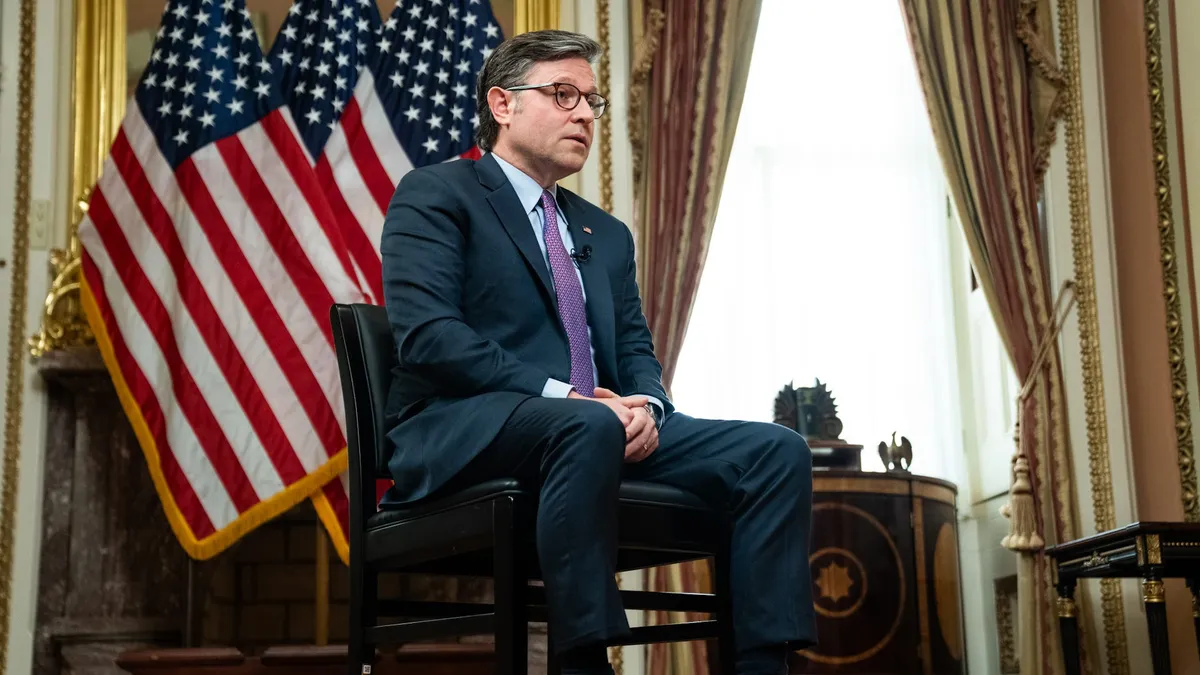
Cybersecarmor.com – On July 5, House Speaker Mike Johnson emphasized the need for legislative action to address birthright citizenship during a Fox News interview. The Louisiana Republican stated that the U.S. Congress should pursue measures to limit automatic citizenship at birth, following the Supreme Court’s decision to overturn an executive order from President Donald Trump that aimed to redefine U.S. citizenship criteria. Johnson’s remarks came amid growing political pressure to tackle what he described as a systemic issue within the nation’s immigration framework.
Birthright Citizenship and the Supreme Court Ruling
The Supreme Court’s ruling on Trump’s executive order ignited debates over the constitutional basis of birthright citizenship. The decision invalidated Trump’s attempt to restrict eligibility for automatic citizenship by revising the interpretation of the 14th Amendment’s “subject to the jurisdiction” clause. Chief Justice John G. Roberts Jr., writing for the majority, affirmed that children born to undocumented parents in the United States still qualify for citizenship under the amendment. This clause, central to the ruling, ensures that anyone born on U.S. soil is considered a citizen, regardless of their parents’ immigration status.
“It’s a threat to the rule of law and national security. We do need to address it,” Johnson stated during the interview.
Johnson argued that the current system allows for “birth tourism,” a term used by officials to describe the practice of parents temporarily entering the U.S. to give birth, thereby securing citizenship for their children. He claimed this phenomenon undermines the value of American citizenship, creating an incentive for individuals to exploit immigration rules for personal gain. The House speaker did not specify which legislative proposal would address the issue, but he confirmed that Republicans are actively considering multiple options.
“If there is a bill that can fix that, we’ll advance it immediately,” Johnson added, underscoring the urgency of the matter.
Legislative Efforts and Constitutional Challenges
While the Supreme Court’s decision preserved birthright citizenship, it opened the door for legislative reforms. Last year, Republican lawmakers Sen. Lindsey Graham of South Carolina and Rep. Brian Babin of Texas introduced a bill to narrow the scope of automatic citizenship, acknowledging the 14th Amendment’s provision but proposing exceptions for children born to individuals in the country illegally. This approach seeks to balance constitutional protections with the goal of reducing perceived abuses.
The number of children born to birth tourists remains a contentious topic. Government data on the matter is incomplete, with researchers estimating annual births to such families between 2,000 and 39,000. A group of 140 university professors, however, contested these figures, asserting that birth tourism constitutes a “negligible” portion of U.S. births. Their argument highlighted the broader debate over whether the practice is a significant problem or a minor anomaly in the immigration system.
Republicans and Democrats have diverged in their views on the importance of curbing birth tourism. Sen. Ted Cruz, a Texas Republican, previously criticized the issue as a “blatant abuse of our immigration laws,” while Sen. Peter Welch, a Vermont Democrat, called it a “pretty marginal issue.” This ideological split reflects differing priorities in how the nation defines its citizenship criteria.
SAVE America Act and Budget Reconciliation
In the same interview, Johnson announced plans to push the SAVE America Act through budget reconciliation, a procedural tool that allows for faster legislative passage. The bill, backed by Trump, aims to reform the electoral process by tightening rules for voting eligibility and campaign finance. Johnson framed the act as a critical step toward aligning the country’s immigration and voting policies, stating, “We’re going to try one more time on a budget reconciliation bill, and I think that will be the way to get it through the Senate, and finally to the president’s desk.”
Earlier this year, the Senate parliamentarian Elizabeth MacDonough had already stalled the SAVE America Act by ruling it violated budget reconciliation rules. The strict procedural constraints of the process prevent “extraneous” legislation from being included in the budget, a hurdle Johnson hopes to overcome. Despite the setback, he expressed confidence in the bill’s eventual passage, citing its alignment with the president’s top priorities.
Johnson also mentioned the recent procedural revolt by a faction of Republicans, led by Rep. Anna Paulina Luna of Florida, which delayed House business and forced a recess. He defended the move, saying, “I just decided it was best to send everybody home to go celebrate July Fourth in their districts. We’ll come back, gather everybody together,” emphasizing the need for focused legislative action.
Legal and Political Implications
The Supreme Court’s ruling has broader implications beyond birthright citizenship. By striking down Trump’s executive order, the decision reinforced the constitutional protections for automatic citizenship, requiring any reform to be achieved through congressional legislation. This means amending the 14th Amendment would necessitate support from two-thirds of both chambers of Congress and ratification by three-fourths of state legislatures, a formidable political task.
Justice Brett Kavanaugh’s concurrence in the case offered a path for legislative action, suggesting that Congress could create exceptions to birthright citizenship for those born to undocumented parents. His opinion, though not altering the majority decision, provided a legal rationale for future reforms. This divergence among justices highlights the potential for congressional intervention, even as the Supreme Court upholds the current framework.
Political analysts note that the debate over birthright citizenship is likely to intensify in the coming months. With the House and Senate racing to pass the SAVE America Act, the issue of birth tourism may become a focal point for lawmakers seeking to reshape immigration policy. Johnson’s call for legislative action signals a continued push to address what he and his allies view as a threat to national security and the integrity of the American identity.
As the discussion unfolds, the focus remains on how to reconcile constitutional rights with the desire to reduce unauthorized immigration. The challenge lies in crafting legislation that limits birthright citizenship without entirely repealing the 14th Amendment, a balance that could define the next phase of the debate. Whether through budget reconciliation or other mechanisms, the goal is clear: to create a system that rewards lawful immigration and deters exploitation of the existing rules.
Broader Context and Public Reaction
Trump’s executive order had been a key part of his immigration strategy, aiming to limit the number of children born to undocumented parents from gaining citizenship automatically. The Supreme Court’s rejection of the order has shifted the focus to Congress, where lawmakers must now navigate both legal and political hurdles to enact change. The decision has also reignited discussions about the role of the federal government in managing immigration, with critics arguing that the current system incentivizes family separation and unauthorized entry.
Public opinion on birthright citizenship remains divided. While some view it as a constitutional right, others see it as a policy flaw that rewards unlawful immigration. The controversy has been amplified by high-profile cases and media coverage, fueling calls for legislative action. As the House speaker and his allies work to advance new proposals, the debate over birthright citizenship is poised to become a central issue in the 2026 legislative session.
With the SAVE America Act now at the forefront, the focus on immigration reform may dominate political discourse. Johnson’s efforts to streamline the process through budget reconciliation reflect a broader strategy to prioritize key issues while navigating procedural complexities. The success of this initiative could set a precedent for future legislative actions, further shaping the nation’s approach to citizenship and immigration policy.