Why Japan’s World Cup coach is using a whiteboard

Japan’s World Cup Coach Leverages Whiteboard for Time Management
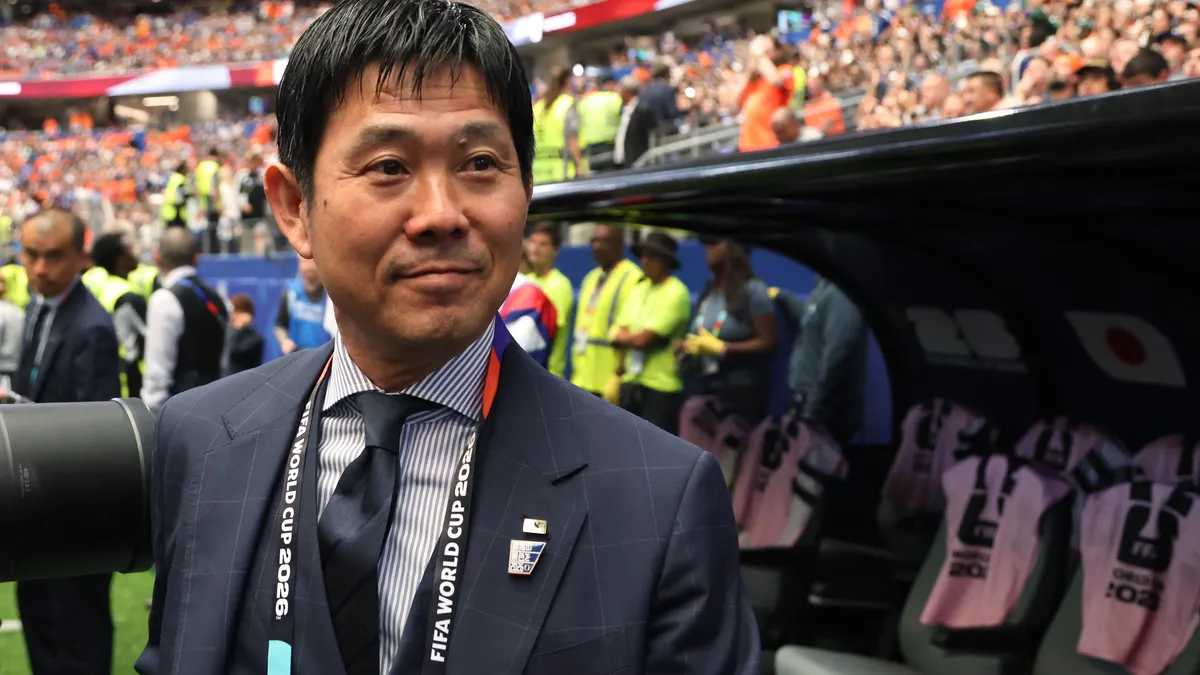
Cybersecarmor.com – In the opening match of the 2026 FIFA World Cup, Japan’s team faced the Netherlands in Monterrey, Mexico, where a surprising tactical detail caught the attention of fans and analysts alike. Manager Hajime Moriyasu, known for his innovative strategies, introduced an unconventional tool to his players: a whiteboard. This simple device, typically associated with classroom settings or office environments, became a focal point during the game, signaling a shift in how time is communicated in high-stakes football.
The Strategic Role of the Whiteboard
The whiteboard’s use was not merely for visual flair; it served a practical purpose for the Samurai Blue. Moriyasu emphasized that the tool was essential for managing the flow of the match, particularly in moments where clarity could make all the difference. “It’s to let them know how much time is and what the time is,” he explained, highlighting the importance of ensuring his players were fully aware of the clock’s status. The coach noted that the team had previously struggled to hear the time being called, prompting him to adopt this straightforward solution. By writing the time directly on the board, he aimed to eliminate any ambiguity and provide a quick reference for his squad.
This approach underscores a broader trend in modern football, where even the most minute details can impact performance. In a sport where split-second decisions are critical, the ability to communicate time effectively can be a game-changer. For Japan, a country renowned for its precision in football, the whiteboard represents a blend of traditional methods with contemporary adaptability. Moriyasu’s decision reflects a strategic emphasis on simplicity, ensuring that his players are always aligned with the game’s rhythm.
Parallel Tactics in American Football
The whiteboard’s presence on the field draws interesting parallels to the practices of American football coaches, who have long utilized visual aids to direct plays. In recent years, coaches at various levels have embraced creative methods, including signs with emojis and intricate symbols, to convey instructions to their teams. These tactics are designed to maintain secrecy from opponents while ensuring players receive clear signals during critical moments of the game.
Names like Nick Saban, Kirby Smart, Mario Cristobal, and Dabo Swinney have become synonymous with these elaborate systems. For instance, Saban, the head coach of the Alabama Crimson Tide, is celebrated for his use of visual cues that combine humor and strategy. Similarly, Smart, who leads the Georgia Bulldogs, incorporates signs featuring cartoon characters and emojis to communicate complex plays to his players. These methods not only add a layer of entertainment but also enhance communication efficiency on the sidelines.
However, Moriyasu’s approach diverges from the flashy designs seen in American football. Instead of intricate symbols or emojis, he opts for a minimalist solution—just a single number on the board. This simplicity allows for quick interpretation without the need for additional explanation. As the match progresses, the whiteboard serves as a constant reminder of the time remaining, reinforcing the team’s focus on timing and execution.
A Unique Approach in the World of Football
While the whiteboard may seem out of place on a football field, its effectiveness lies in its adaptability. In Japan, where the sport is deeply ingrained in culture and often associated with meticulous planning, the whiteboard aligns with the team’s philosophy of clarity and precision. Moriyasu’s strategy not only addresses the immediate need for time awareness but also reflects a broader commitment to ensuring that his players are always on the same page.
The coach’s use of the whiteboard also highlights a growing trend in football, where coaches are constantly seeking innovative ways to enhance their team’s performance. By integrating technology and traditional tools, Moriyasu demonstrates how even the smallest adjustments can contribute to a competitive edge. This method is particularly effective in a tournament setting, where every moment counts and the ability to adapt quickly can determine the outcome of a match.
As the World Cup continues, the whiteboard is expected to be a recurring feature in Japan’s coaching strategy. Fans will be watching closely to see how this unique tool influences the team’s gameplay, especially in the upcoming match against Tunisia. The contrast between Japan’s minimalist approach and the more elaborate tactics of American coaches illustrates the diverse methods employed to achieve success in the sport.
Moriyasu’s decision to use the whiteboard has sparked discussions about the importance of clear communication in football. In an era where technology plays a significant role, the coach’s reliance on a basic whiteboard serves as a reminder that sometimes the most effective solutions are the simplest. This approach not only streamlines the coaching process but also fosters a sense of unity among the players, ensuring they are always aware of the game’s dynamics.
As the tournament progresses, the Samurai Blue’s use of the whiteboard may inspire other teams to consider similar strategies. In a sport where innovation is key, Moriyasu’s unique method highlights the value of thinking outside the box. By focusing on the essentials, he provides a model for how effective communication can be achieved without the need for complex visuals. This simple yet thoughtful tactic exemplifies the coach’s ability to adapt and innovate, ultimately contributing to Japan’s competitive presence in the World Cup.
The students Evan Waldman and Brooks Thomason, who are part of the University of Georgia’s Carmical Sports Media Institute, have noted the significance of Moriyasu’s approach. Their analysis of the coach’s tactics emphasizes the importance of context and cultural influence in sports strategies. As they continue their studies, they are likely to explore how such unique methods can be applied in various football contexts, further enriching the discussion around innovative coaching techniques.