
US not ready to seek deal to end war with Iran, Donald Trump says
US Not Ready to Seek Deal to End War with Iran, Donald Trump Says
On Saturday, Donald Trump stated that the United States is not prepared to pursue a ceasefire agreement with Iran, despite claims that Tehran is eager to negotiate. He emphasized that the US would continue its military actions against Iran until the terms of peace are deemed favorable. This came as Iran launched fresh missile and drone assaults on Gulf nations and Israel, while US and Israeli aircraft conducted further strikes on Iranian territory.
The ongoing conflict has caused widespread disruption in the Middle East, with global air travel networks thrown into disarray and oil exports from the region severely impacted. Fuel prices have surged worldwide due to the near-closure of the Strait of Hormuz, a critical maritime route for energy shipments. Neither Iran nor the US has shown signs of reducing their aggressive rhetoric, even as the death toll rises and economic pressures mount.
Kharg Island Targeted Again
Trump, during an interview with NBC News, hinted at the possibility of reattacking Kharg Island, where Iran’s main oil infrastructure is located. The island was recently struck by US warplanes, and Trump suggested a follow-up assault “just for fun” could be on the agenda. He also mentioned intensifying air operations along the Iranian coast to secure safe passage for oil tankers.
“Iran wants to make a deal, and I don’t want to make it because the terms aren’t good enough yet,” Trump remarked, underscoring his commitment to maintaining the offensive.
Experts warn that reopening the Strait of Hormuz through military force alone will remain challenging as long as Iran can threaten shipping via missiles, drones, or small boats. Trump has called on international warships to assist in protecting tankers traversing the strait, which typically transports roughly 20% of global oil and gas supplies.
Iranian Diplomacy Amid Chaos
Iran’s foreign minister, Abbas Araghchi, urged restraint from other nations during a meeting with his French counterpart, Jean-Noël Barrot, as reported by the Iranian foreign ministry. He indicated that Iran is open to proposals offering a complete resolution to the conflict, though no progress has been confirmed. Turkish officials have expressed support for mediation efforts between Iran and its neighbors to ease tensions.
“I don’t know if he’s even alive. So far, nobody has been able to show him,” Trump said, dismissing the authority of Iran’s new supreme leader, Mojtaba Khamenei, who vowed to keep the Strait of Hormuz closed in a written statement.
Despite Khamenei’s pledge, Iran admitted that he sustained injuries during the initial strike on February 28, which killed his predecessor, Ayatollah Ali Khamenei. The injuries were described as minor. Meanwhile, the Israeli military launched attacks on western Iran after the Revolutionary Guards labeled Prime Minister Benjamin Netanyahu a criminal and vowed to hunt him down.
Normalcy Amidst Turmoil
In Tehran, some signs of normalcy emerged as citizens resumed work and daily routines. Traffic grew busier compared to the previous week, and several cafes and restaurants reopened. In the Tajrish bazaar, over a third of vendors were back in operation just five days before Nowruz, the Persian New Year. However, online banking at Bank Melli faced interruptions, with shoppers waiting at ATMs for cash withdrawals.
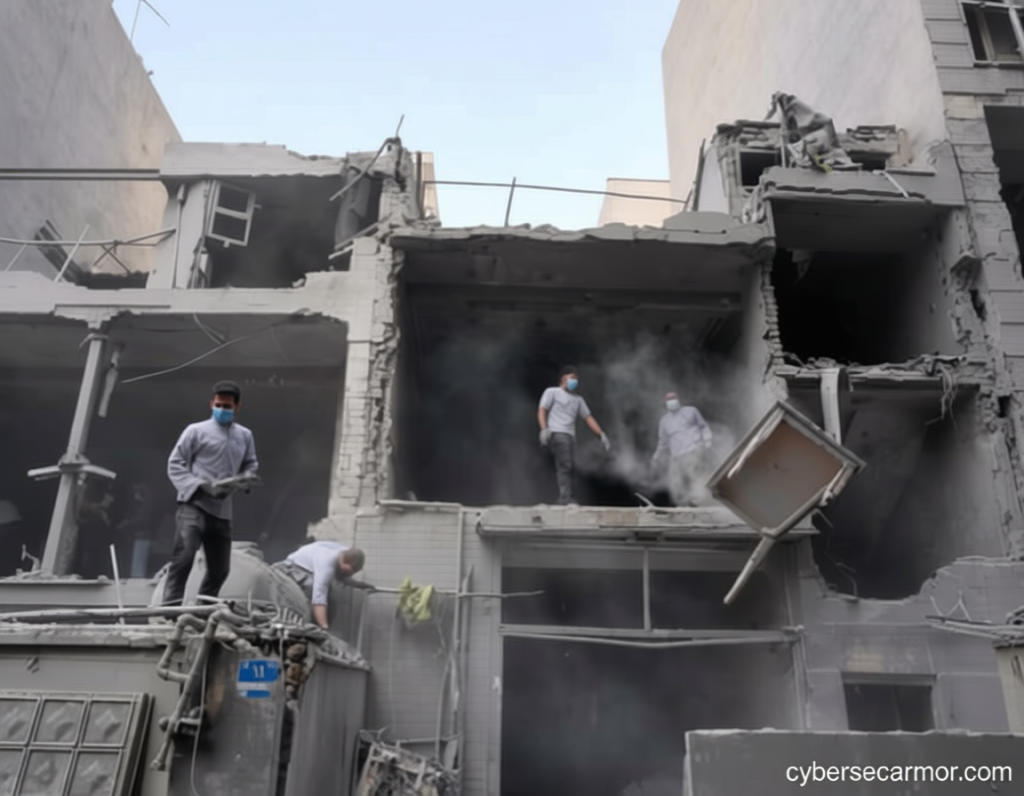
The International Committee of the Red Cross reported over 1,300 casualties from US and Israeli strikes on Iran, including 223 women and 202 children. The UN refugee agency estimated that up to 3.2 million people have been displaced, many fleeing urban centers for safer areas.
Meanwhile, violence persisted in Iraq, prompting the US to advise its citizens to evacuate as pro-Iranian groups targeted embassy buildings and western military bases. Reports of new strikes against Kurdish allies in the north added to the regional instability.
