
‘We’re sinking deeper’: Iranians brace for infrastructure strikes as Trump deadline nears
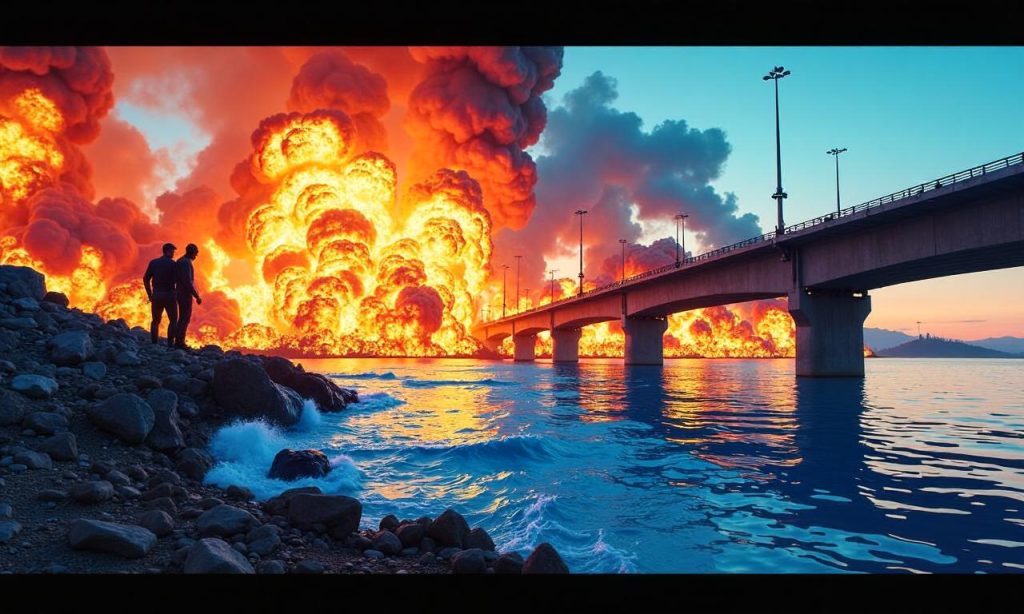
We’re sinking deeper’: Iranians brace for infrastructure strikes as Trump deadline nears
As the deadline set by US President Donald Trump approaches, ordinary Iranians are increasingly concerned about potential strikes on their country’s critical infrastructure. Trump’s latest threats, posted on social media with strong language, warned of “Power Plant Day” and “Bridge Day” in Iran, aiming to pressure the government into opening the Strait of Hormuz. Iranian officials have dismissed his ultimatum, calling it a display of “desperation and rage.” Despite the internet blackout enforced by authorities for over five weeks, the BBC has managed to speak with several Iranians who oppose the current regime, though their identities remain anonymous for safety.
Living with Uncertainty
Kasra, a young man in Tehran, described the growing sense of helplessness. “It feels like we’re slipping further into chaos, with no clear escape in sight,” he said. “What can we do as everyday people? We can’t stop him. I keep imagining a scenario where, in a month, I’m sitting with my family, completely cut off from water, electricity, and everything else. It’s like someone will snuff out the last light and we’ll be left in darkness.”
“I’ve thanked Israel and the US for almost all of what they’ve hit so far,” said Arman, a 20-something from Karaj, west of Tehran. “They must have had good reasons for their targets. But hitting a power station just cripples the country. If they take out the biggest power station in Karaj, it’ll be misery for me.”
Mina, another Tehran resident in her early twenties, shared similar fears. “My mum is filling every bottle in the house with water,” she explained. “I’m not sure what we’ll do now. More and more people in Iran have realized that Trump doesn’t care about us at all. I hate him from the bottom of my heart, and I despise those who back him.”
Backlash and Economic Strains
While Iranian state media showcased footage of well-stocked grocery stores, whispers of panic spread among citizens. Some were quietly stockpiling essentials, fearing disruptions to the water supply. Radin, a Tehran resident in his twenties, said: “I’m fine with them hitting energy infrastructure, using an atomic bomb, or even flattening Iran. If attacking targets brings down the Islamic Republic, I’m okay with that. It will stay forever if it survives this war.”
Bahman, a 20-something in Tehran, expressed worries about the economic fallout. “Trump is scared of what Iran will do in retaliation,” he said. “I don’t have a routine anymore, and I can’t even go to work. As a building superintendent engineer, nothing is being built right now. Some smaller companies have already started laying off workers.”
Jamshid, a restaurant owner in his thirties, noted the strain on daily life. “My business isn’t the same as before,” he said. “I’m not optimistic about the situation. I think I can hold out for a month, maybe two, at most. The rent is crushing me—it’s 200 million tomans a month, which is about $1,270.”
Internet Blackout and Resistance
The internet blackout has made it harder to stay connected, but many rely on shared satellite connections via Starlink systems. However, using Starlink in Iran risks up to two years in prison, and authorities have reportedly intensified searches for those with access. Despite these challenges, the BBC’s interviews highlight a growing unease about the potential consequences of Trump’s threats, especially on energy infrastructure, which could severely impact daily life and economic stability.
