
They were forced to hand one son over to the Israeli army in return for another. Eight months later he was dead in prison
A Tragic Exchange
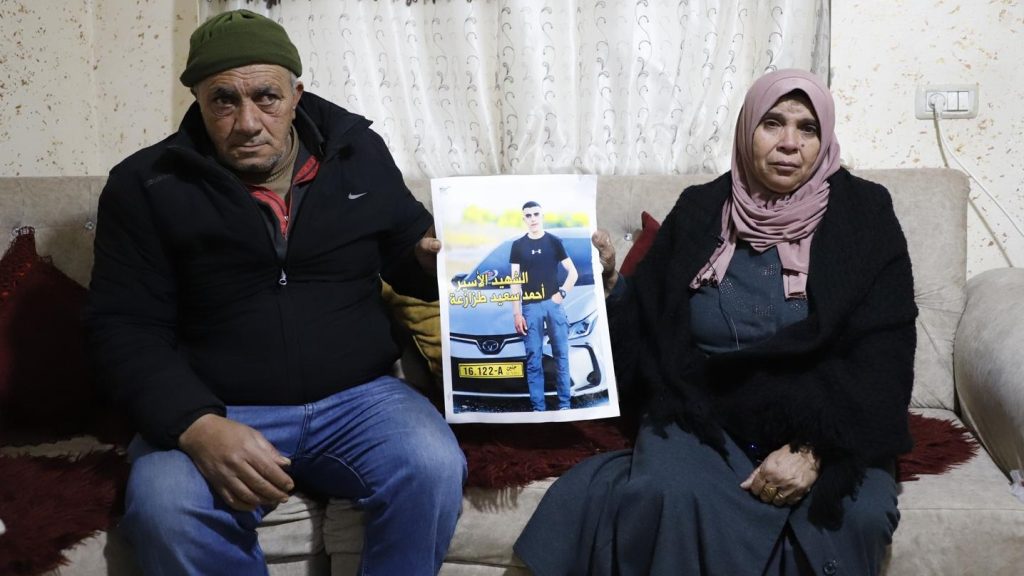
The Tazaza family in the northern West Bank town of Qabatiya remains consumed by sorrow and regret over the fate of their son, Ahmad Tazaza, who died in Israeli custody last August. His parents, unable to see him during his eight-month imprisonment, recall the moment they handed him over to the authorities in January 2025, hoping it would spare him from a harsher fate.
The Detention Process
Ahmad, a 20-year-old with no prior health issues, was taken by Israeli forces in the occupied West Bank. His parents assert they still do not understand why he was targeted, as his detention mirrored the experiences of countless other Palestinian youths. They were held as administrative detainees, imprisoned without trial or legal recourse.
“They smashed the house and destroyed everything,” said Najah Abdul Qader, Ahmad’s mother.
The family endured repeated raids and threats. Qader described how Israeli security forces detained her son and his father, later releasing them with a demand for Ahmad’s surrender. A soldier had warned of bombing their home if he did not hand himself in, a threat Ahmad narrowly avoided by escaping during a previous raid.
The Exchange
After failing to locate Ahmad, the authorities detained his brother again. His father, Saeed Tazaza, recounted the exchange: “We were forced to bring our son. His brother is married with two children. We had no choice.”
“We handed him over,” said Qader. “He looked at us and I knew he would not return. I felt he was not coming back when he turned his face and walked away.”
The Tazaza parents believed they were saving his life by surrendering him. They were convinced he would be released after a period of detention. However, their hope was shattered when Ahmad was found dead at Megiddo prison on August 3, 2025.
The Autopsy’s Findings
A post-mortem report by Physicians for Human Rights Israel (PHRI) noted Ahmad was described as healthy at the time of his arrest. His prison records listed symptoms like diarrhoea and scabies, along with a sore throat days before his death. On August 2, an on-call doctor observed blood stains on his trousers during a clinic visit.
“The report said: ‘During the clinic visit, Mr Tazaza requested to go to the toilet and later collapsed to the floor, losing consciousness and vital signs. Resuscitation attempts were initiated, but despite intubation and CPR, he was pronounced dead.'”
The autopsy suggested possible indicators of severe blood cancer, such as acute leukaemia or aggressive lymphoma. Yet the report excluded signs of sudden death. Ahmad’s parents, unable to view his body, challenge the findings, relying instead on accounts from released prisoners and an International Committee of the Red Cross officer who informed them of his demise.
A Dilemma of Sacrifice
Reflecting on the incident, Qader expressed regret: “I handed my son to my enemy. But that’s it. We wanted to protect him.” His father added, “I handed him over because I was afraid for him. I was afraid he would die.”
Though the Israeli authorities claim to monitor Palestinian prisoners, the Tazaza family feels their son’s fate was sealed before he even entered the prison gates. His death has left them questioning the cost of their choice and the justice of the system they now confront.
