
They were forced to hand one son over to the Israeli army in return for another. Eight months later he was dead in prison
They were forced to hand one son over to the Israeli army in return for another. Eight months later he was dead in prison
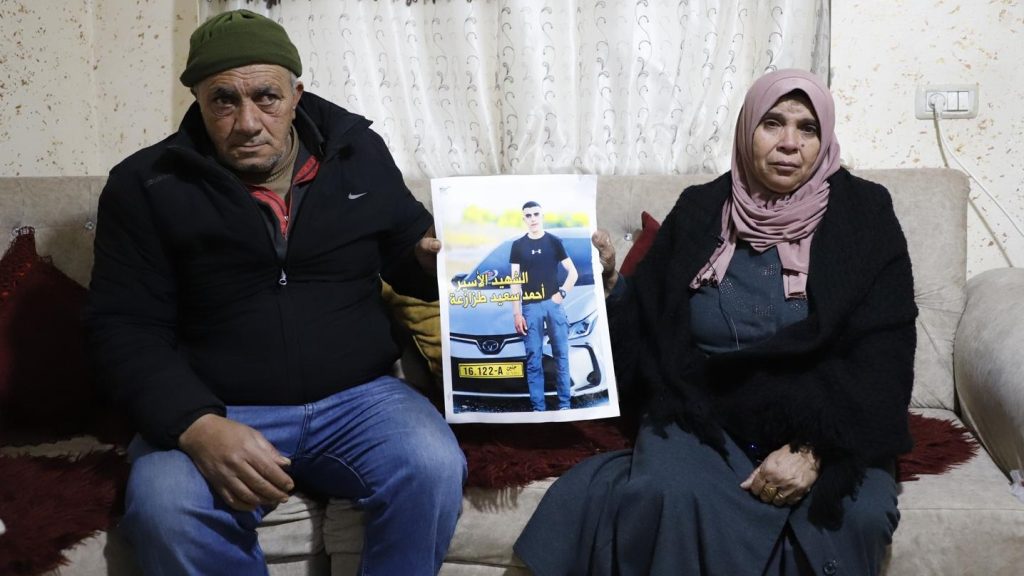
The Tazaza family in Qabatiya, a northern West Bank town, now grapples with sorrow and remorse following the death of their youngest son, Ahmad, in Israel’s Megiddo prison last August.
At 20, Ahmad was a fit and healthy young man with no prior medical issues. His parents handed him over to Israeli authorities in January 2025 during a detention in the occupied West Bank. They were later compelled to exchange him for his older brother, a decision made under pressure.
Ahmad’s father, Saeed Tazaza, recounted how Israeli forces targeted their home repeatedly, subjecting the family to threats and intimidation. “They said: ‘We will not release him until you bring your [other] son’,” he shared, emphasizing the family’s desperation.
“We handed him over. He looked at us and I knew he would not return. I felt he was not coming back when he turned his face and walked away,” said Najah Abdul Qader, Ahmad’s mother.
Before his capture, Ahmad had been working at a market and sleeping there the night of his arrest. Israeli security forces took his brother and father, releasing them the next morning with a demand for his surrender. A soldier had previously warned Qader of a potential house bombing if Ahmad didn’t volunteer himself.
During his eight months in prison, the family had no opportunity to see or speak with him. Information about his condition came through whispers from released detainees. His father claimed he handed his son over to avoid harm, but now laments the act.
“I handed my son to my enemy. But that’s it. We wanted to protect him,” said Saeed Tazaza.
A post-mortem report, dated 8 August 2025, revealed that Ahmad was “reported to be healthy” at the time of his detention. However, his medical records showed he had been suffering from diarrhoea and scabies, with a sore throat noted days before his death. On 2 August, a physician observed blood stains on his trousers during a routine check.
The report detailed his collapse after requesting to use the restroom, leading to unconsciousness and loss of vital signs. Despite resuscitation efforts, he was pronounced dead. It also pointed to possible signs of severe blood cancer, such as acute leukaemia or lymphoma, ruling out sudden death causes.
Without access to his body, the Tazaza parents dispute the findings, relying on accounts from fellow prisoners. They believe their son was killed in custody, a fate they feared but sought to prevent by surrendering him in exchange for his brother.
