
The five big sticking points in US-Iran talks
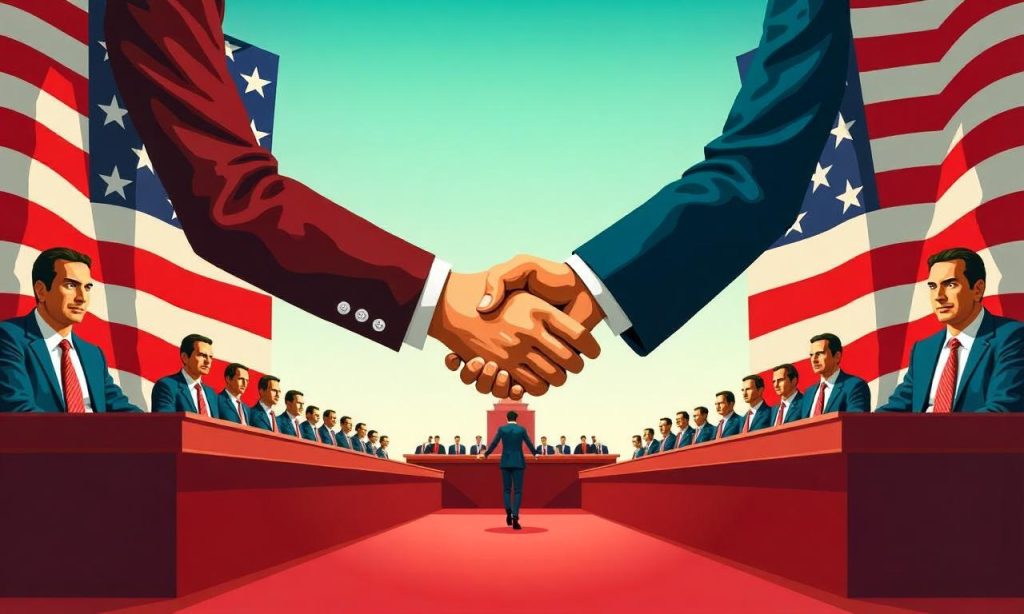
The Five Big Sticking Points in US-Iran Talks
Islamabad has prepared its surroundings for critical discussions between the United States and Iran. Security personnel are stationed, and the approach road has been freshly marked with yellow and black stripes. Government officials in Pakistan, acting as hosts, have expressed confidence, noting their unique position of trust with both parties. Vice President JD Vance, leading the U.S. delegation, delivered a positive message before departing, stating,
“If the Iranians are willing to negotiate in good faith, we’re certainly willing to extend the open hand.”
However, he also hinted at caution, warning,
“If they’re going to try to play us, then they’re going to find the negotiating team is not that receptive.”
Regional Tensions and the Hezbollah Factor
One significant challenge arises from Israel’s recent operations against Hezbollah, Iran’s Lebanese ally. The conflict threatens to disrupt the talks at their outset. Iran’s President, Masoud Pezeshkian, asserted on X,
“The continuation of these actions will render negotiations meaningless.”
He emphasized that Iran’s commitment to its regional partners remains firm, stating,
“Our fingers remain on the trigger. Iran will never abandon its Lebanese sisters and brothers.”
Prime Minister Benjamin Netanyahu has maintained that there is “no ceasefire” in the fight against Hezbollah, despite warnings to evacuate Beirut’s southern suburbs that have not led to a cessation of hostilities. Meanwhile, Donald Trump suggested that Israel’s actions in Lebanon would become “a little more low key,” with the U.S. State Department planning direct talks between Israel and Lebanon in Washington the following week.
Strait of Hormuz and Maritime Concerns
The Strait of Hormuz, a crucial oil shipping route, poses another potential roadblock. Trump criticized Iran for “doing a very poor job” of allowing vessels through, declaring in a Truth Social post,
“This is not the agreement we have!”
He accused Iran of being “dishonourable.” Reports indicate that few ships are navigating the strait, with hundreds of vessels and around 20,000 seafarers still confined to the Gulf. Iran, in response, has asserted sovereignty over the waterway, announcing new transit routes north of existing channels. This move was carefully framed to exploit shipping companies’ concerns, citing the need to “avoid the presence of various types of anti-ship mines in the main traffic zone.” Trump also raised an issue regarding fees, stating,
“Iran better not be charging fees to tankers.”
Nuclear Ambitions and Historic Agreements
The nuclear issue remains a central dispute, with both sides holding firm positions. Trump’s Operation Epic Fury aims to ensure Iran “can never have a nuclear weapon.” Iran, however, claims it has never pursued bomb development and argues that its enrichment rights are justified under the Nuclear Non-Proliferation Treaty. Their 10-point proposal calls for international acknowledgment of these rights, while Trump’s 15-point plan demands an end to all uranium enrichment on Iranian soil. Secretary of Defence Pete Hegseth, when questioned, stated,
“Iran would never had a nuclear weapon or the capability to get a path to one.”
The 2015 Joint Comprehensive Plan of Action (JCPOA) addressed this complex topic in depth, a process that took years to finalize.
Regional Alliances and the Axis of Resistance
Iran’s network of allies and proxies—Hezbollah in Lebanon, the Houthis in Yemen, Hamas in Gaza, and various militias in Iraq—has bolstered its influence, enabling “forward defence” strategies in conflicts with Israel and the U.S. Since the start of the Gaza war in October 2023, this alliance has faced persistent attacks. The former Syrian regime under Bashar al-Assad, once a key player, is no longer intact. Despite this, Israel perceives the group as representing an “existenti” threat, highlighting the deepening regional divide.
