
Negotiators face huge task to close gaps in rival Iran peace proposals
Negotiators face huge task to close gaps in rival Iran peace proposals
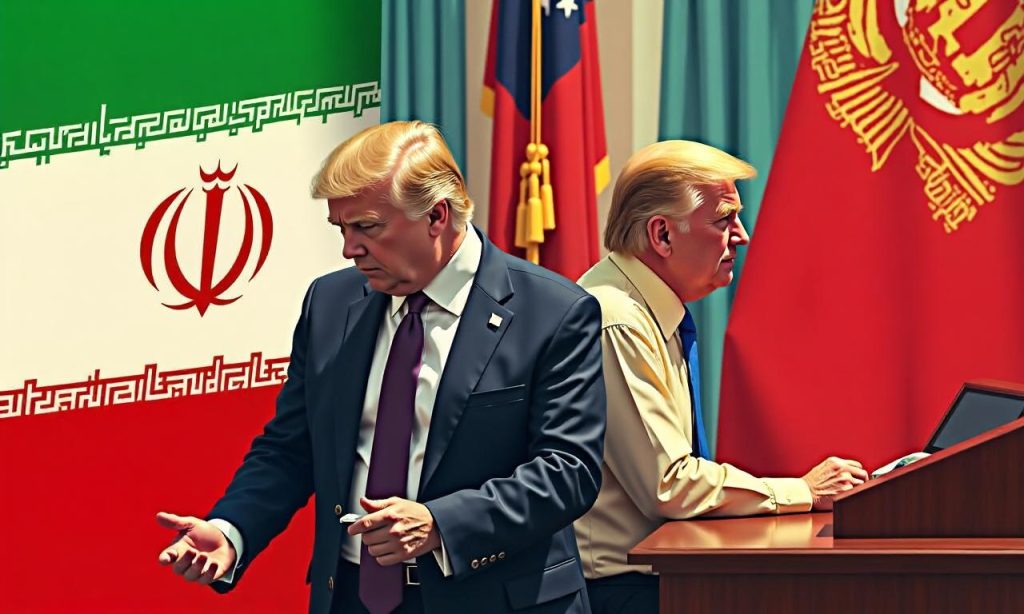
As the clock ticked toward a self-imposed deadline and amid a looming threat to erase Iran’s “civilisation,” US President Donald Trump declared a two-week ceasefire to pause hostilities. The mediation process, led by Pakistan, is set to convene American and Iranian delegates in Islamabad, potentially as early as Friday. Despite this progress, significant disputes remain, particularly regarding the core framework for discussions.
Trump shared his perspective on Truth Social, highlighting that the US had received a 10-point plan from Iran, which he characterized as “a workable basis on which to negotiate.” Meanwhile, Iran’s Foreign Minister Abbas Araghchi noted the US had put forward a 15-point proposal, claiming it could resolve the conflict. Neither document has been officially released, though leaked versions circulating in the media show stark contrasts between the two sets of demands.
“A lot of details are not very clear,” Anwar Gargash, senior diplomatic adviser to the UAE president, told the BBC. “There are different statements coming out of Iran, from Washington and from the Pakistani mediator,” he added. “So, we need to reconcile the details of these statements and understand exactly what the way forward is.”
The dispute centers on Iran’s right to enrich uranium for civilian purposes, a key point under the Nuclear Non-Proliferation Treaty (NPT). The US, however, has emphasized its belief that the 12-day war last year and recent Israeli strikes have sufficiently weakened Iran’s nuclear capabilities. The focus now is on the 440kg (970lbs) of highly enriched uranium reportedly stored beneath the wreckage of Iran’s Nuclear Technology/Research Centre in Isfahan.
US Defence Secretary Pete Hegseth described the uranium as “deeply buried and watched 24/7,” asserting that “there will be no Iranian nuclear weapons. Period. Full stop.” Yet, the US’s 15-point plan reportedly demands the dismantling of all major nuclear facilities, an end to enrichment on Iranian soil, and the transfer of stockpiles abroad. Directly addressing these points, Hegseth stated Iran would “never have a nuclear weapon or the capability to get a path to one,” a slightly more cautious phrasing than the original document.
The 15-point proposal also targets Iran’s missile program, calling for a suspension of ballistic missile development, a halt to long-range missile production, and restrictions on drone and military exports to Middle Eastern allies. This aligns with Washington’s argument that Iran’s missile arsenal has shielded its nuclear ambitions. According to Gen Dan Caine, Chairman of the US Joint Chiefs of Staff, 80% of Iran’s missile facilities, 80% of its air defense systems, and 90% of its weapons factories have been devastated.
Iran’s stance on missile limits has been firm, but the destruction of its infrastructure may now compel Tehran to consider concessions. Meanwhile, the regime’s recent strategic move to control the Strait of Hormuz has been a major achievement. Its apparent readiness to re-open the waterway could signal relief for global shipping and economic stability, though the outcome of negotiations will determine the extent of this shift.
