
Jim Whittaker, first American to summit Mount Everest, dies aged 97
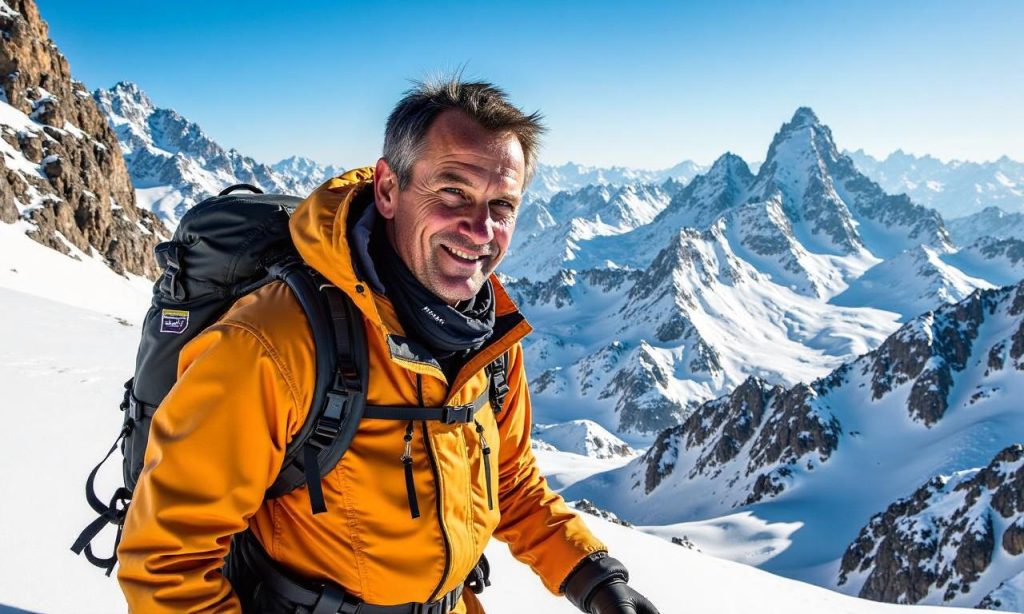
Jim Whittaker, First American to Summit Mount Everest, Dies at 97
Legacy of Adventure and Leadership
Jim Whittaker, the trailblazing American climber who became the first to conquer Mount Everest, has passed away at the age of 97, his family announced. The iconic ascent, achieved on 1 May 1963, remains a defining moment in his life, which was marked by a lifelong dedication to exploration and community. His son, Leif Whittaker, shared that the climber spent his final years on the mountain, returning to Everest at 83 to experience the journey with his family.
A Life Shaped by Mountains
Born in Seattle, Washington, on 10 February 1929, Whittaker’s passion for climbing began in his youth. Alongside his twin brother, Lou, he summited Mount Olympus, the highest peak in the Olympic Mountains, at age 16. This early success set the stage for his later achievements, including the historic 1963 Everest climb with Nawang Gombu Sherpa. The feat not only secured his place in history but also sparked a new era of mountaineering in the United States.
Enduring Influence and Recognition
Whittaker’s impact extended beyond the mountains. He was honored with the Hubbard Medal by President John F. Kennedy for his Everest triumph, a testament to his role in shaping American outdoor culture. In a reflective quote to the BBC, he noted,
“You learn, when you climb a difficult mountain, you leave your ego behind and learn that you’re just a little micro-speck in this life. You learn your weaknesses and have a little broader perspective.”
His later years saw him mentoring climbers, including his son, who specialized in high-altitude training. The family’s journey back to Everest in 2013 was chronicled in his memoir, *A Life on the Edge*.
Contributions to Conservation and Community
Throughout his career, Whittaker was deeply involved in the climbing community, serving as a leader for The Mountaineers, an alpine club founded in 1906. His advocacy for the outdoors led to pivotal moments, such as testifying before Congress in 1968 to help establish North Cascades National Park, the Pasayten Wilderness, and Redwood National Park. REI, the company he co-founded, celebrated him as a “true trailblazer and generous leader,” highlighting his role in expanding the definition of exploration and promoting environmental stewardship.
Connection to the Kennedys
Whittaker’s relationship with the Kennedy family further cemented his legacy. He served as a state chairman for Senator Robert F. Kennedy’s presidential campaign and accompanied him on a climb of a 14,000-foot peak in Canada. That summit was later renamed Mount Kennedy in tribute to the late president. Washington Governor Bob Ferguson honored Whittaker on X, calling him “one of the great Washingtonians” and expressing gratitude for the mentorship he provided over the years.
A Final Homecoming
Whittaker’s final days were spent in Port Townsend, Washington, where he died surrounded by loved ones. His son Leif described the serene setting, noting that the climber passed “with a sweeping view of the region he loved: the Olympic Mountains, Port Townsend Bay, and the Strait of Juan de Fuca.” His life, as his family stated, was “devoted to adventure, stewardship, service, and family,” a philosophy that inspired countless others to embrace the outdoors and seek meaning beyond personal accolades.
