
French foreign minister faces criminal complaint over misquoting Francesca Albanese
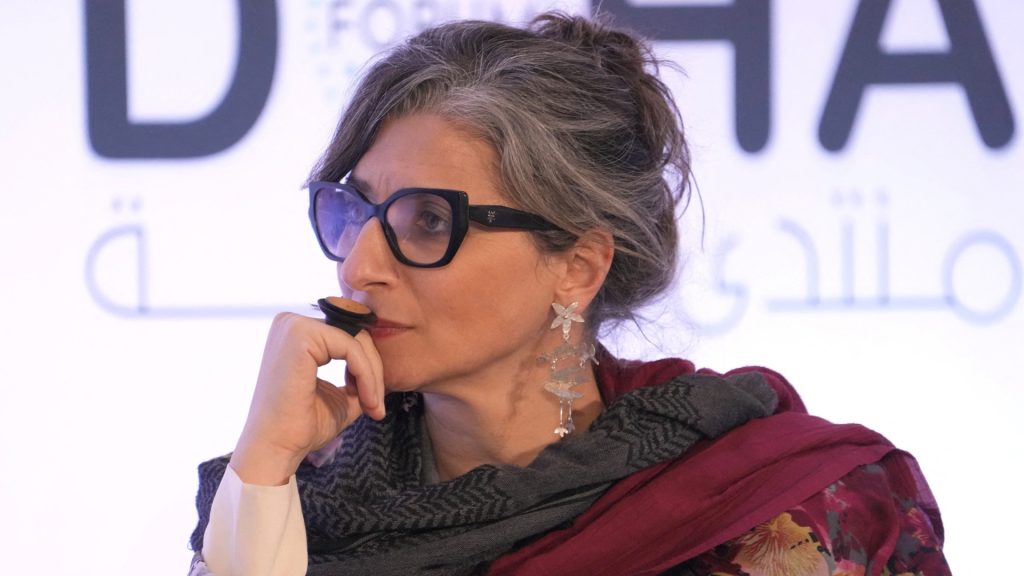
French Foreign Minister Faces Criminal Complaint Over Misquoting of UN Official
A coalition of French international legal experts has submitted a formal report to the Paris public prosecutor’s office, alleging that the nation’s chief diplomat misrepresented remarks by Francesca Albanese, the UN special rapporteur on Palestine. The accusation centers on Barrot’s claim that Albanese referred to Israel as the “common enemy of humanity,” a phrase the lawyers argue was taken out of context.
Context of the Controversy
The dispute arose after France’s foreign minister, Jean-Noel Barrot, criticized Albanese during a parliamentary session on 11 February. His remarks followed a question from Renaissance MP Caroline Yadan, who had previously cited a distorted version of Albanese’s speech to accuse her of labeling Israel as the “common enemy of humanity.”
“Three European governments accuse me – based on statements I never made – with a virulence and conviction that they have NEVER used against those who have slaughtered 20,000+ children in 858 days,” Albanese wrote on X, referencing the Israeli military’s actions in Gaza since October 2023.
Jurdi, the Association of Lawyers for the Respect of International Law, emphasized that Albanese’s full remarks, delivered remotely at the Al Jazeera Forum in Doha on 7 February, clearly placed the “common enemy” phrase within a critique of systemic forces. In her speech, she stated:
“We now see that as a humanity we have a common enemy and the respect of fundamental freedoms is the last peaceful avenue, the last peaceful toolbox that we have to regain our freedom.”
Earlier in December, Albanese had similarly used the term during a Doha Forum address, highlighting how political systems prioritize economic interests. “Palestine is allowing us to see what the law becomes when it’s in the hands of power,” she noted, linking Gaza’s conflict to broader global injustices.
Legal and Institutional Concerns
Jurdi argues that Barrot’s portrayal of Albanese’s statements as hate speech or a direct attack on Israel as a people and nation constitutes a clear misrepresentation. The group asserts that the UN expert’s remarks were part of a structured analysis of alleged rights violations in Gaza, fully aligned with her mandate.
The organization further pointed out that partial excerpts of Albanese’s intervention were circulated online by pro-Israel groups like UN Watch in a truncated form, omitting critical context. These clips were later amplified by public figures, including Yadan, leading to a distorted narrative.
Under French law, spreading false information with intent to disrupt public order can be a criminal act. Jurdi informed prosecutors that the minister’s misattribution of Albanese’s words could qualify as such, given the institutional setting and the authoritative nature of the claims.
Albanese’s comments have also drawn criticism from German and Italian foreign ministers, who echoed Barrot’s stance in recent weeks. However, Jurdi maintains that the minister’s interpretation of her statements is both legally and contextually flawed.
