
Electric bikes can be fast and dangerous. Here’s how to stay safe.
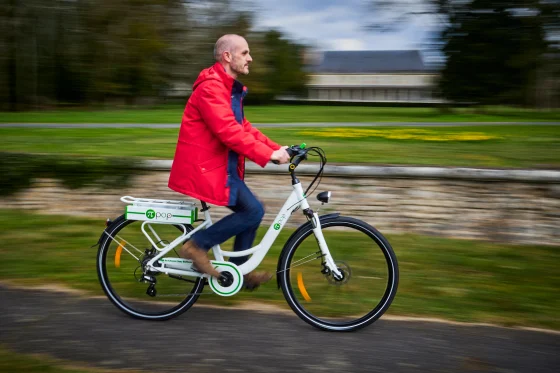
Electric bikes can be fast and dangerous. Here’s how to stay safe
In a recent incident, a 14-year-old boy was traveling at approximately 25 mph on an electric bike when he collided with Janet Stotko while she was walking in her Minnesota neighborhood. The accident left her unconscious and bleeding on a sidewalk, with severe brain injuries, a facial fracture, and a broken eardrum. Although the 2024 crash nearly proved fatal, Stotko survived after being on a ventilator for two days, spending three weeks in the hospital, and undergoing brain surgery. Her recovery has prompted her to advocate for stronger e-bike regulations to prevent similar incidents.
Electric bikes offer a practical, environmentally friendly, and affordable alternative to traditional vehicles, yet their growing popularity has raised safety concerns. A study by the University of California, San Francisco revealed that e-bike-related injuries increased by over 100% annually from 2017 to 2022. Similarly, research from the University of California, San Diego found a 300% rise in injuries among riders under 18 in the region during the same period.
Regulatory Challenges and Variability
Under federal guidelines, most e-bikes are classified as nonmotorized vehicles akin to standard bicycles, meaning riders typically don’t require a driver’s license, insurance, or a helmet. However, state laws differ significantly, with some adopting stricter measures. For instance, Connecticut now mandates helmet use for all e-bike riders and requires a license for models with motors exceeding 750 watts that don’t need pedaling. Meanwhile, New York City set a 15 mph speed limit for all electric bikes in October, and Florida lawmakers proposed a bill limiting speeds to 10 mph within 50 feet of pedestrians.
“It’s basic math that increased speeds lead to increased injuries. Force equals mass times acceleration, and kinetic energy is mass times velocity squared,” said John Maa, a general surgeon at MarinHealth Medical Center in Northern California.
The classification of e-bikes varies widely, with many states using a three-tier system: Class 1 e-bikes assist up to 20 mph while pedaling, Class 2 operate on throttle for the same speed, and Class 3 provide pedal assistance up to 28 mph. Faster models, sometimes labeled as e-motos, can reach 40 mph without pedaling. These are often treated like motorcycles in some states, restricting their use to roads rather than sidewalks or paths. Yet, in other areas, no specific rules govern these high-speed variants.
Key Safety Considerations
Experts emphasize the importance of understanding a bike’s specifications. This includes its maximum speed, motor wattage, and whether it requires pedaling or operates via throttle. Vehicles outside the standard three-class system may fall under motor vehicle regulations, making them ineligible for shared-use paths where slower e-bikes are permitted. Charles DiMaggio, an injury public health researcher and professor at NYU’s medical school, advises, “The first thing we always tell people is to familiarize yourself, read the manual, watch instructional videos, and assess your specific model.”
Shopping locally can also aid in learning about local laws and bike capabilities. A visit to a bike shop allows for test rides and direct inquiries. In addition, hospitals and medical associations, including the American College of Surgeons and American Association of Neurological Surgeons, have urged tighter policies and highlighted essential safety practices. These include wearing helmets, riding defensively alongside motor vehicles, and using front and rear lights to enhance visibility.
