
‘Associate membership’ risks leaving Ukraine in limbo, Ireland warns after Merz pitches bold plan
Associate Membership Risks Trapping Ukraine in Transitional State, Ireland’s Foreign Minister Warns
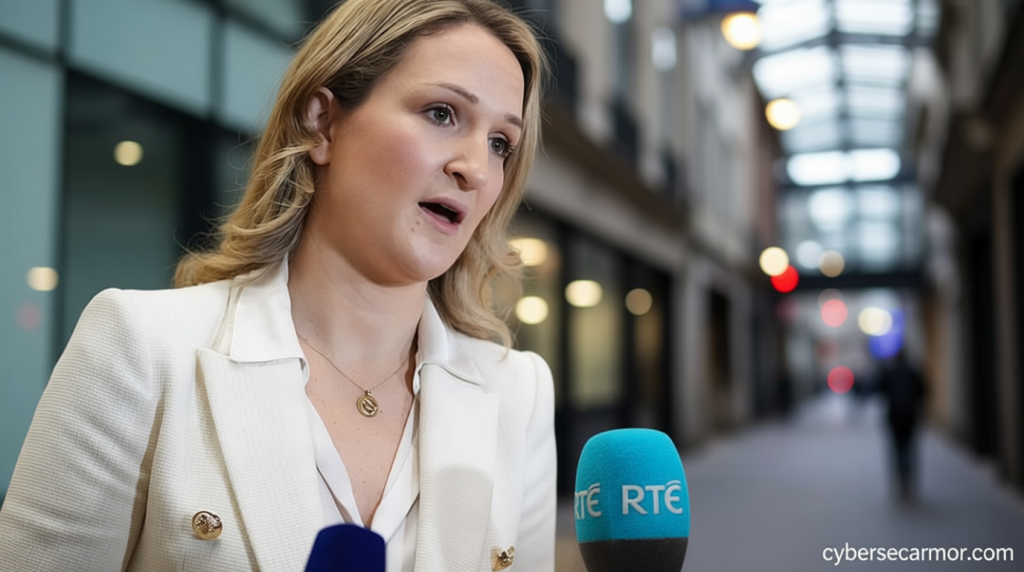
Associate membership risks leaving Ukraine in limbo – As the European Union grapples with the future of Ukraine’s membership aspirations, Ireland’s foreign minister, Helen McEntee, has raised concerns that granting the nation “associate membership” could stall its progress toward full EU integration. Her warning follows a bold proposal by German Chancellor Friedrich Merz, which suggests a tailored status for Ukraine to bypass the lengthy accession process. McEntee emphasized the importance of maintaining a unified approach to EU enlargement, fearing that a two-tiered system might create ambiguity in Ukraine’s path to membership.
Merz’s Plan: A New Approach to EU Integration
Merz’s five-page letter to EU leaders, shared with Euronews, outlines a strategy to grant Ukraine an “associate membership” status that would grant it access to key decision-making bodies without voting rights or a dedicated portfolio. This approach would also allow Kyiv to participate in certain EU-funded programs on a gradual, step-by-step basis. The proposal aims to provide immediate security guarantees, leveraging Article 42.7 of the EU treaties to enable member states to offer military support in the event of Russian aggression.
“It is obvious that we will not be able to complete the accession process shortly, given the countless hurdles as well as the political complexities of ratification processes in various member states,” Merz wrote. “It is now time to boldly move on with Ukraine’s EU integration through innovative solutions as immediate steps forward.”
The German leader’s plan seeks to address the two-year stalemate on Ukraine’s accession, which has been held back by Hungary’s persistent veto. By offering a more flexible status, Merz hopes to create a precedent that could streamline negotiations and provide Kyiv with a temporary foothold in the EU framework. However, Ireland’s McEntee has cautioned that such a move might leave Ukraine in a state of limbo, reducing the urgency to meet all the criteria for full membership.
Ireland’s Caution: Avoiding a Two-Tiered EU Membership Model
Speaking during a press briefing with journalists, McEntee stressed the need for fairness in the EU’s enlargement process. “We need to make sure that there isn’t a two-tiered approach or we apply [the accession process] equally to each country,” she said. Ireland, set to assume the EU Council’s presidency in July, will play a critical role in steering Kyiv’s bid for membership. The minister argued that associate membership could undermine the momentum Ukraine has built in its bid to join the bloc, potentially allowing candidate countries to stagnate in their reforms.
“Do you end up in a situation where associated members find themselves in some kind of a limbo?” McEntee questioned, highlighting areas like the rule of law and legal system where candidate nations often encounter delays. She warned that a lack of pressure might lead to a half-way membership status, where Ukraine could remain in a state of uncertainty for years. “Does that take a bit of the pressure off? Do countries end up kind of in this half position of membership that then doesn’t naturally progress?” she added, underscoring the risk of complacency.
Brussels’ Mixed Response to Merz’s Proposal
While the European Commission has endorsed the idea of exploring innovative solutions, it has also cautioned against abandoning the merit-based logic that underpins EU enlargement. The executive body stated it would evaluate Merz’s plan based on its legal merits once discussions among national leaders conclude. However, diplomats within the bloc have expressed skepticism about the practicality of such a model, questioning whether it could be implemented without causing long-term structural issues.
Merz’s proposal comes at a pivotal moment as the EU seeks to capitalize on a potential breakthrough in the Hungarian veto. With a new government in Budapest, negotiations have begun to address the rights of the Hungarian minority in Ukraine, a politically sensitive topic that could pave the way for lifting the veto. Brussels is hopeful that this dialogue will culminate in a decision by June, allowing the first cluster of negotiations—focused on “fundamentals”—to commence. The remaining five clusters of discussions are expected to follow throughout the year.
Ukraine’s Determination: A Commitment to Full Membership
Despite the debate over associate membership, Ukraine’s foreign minister, Andrii Sybiha, reiterated his country’s focus on achieving “full-fledged membership” in the EU. “We see that the search for modalities that can lead to this membership is ongoing. Well, let them have a place, but they cannot replace our strategic position,” Sybiha stated. His comments reflect Ukraine’s desire to maintain its position as a key player in the bloc’s expansion, even as alternative statuses are discussed.
President Volodymyr Zelenskyy, who has not yet commented on Merz’s plan, previously rejected the notion of a “symbolic” accession. In a recent interview, he emphasized that Ukraine’s goal remains clear: to join the EU as a full member, not as a transitional entity. “We cannot accept any form of partial membership that would dilute our ambitions,” Zelenskyy said, reinforcing the importance of maintaining the integrity of the EU’s enlargement process.
The Path Forward: Balancing Urgency and Fairness
As the EU prepares to revisit Ukraine’s accession, the debate over associate membership has sparked renewed discussions about the bloc’s approach to enlargement. McEntee’s concerns highlight the need to ensure that all candidate countries are treated consistently, preventing a scenario where Ukraine might be stuck in a hybrid status indefinitely. Meanwhile, Merz’s plan offers a pragmatic alternative, aiming to provide immediate benefits while addressing political gridlock.
The outcome of this debate will have significant implications for Ukraine’s future. If the EU adopts a two-tiered model, it could create a new category of members with differing rights and responsibilities. However, if the merit-based approach is upheld, Ukraine’s path to full membership may remain unaltered. As the Council of the European Union prepares to take up its presidency, Ireland’s leadership will be crucial in shaping the next phase of negotiations.
With the Hungarian veto potentially lifted, the EU now faces a critical juncture. The question remains: will associate membership serve as a stepping stone or a barrier to Ukraine’s long-term aspirations? The answer could determine whether the bloc’s expansion process continues with momentum or risks being divided by competing interests. As discussions unfold, the balance between innovation and fairness will be tested, with Ukraine at the center of this evolving political landscape.

