
Is Iran’s regime at a breaking point?
Is Iran’s regime at a breaking point?
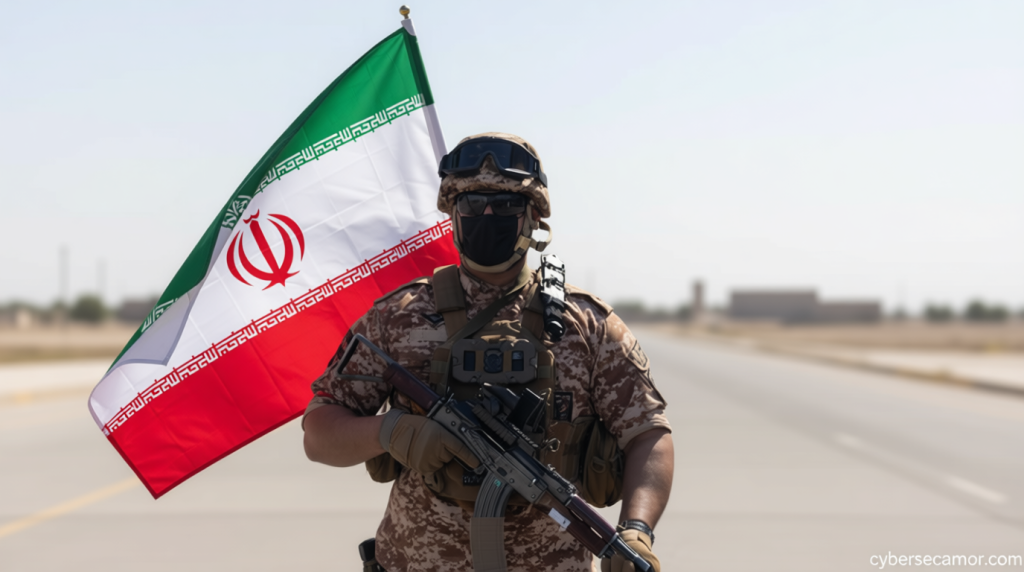
Eighteen days into the ongoing conflict, Iran’s Revolutionary Guards persist in their operations despite significant challenges. Analysts suggest that the internal hierarchy of power is experiencing strain, yet the IRGC continues to assert its influence. Initial fears of a collapse were tempered by the realization that the regime’s core remains intact.
Shortly after the U.S. and Israel initiated attacks, targeting Supreme Leader Ali Khamenei and other key figures, the Islamic Republic appeared vulnerable. However, as the third week of hostilities unfolds, the situation reveals a more resilient power structure. “The early optimism about destabilization has faded,” said Habib Hosseini-Fard, a Middle East expert. “Iran’s leadership has adapted, maintaining its operational capacity.”
The IRGC, a decentralized force, is spearheading attacks across multiple fronts. Israel claimed to have neutralized Ali Larijani, head of the Supreme National Security Council, and Gholamreza Soleimani, leader of the Basij militia, in separate strikes. Meanwhile, the U.S. Central Command reported over 300 Iranian assaults targeting nations such as Oman, Saudi Arabia, and Jordan within two weeks. Saudi Arabia’s Defense Ministry noted intercepting more than 60 drones in its airspace, highlighting the conflict’s broad reach.
Amid these strikes, the United Arab Emirates recorded one fatality and an injured individual in Abu Dhabi, attributed to debris from Iranian projectiles. Despite this, Iran’s Foreign Minister Abbas Araghchi dismissed the possibility of ceasefire talks, insisting the attacks will continue as long as the U.S. and Israel target Iranian interests.
The Role and Structure of the IRGC
Established following the 1979 Islamic Revolution, the IRGC was designed to safeguard the regime’s ideology and prevent internal uprisings. Initially a military branch, it has since evolved into a multifaceted organization. Its personnel count exceeds 200,000, and it operates alongside the regular army under the authority of Supreme Leader Mojtaba Khamenei.
“The IRGC has transitioned from a rigid hierarchy to a networked system, enabling provincial units to function independently,” Hosseini-Fard explained. “This adaptability, combined with Iran’s strategic reserves, ensures its military capabilities endure despite aerial assaults.”
The U.S. and Israel have reportedly struck 15,000 Iranian targets, yet Iran remains capable of launching rocket attacks on Israeli cities. On Tuesday, the U.S. embassy in Baghdad faced drone and missile assaults, underscoring the regime’s capacity to retaliate. Regional allies and shipping lanes in the Persian Gulf have also been targeted, intensifying the conflict’s impact.
Internal Dynamics and Strategic Influence
Reza Talebi, a political analyst, cautions against simplistic views of Iran’s stability. “The military’s ideological commitment to the regime cannot be easily shaken,” he noted. “Even as external pressures grow, internal cohesion remains strong.”
“The Revolutionary Guards are not just a military force—they control economic and ideological frameworks that extend beyond national borders,” Talebi added. “This dual role strengthens their ability to sustain operations and resist external pressures.”
The IRGC’s Quds Force, a specialized unit, plays a crucial role in regional operations, supporting militant groups across the Middle East. This interconnected system illustrates Iran’s strategic depth, making swift destruction unlikely. Analysts now emphasize the regime’s ability to endure, even as attacks escalate.
