
Iran war: Why is Russia not coming to Tehran’s aid?
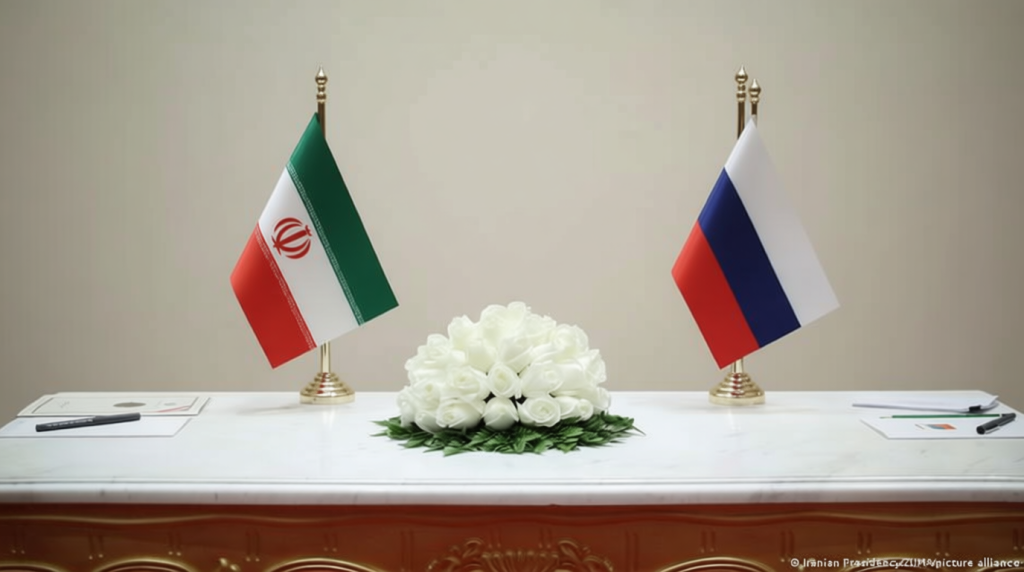
Iran War: Why is Russia Not Coming to Tehran’s Aid?
The Iranian government, facing dwindling global alliances, has relied heavily on Moscow’s backing as the U.S. and Israel intensify their attacks. Yet, despite expectations, Russia has not extended significant support, leaving Tehran frustrated. Hours after the strikes began, Moscow’s UN envoy, Vassily Nebenzia, condemned the actions as an “unprovoked act of armed aggression against a sovereign and independent UN member state.”
Russian-Iranian Cooperation and Strategic Interests
Russia and Iran share a close alliance, particularly in economic ventures. Nikita Smagin, an Azerbaijan-based analyst, highlighted their collaboration on projects like the North-South transport corridor, a 7,200-kilometer network spanning through Azerbaijan. This initiative became vital after Russia disrupted its traditional transit routes during the 2022 invasion of Ukraine. According to Gulf Research Center, 75% of the project has been completed.
Military Ties and Drone Support
Iran has also been a key military partner for Russia, supplying Shahed drones since 2023. These unmanned systems have altered the dynamics of the Ukraine war, as noted by Julian Waller of the Center for Naval Analyses. “Iran’s contributions were significant for Russia’s war effort, even though production has since shifted to domestic capabilities,” he explained. Russia has reportedly shared intelligence with Tehran and provided missiles and ammunition, though this cooperation remains pragmatic rather than ideological.
A Possible Non-Attack Agreement with Israel
Analysts suggest Russia has an informal agreement with Israel to avoid direct confrontation. “The two countries are not defensive allies,” Waller stated, emphasizing that this pact may limit Moscow’s involvement in the Iran conflict. Despite this, Tehran had anticipated more active support, as Mojtaba Hashemi, an international relations expert, noted: “Russia and China face greater challenges, and their assistance has been limited to supplying weapons and tools for repression.”
Iran’s Calculations and Russian Reluctance
Iranian leaders, however, had long anticipated Moscow’s hesitance. Mohammad Ghaedi, a George Washington University lecturer, pointed out that skepticism toward Russia has existed in Tehran. “Former President Mahmoud Ahmadinejad once criticized Russia for ‘selling out the Iranian nation,’ and President Masoud Pezeshkian observed that ‘friends we thought relied on us during the war.'” This lack of support may also benefit Russia, as Chatham House’s Gregoire Roos argued: “A prolonged Iran conflict could reduce media attention on Zelenskyy, shifting focus to regional tensions and escalation risks.”
Strategic Partnerships and Geopolitical Dynamics
Smagin further explained that Russia values Iran as a reliable partner, especially under Western sanctions. “Both nations share common interests, unlike Turkey or Egypt, which might abandon Russia if pressured,” he said. While the alliance is practical, it does not reflect deep ideological alignment. The absence of Russian intervention underscores this pragmatic relationship, with Tehran’s hopes for stronger backing proving misplaced in the current geopolitical landscape.
“The partnership between Russia and Iran is not about ideology — Russian politicians don’t particularly like Iran,” said Smagin. “But they view Tehran as a reliable strategic partner.”
“Iran has had the significant experience of bypassing international sanctions for many years and been providing Russia with advice on how to circumvent them,” emphasized Roos.
“This included expanded military-technical cooperation, intelligence sharing, and sending a clear deterrent message to its enemies — not just verbal support,” Hashemi added.
“Countries we considered friends did not help us during the war,” noted Pezeshkian.
