
US says the fragile truce with Iran holds as it awaits response to its latest ceasefire proposal
US Says the Fragile Truce with Iran Holds as It Awaits Response to Its Latest Ceasefire Proposal
US says the fragile truce – Despite recent military actions, the United States continues to assert that the precarious ceasefire with Iran remains valid. The truce, which has been in place for over a month, faces uncertainty following a series of strikes by U.S. forces against Iranian assets. On Saturday, Washington’s military confirmed that two Iranian oil tankers had been disabled, while the Bahraini government announced the arrest of 41 individuals allegedly connected to Iran’s Revolutionary Guard. These developments have raised questions about the stability of the ceasefire, but officials in the U.S. insist it is still in effect.
Recent US Actions
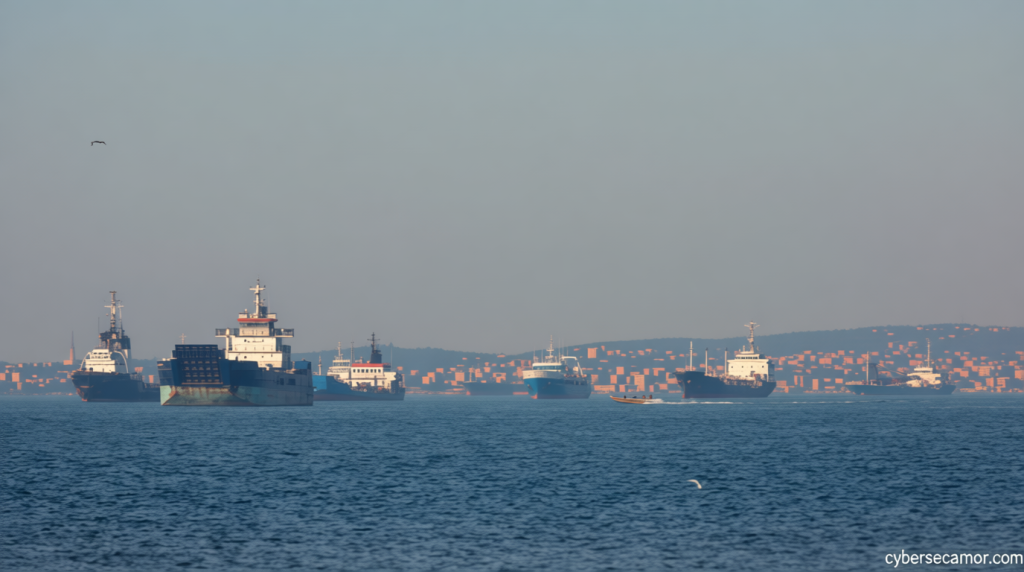
The U.S. military claimed on Friday that its forces had intercepted and disabled two Iranian tankers attempting to bypass a naval blockade around Iran’s ports. The blockade, implemented to pressure Tehran over its continued closure of the Strait of Hormuz, has become a focal point of the conflict. US Central Command released footage of the incident, showing the tankers’ smokestacks being hit by an American fighter jet. This came after earlier in the week, when a U.S. jet targeted the rudder of another tanker, which Washington said was evading the blockade. The same day, the military reported thwarting attacks on three Navy ships and striking Iranian military installations in the Strait of Hormuz.
While these strikes have not yet disrupted the ceasefire, they have signaled a renewed level of aggression. President Donald Trump has remained steadfast in his claim that the agreement holds, even as tensions mount. He reiterated his readiness to escalate hostilities if Iran fails to accept the U.S. terms for ending the war, reopening the Strait, and curbing Tehran’s nuclear program. “The ceasefire is still functioning,” Trump stated, though he warned of increased military intensity should Iran not comply with the proposed deal.
Bahrain’s Crackdown
Meanwhile, Bahrain, a small Gulf island nation, has intensified its crackdown on individuals linked to Iran. The Ministry of Interior reported Saturday that it had arrested 41 people connected to the Revolutionary Guard, stating investigations are ongoing. These arrests are part of a broader campaign the country has pursued since the conflict began on 28 February. Bahrain, ruled by a Sunni monarchy, has a predominantly Shiite population, and human rights groups have accused the government of using the war as a pretext to suppress domestic dissent. “Bahrain has leveraged the conflict with Iran to target its own citizens,” one activist noted, highlighting concerns over political repression.
The arrests underscore the regional impact of the U.S.-Iran standoff. As the U.S. and Iran continue their rivalry, neighboring states are caught in the crossfire. The Bahraini government has not disclosed the full scope of the arrests or their connection to the broader conflict, but the move has drawn criticism from rights organizations. They argue that the kingdom has framed its crackdown as a necessary measure against Iranian aggression, while downplaying its domestic implications.
Diplomatic Efforts on the Global Stage
Amid rising tensions, a flurry of diplomatic activity has emerged across the globe. Russia and Saudi Arabia have called for sustained talks to achieve a “sustainable, long-term agreement” to end the war. In a joint statement, Russian Foreign Ministry officials emphasized the importance of dialogue, while Saudi representatives reiterated their support for diplomatic solutions. Egypt and Qatar’s foreign ministers also aligned in their stance, stating that negotiations are the only viable path forward. According to a readout of a Saturday phone call, both diplomats stressed the need for cooperation between the U.S. and Iran.
Pakistan, which has played a key role in mediating between the two nations, has maintained constant communication with both sides. Prime Minister Shehbaz Sharif described his country’s efforts as “day and night,” aiming to prolong the ceasefire and secure a peace deal. This aligns with the U.S. strategy of leveraging regional allies to stabilize the situation. However, Iran’s Foreign Minister Abbas Araghchi has criticized the U.S. for its aggressive tactics, arguing that diplomacy is being undermined by military strikes.
Iran’s Stance and Strategic Moves
Iran has responded to the U.S. attacks with defiance, maintaining that its military capabilities are stronger than previously reported. In a post on X, Araghchi dismissed Washington’s assessments, stating that Iran’s missile inventory and launcher capacity are at 120% compared to February 28. “The CIA is wrong,” he wrote, asserting that the country is fully prepared to resume hostilities if needed. He also criticized the U.S. for prioritizing military action over diplomatic engagement, calling it a “reckless adventure” that pressures Iran into submission.
Araghchi’s comments reflect Iran’s broader strategy of balancing regional alliances. He has previously signaled confidence in China’s support for a new post-war framework, aiming to reshape the Middle East’s security landscape. On Wednesday, he reiterated Iran’s reliance on Beijing, stating that the country “looks forward to” China’s assistance in establishing a regional structure that can reconcile development and stability. This focus on China highlights Iran’s efforts to diversify its diplomatic partnerships and counter U.S. influence.
The escalating conflict has also drawn attention to the strategic importance of the Strait of Hormuz. Washington’s repeated strikes on Iranian vessels have been framed as attempts to ensure the waterway remains open, a critical route for global oil shipments. However, the U.S. has faced accusations of using the strait as a battleground, with critics arguing that its actions risk further destabilizing the region. As the ceasefire hangs by a thread, the international community watches closely for signs of either de-escalation or renewed warfare.
With the U.S. awaiting Iran’s response to its latest proposal, the stakes have never been higher. The proposal, which includes conditions for reopening the Strait and rolling back Tehran’s nuclear program, represents a key opportunity to resolve the crisis. Yet, the recent attacks suggest that neither side is willing to ease up on their demands. As the situation unfolds, the fate of the ceasefire—and the broader conflict—remains uncertain, with the world holding its breath for the next move.
Quotes from Iranian Officials
“Every time a diplomatic solution is on the table, the U.S. opts for a reckless military adventure. Is it a crude pressure tactic? Or the result of a spoiler once again duping POTUS into another quagmire? Whatever the causes, outcome is the same: Iranians never bow to pressure.”
“Also the CIA is wrong. Our missile inventory and launcher capacity are not at 75% compared to Feb 28. The correct figure is 120%.”
“As for our readiness to defend our people: 1,000%.”
These statements from Araghchi illustrate Iran’s resolve to maintain its position. By emphasizing its military preparedness, Tehran aims to signal that it is not vulnerable to U.S. pressure. The conflict has become a test of wills, with each side leveraging its strengths to assert dominance. As the ceasefire teeters on the edge, the world remains divided on whether diplomacy can prevail over force.

