
Erdoğan visits Astana as Turkey and Central Asia deepen ties amid shifting regional order
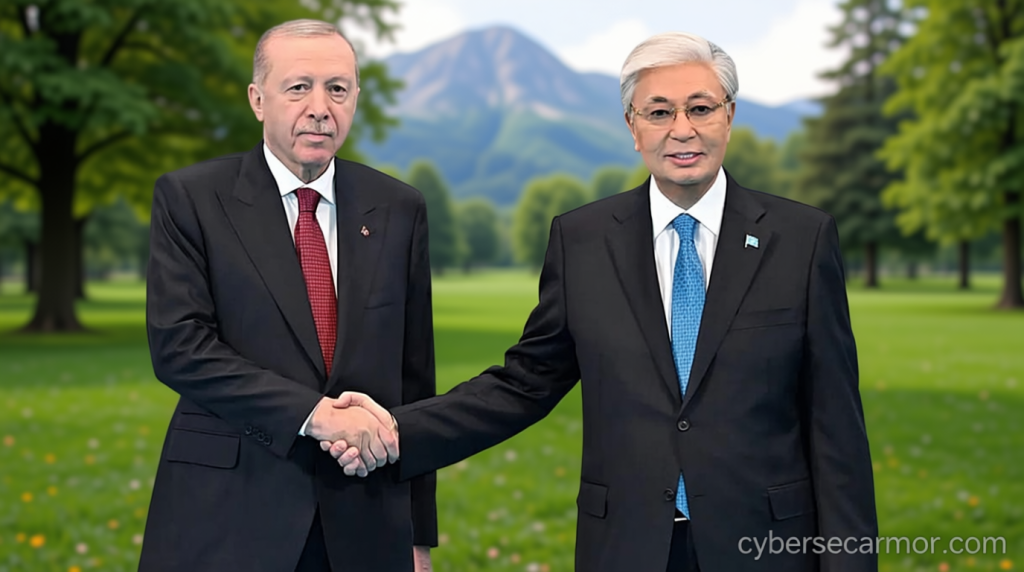
Erdoğan’s Astana Visit Strengthens Turkey’s Central Asia Ties
Erdoğan visits Astana as Turkey and Central – President Recep Tayyip Erdoğan’s state visit to Astana, Kazakhstan’s capital, has marked a strategic milestone in Turkey’s expanding engagement with Central Asia. During the four-day trip, the leaders signed the Declaration on Eternal Friendship and Expanded Strategic Partnership, aiming to elevate their bilateral collaboration across defense, energy, and digital sectors. This agreement underscores Turkey’s growing influence in the region as it navigates a shifting geopolitical landscape, balancing its relationships with Russia, China, and Western nations while deepening ties with Central Asian countries.
Bilateral Collaboration and Symbolic Recognition
Kazakh President Kassym-Jomart Tokayev highlighted the significance of Erdoğan’s visit, emphasizing Turkey’s role as a bridge between Europe and Asia. “Ankara’s strategic positioning continues to bolster regional connectivity and economic integration,” he stated. In a symbolic gesture, Erdoğan was honored with the Order of Qoja Ahmet Yasawi, an award named after a 12th-century Turkic Sufi mystic. Tokayev noted that this recognition reflects the shared historical and cultural values between the two nations.
“Ankara’s strategic positioning continues to bolster regional connectivity and economic integration,” Tokayev said.
The visit included a meeting with Kazakh business leaders, where the sixth High-Level Strategic Cooperation Council session focused on advancing Turkey’s 67-point Action Plan. Erdoğan stressed the importance of implementing this roadmap to achieve the €13 billion trade target, which is three times their current bilateral trade levels. The agreement also emphasized collaboration in infrastructure development and digital innovation, positioning Turkey as a key player in Central Asia’s evolving economic order.
Trade Growth and Investment Expansion
Kazakhstan’s trade with Turkey has surged by nearly 9% this year, reaching over €4.5 billion. With more than 4,000 Turkish firms operating in the region, Ankara has emerged as one of Kazakhstan’s top trade partners. Investments from Turkey in Kazakhstan now exceed €5 billion, while Kazakh investments in Turkey have surpassed €2 billion. Deputy Prime Minister Serik Zhumangarin noted that 100 investment projects totaling nearly €3.5 billion have been completed, with 50 more in progress, signaling a strong foundation for future economic cooperation.
Erdoğan’s emphasis on the 67-point Action Plan aligns with Kazakhstan’s ambition to double its exports to Turkey by 2028. The plan includes measures to enhance legal frameworks and cultural exchanges, fostering trust in trade relations. In agriculture, Turkish firms have contributed to wheat processing and greenhouse development, resulting in a 25% increase in trade last year. This growth has prompted Kazakh officials to propose a three-year roadmap for agricultural cooperation, reinforcing the two nations’ shared economic interests.
Transport and Energy Partnerships
Transportation initiatives were a key focus, with Tokayev reaffirming Kazakhstan’s commitment to the Trans-Caspian International Transport Route. This corridor, linking China to Europe via the Caspian Sea, Azerbaijan, Georgia, and Turkey, saw a 35% rise in rail cargo and a 5% increase in road transport this year. Erdoğan welcomed proposals to boost Turkish involvement in Aktau and Kuryk ports, underscoring the route’s potential to enhance regional connectivity.
Energy cooperation also gained traction, as Turkey Petrolleri Anonim Ortaklığı expressed interest in Kazakhstan’s oil and gas markets. The Kazakh leader invited Turkish firms to participate in mining ventures, leveraging their expertise in metals and lithium production. These partnerships aim to diversify energy supply chains and reduce dependence on any single economic power, aligning with broader goals to stabilize Central Asia’s energy sector.
Digital Integration and Future Outlook
Digitization emerged as a critical area of collaboration, with Kazakhstan’s state-backed e-commerce platform Kaspi.kz set to support Turkish online marketplace Hepsiburada. This initiative is expected to facilitate cross-border digital trade and boost consumer engagement. Additionally, Freedom Holding Corp’s expansion in Turkey is strengthening the country’s financial infrastructure, further integrating it into regional digital networks.
Erdoğan’s visit to Astana not only deepened diplomatic ties but also positioned Turkey as a pivotal actor in Central Asia’s geopolitical reconfiguration. As the region’s dynamics shift, the partnership with Kazakhstan highlights Turkey’s proactive approach to securing economic and strategic advantages. The mutual commitments outlined during the visit suggest a promising trajectory for sustained collaboration, ensuring both nations remain key players in shaping the future of Central Asian development.

