
Drone strike sparks fire near UAE nuclear plant amid Iran ceasefire tension
Drone Strike Sparks Fire Near UAE Nuclear Plant Amid Iran Ceasefire Tension
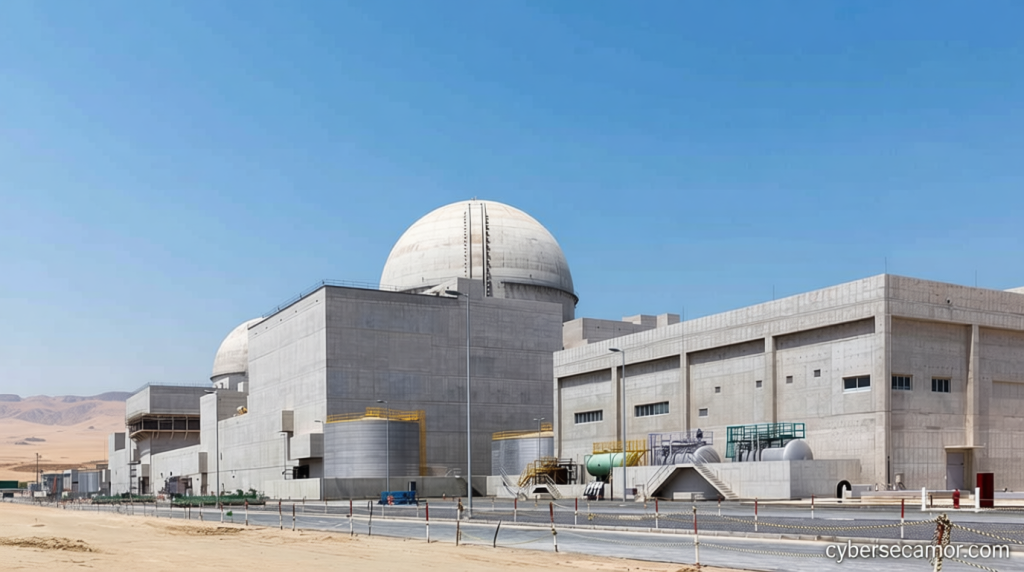
Drone strike sparks fire near UAE nuclear – A drone strike ignited a fire near the perimeter of the Barakah nuclear power plant in the United Arab Emirates on Sunday, intensifying concerns over the stability of a fragile ceasefire tied to the ongoing Iran conflict. The incident occurred amid heightened regional tensions, as both sides grapple with the potential for renewed hostilities. According to the Abu Dhabi Media Office, the fire originated from an electrical generator outside the main facility, with no radiation leaks or injuries reported. The statement also confirmed that the plant continued to operate without disruption, though the event underscored vulnerabilities in the area’s security infrastructure.
IAEA Confirms Fire Impact on Plant Operations
The International Atomic Energy Agency (IAEA) provided additional details, stating that the fire affected an electrical generator and temporarily required one reactor to rely on emergency diesel generators. The agency emphasized that radiation levels at the Barakah Nuclear Power Plant (NPP) remained within normal ranges, and no injuries were attributed to the drone strike. “This incident highlights the critical need for vigilance in protecting nuclear facilities,” said IAEA Secretary General Rafael Grossi, who expressed grave concern over the potential for military activity to endanger nuclear safety. He called for “maximum military restraint near any nuclear power plant” to prevent accidents that could escalate into broader crises.
“Military activity that threatens nuclear safety is unacceptable,” Grossi said. “All parties must exercise caution to avoid the danger of a nuclear accident.”
The drone strike appears to be part of a larger pattern of attacks targeting critical infrastructure in the region. Over the past weeks, Iran has launched multiple drone and missile strikes, which have disrupted operations in the UAE and raised alarms among regional allies. These attacks are seen as a direct response to the ongoing conflict, with both Iran and the United States vying for strategic advantages. Despite efforts to broker a ceasefire, negotiations have stalled, leaving the region in a precarious state of readiness.
Rising Tensions and Ceasefire Stalemate
The fire near the Barakah plant comes at a time when ceasefire discussions between Iran and the United States are at a standstill. Analysts suggest that the lack of progress in these talks has heightened the risk of conflict resuming, with both sides showing no signs of backing down. Meanwhile, Iranian state media has been actively promoting wartime imagery, including footage of presenters receiving firearms training and appearing armed on air. These visuals aim to reinforce a sense of urgency and preparedness, aligning with the nation’s military posturing.
While no group has yet claimed responsibility for the drone strike, the UAE has not publicly assigned blame, indicating a cautious approach to the situation. The absence of an immediate claim has left questions about the motivations behind the attack, with speculation pointing toward either internal dissent or external adversaries seeking to exploit the region’s instability. The Barakah plant, which is a cornerstone of the UAE’s energy strategy, serves as a symbol of the country’s commitment to nuclear development amid geopolitical uncertainty.
Historical Context and Regional Implications
Iran’s involvement in the region’s conflicts has long been a focal point of international diplomacy. The current ceasefire tensions are a continuation of a complex web of alliances and rivalries, with the UAE positioned as a key player in the Middle East. The drone strike near the Barakah plant not only underscores the threat to nuclear facilities but also highlights the interconnectedness of regional security issues. For instance, the attack could be interpreted as a test of the UAE’s defenses or a message to the United States, emphasizing Iran’s determination to assert control over the area.
Experts warn that the incident may serve as a catalyst for further military escalation. The UAE’s reliance on nuclear energy makes it a critical target, and any disruption could have far-reaching consequences. In addition to energy concerns, the plant’s strategic location raises questions about its role in the broader conflict. The IAEA’s swift response and confirmation of normal operations have provided some reassurance, but the underlying tensions remain unresolved. As the conflict continues to evolve, the Barakah plant’s safety will be a closely watched indicator of the region’s stability.
Global Reactions and Future Outlook
The incident has drawn attention from international observers, with some expressing worry over the potential for a nuclear accident. The IAEA’s involvement underscores the global stakes of the situation, as nuclear facilities are vital to energy security and climate goals. The agency’s statement that radiation levels remain normal is a positive sign, but the incident has reminded the world of the fragility of nuclear infrastructure in times of conflict.
As ceasefire talks remain inconclusive, the risk of further attacks increases. The UAE’s decision not to publicly blame any party suggests a desire to avoid direct confrontation, even as it seeks to protect its interests. The drone strike near the Barakah plant has thus become a symbol of the delicate balance between diplomacy and military action. With both Iran and the United States showing little willingness to compromise, the region may be on the brink of a new phase in the conflict, one that could have profound implications for nuclear safety and global energy markets.
Amid the rising tensions, the UAE has been working to maintain its position as a neutral actor in the conflict. However, the drone strike has challenged that narrative, forcing the nation to confront the reality of its vulnerability. The incident has also sparked discussions about the need for stronger international safeguards to protect nuclear facilities from potential threats. While the immediate danger appears contained, the broader implications of the strike suggest that the conflict is far from over, and the risk of nuclear-related incidents remains a pressing concern.
Conclusion and Call for Caution
The drone strike near the Barakah nuclear plant serves as a stark reminder of the challenges facing nuclear energy in conflict zones. Although the incident did not result in major casualties or environmental damage, it has intensified the debate over the security of such facilities. Rafael Grossi’s call for military restraint is a timely reminder of the importance of preserving nuclear safety, even as political tensions mount. With the UAE’s energy ambitions at stake, the region’s leaders are under pressure to find a solution that balances security with diplomacy.
In the coming days, the focus will remain on the Barakah plant’s status and the broader geopolitical landscape. The UAE’s ability to respond to the incident without drawing additional conflict will be key to maintaining stability. Meanwhile, the international community will be watching closely, as the situation continues to evolve. The drone strike is not just a local event—it is a flashpoint in a larger struggle for regional control, with nuclear facilities at the center of the storm.

