
Noam Bettan thanks supporters after controversial Eurovision second place
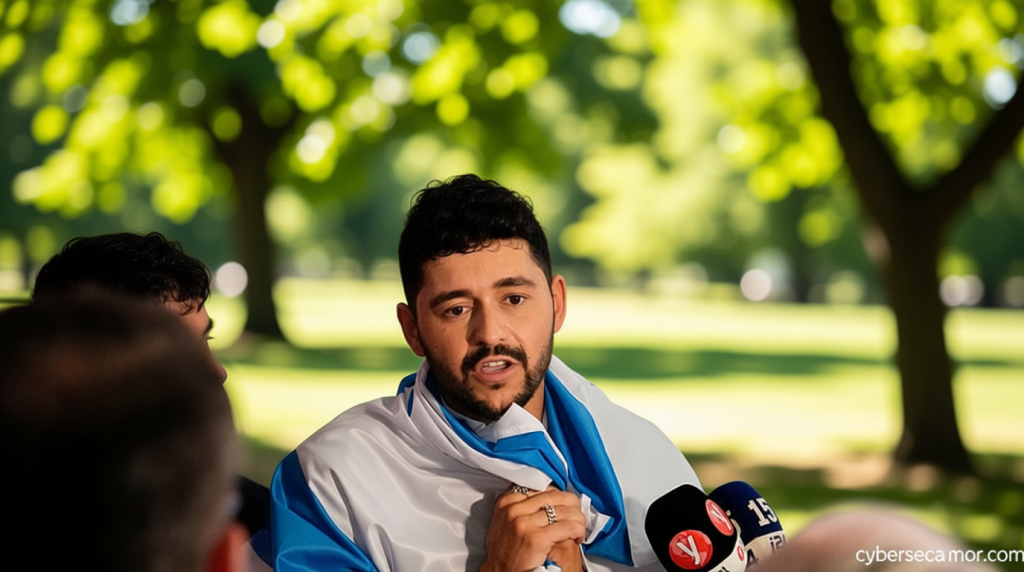
Noam Bettan Thanks Supporters After Controversial Eurovision Second Place
Noam Bettan thanks supporters after controversial – The 70th edition of Eurovision concluded on Saturday in Vienna’s Wiener Stadthalle, with Bulgaria’s song “Bangaranga” claiming the top spot and Israel’s Noam Bettan securing the runner-up position. Despite the political tensions surrounding Israel’s participation, Bettan expressed gratitude to his fans, acknowledging their unwavering support. The contest, which drew international attention for its geopolitical undertones, saw a notable absence from five nations that had withdrawn in protest over the inclusion of Israeli representatives.
Boycott Over Gaza Conflict
The decision by Spain, Ireland, the Netherlands, Slovenia, and Iceland to skip the competition marked the largest political withdrawal in Eurovision’s history. These countries cited Israel’s presence as a symbol of the ongoing Gaza war, arguing that the nation’s involvement in the conflict undermined the event’s neutrality. The European Broadcasting Union (EBU), which oversees the contest, faced mounting pressure to exclude Israel, particularly following allegations that the Israeli government had influenced voting in previous years. However, the EBU stood firm, allowing Israel to remain in the contest despite the boycott.
Bettan, representing Israel with the song “Michelle,” navigated a charged atmosphere during the final. While the performance received enthusiastic applause from the audience, it also drew sharp criticism from some spectators. Demonstrators gathered outside the venue, waving signs and chanting slogans, as the contest unfolded. Austrian authorities maintained a watchful presence, ensuring the demonstrations remained peaceful while keeping the streets around the Wiener Stadthalle open for the public.
Prime Minister’s Endorsement
Israeli Prime Minister Benjamin Netanyahu praised Bettan’s achievement, highlighting his resilience in the face of adversity. “He has earned the gratitude of the entire nation,” Netanyahu stated, adding that Bettan had demonstrated courage by “standing tall against those hollow verbal potshots.” The leader’s remarks underscored the symbolic weight of Israel’s participation, which has often been a focal point of debate. While the Eurovision stage is typically a celebration of music, this year it became a battleground for conflicting perspectives on the nation’s role in the conflict.
The EBU’s decision to include Israel came after a series of rule changes aimed at ensuring impartiality. In December, the organization announced that it would allow the country to compete, defying calls for its exclusion. This move was seen as a compromise, balancing the concerns of critics with the need to maintain the contest’s global appeal. The revised rules also prohibited broadcasters and contestants from engaging in promotional campaigns by third parties, including governments, to prevent political interference in the voting process.
Belgium Considers Withdrawal
The controversy did not end with the final. On Saturday, Belgian broadcaster VRT hinted at potential non-participation in next year’s contest, signaling a possible shift in its stance. A spokesperson for VRT, Yasmine Van der Borght, noted that “as things stand today, there is little chance that VRT will send an artist next year.” She emphasized the need for the EBU to take a firm position on the issue, urging a vote to determine which countries should be eligible to compete. “We expect the EBU to make a clear statement against war and violence and in favor of respect for human rights,” Van der Borght added, reflecting growing discontent among some European broadcasters.
Bettan’s journey to the Eurovision stage had been anything but straightforward. The Israeli entry faced scrutiny from the outset, with critics questioning the country’s neutrality in the Middle East conflict. Nevertheless, the singer’s performance on Saturday showcased his talent and determination, earning him a place in the contest’s history. Israel’s second-place finish in 2025 had already set a precedent, and this year’s result reinforced the nation’s growing presence in the competition.
Security Measures and Public Sentiment
Throughout the week leading up to the final, security protocols were heightened in anticipation of protests. Police officers were deployed across Austria, monitoring the demonstrations and ensuring the safety of attendees. Despite the tensions, the event proceeded without major disruptions, with fans from all over the world converging on Vienna to witness the outcome. The mix of cheers and boos during the broadcast highlighted the divided opinions of the audience, with some expressing pride in Israel’s success and others criticizing its participation.
Bettan’s performance, while divisive, managed to capture the attention of millions. The song “Michelle” blended emotional storytelling with powerful melodies, resonating with listeners even as it sparked debate. His ability to perform under such scrutiny demonstrated not only his artistic capability but also his role as a cultural ambassador for Israel. The singer’s journey through the competition had been marked by both support and criticism, with his placement reflecting the complex interplay of music and politics.
As the dust settled on Saturday night, the EBU faced renewed calls to address the controversies surrounding its decision to include Israel. With the global audience divided, the organization’s commitment to maintaining the contest’s integrity was tested. The outcome of this year’s Eurovision, however, underscored the enduring appeal of music as a unifying force, even in the shadow of political discord. For Bettan, the second-place finish was a testament to the resilience of the Israeli team and the strength of their message.
A Eurovision Legacy in the Spotlight
Israel’s return to Eurovision in 2026 marked a significant moment in the contest’s storied history. The country has participated in every edition since 1973, with its performances often serving as a reflection of its national identity and cultural aspirations. This year’s contest, however, added a new layer of complexity, as the stage became a platform for expressing views on the Gaza conflict. The EBU’s decision to keep Israel in the competition was a calculated move, recognizing the country’s right to participate while addressing the concerns of its critics.
The 70th Eurovision contest not only highlighted the musical talents of its participants but also revealed the broader geopolitical currents influencing the event. The presence of five boycotting nations added a unique dimension to the competition, with the outcome symbolizing both the unity and division among the participating countries. As the EBU prepares for future editions, the challenge remains to balance the artistic spirit of the contest with the growing political sensitivities of its audience.
Bettan’s expression of thanks to his supporters was a poignant moment in the event, encapsulating the emotions of a nation that had weathered criticism and skepticism. His words served as a reminder of the power of music to transcend political boundaries and connect people across cultures. While the path to Eurovision 2026 was fraught with controversy, the final result affirmed the enduring significance of the contest as a stage for both artistry and diplomacy.

