
Exclusive: Cuba says it’s ready to talk to US, but not about regime change, as Trump ramps up pressure
Cuba’s Stance on US Dialogue
Cuba is ready for “meaningful” dialogue with the United States but is not willing to discuss changing its government, according to Carlos Fernández de Cossío, the Cuban deputy foreign minister. His remarks come as the Trump administration intensifies pressure on the island with talk of regime change.
“We’re not ready to discuss our constitutional system as we suppose the US is not ready to discuss their constitutional system, their political system, their economic reality,” Fernández de Cossío stated.
Díaz-Canel’s Comments on Pressured Dialogue
Cuban President Miguel Díaz-Canel echoed these comments on Thursday, asserting that dialogue under pressure is impossible. Fernández de Cossío clarified that while the countries have not yet established “a bilateral dialogue,” they have had “some exchanges of messages” linked to the highest levels of Cuba’s government.
US Pressure and Oil Cuts
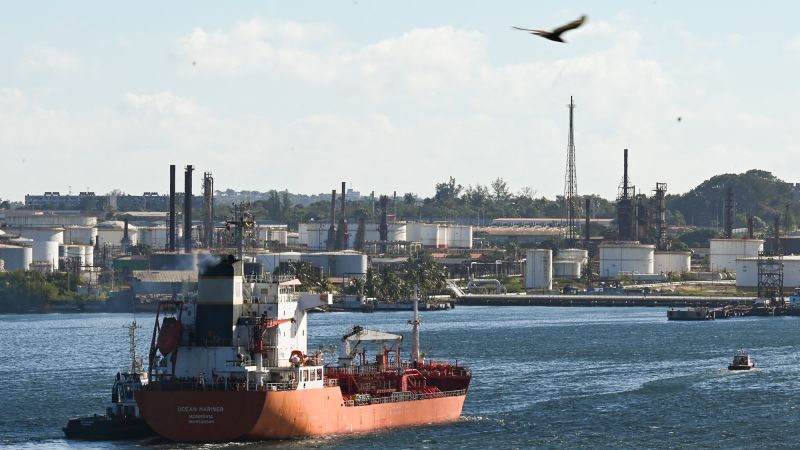
His remarks follow days after US Secretary of State Marco Rubio indicated the US “would love to see” regime change in Cuba, though he did not confirm any immediate action. The Trump administration has also ramped up pressure by attempting to cut off oil deliveries to the Caribbean island.
The US has already disrupted Cuba’s oil supplies from Venezuela following the removal of that country’s president. Last week, it threatened tariffs on nations exporting oil to Cuba, claiming Havana poses an “extraordinary threat” by aligning with “hostile countries and malign actors,” and hosting their military and intelligence capabilities.
Cuba’s Rebuttal and Economic Impact
“Cuba poses no threat to the United States. It is not aggressive against the United States. It’s not hostile. It doesn’t harbor terrorism, nor sponsors terrorism,” Fernández de Cossío said. He urged the US to ease its pressure campaign, which he argues has already harmed the country.
Cubans are experiencing constant blackouts and long lines at gas stations due to a dwindling fuel supply. Cuban officials attribute this to existing US economic sanctions, though critics also point to insufficient government investment in infrastructure.
Fernández de Cossío mentioned Cuba may need to consider austerity measures and unspecified sacrifices to conserve fuel, though he did not specify how much remains in its reserves. “What Cuba suffers is equivalent to war in terms of economic coercive measures,” he said.
Trump’s Proposal for a Deal
US President Donald Trump suggested Cuba could avoid a total cut-off by striking “a deal,” potentially requiring the return of property confiscated from Cuban exiles after the 1959 revolution.
Mexico’s Role in Supporting Cuba
Trump also mentioned Mexico, a close ally of the Cuban government, would suspend oil shipments amid increased US pressure. Mexico stated its oil contracts with Cuba remain open, but it is exploring alternative ways to help the island mitigate the effects of US tariffs.
