The surprising reason behind Earth’s summer solstice

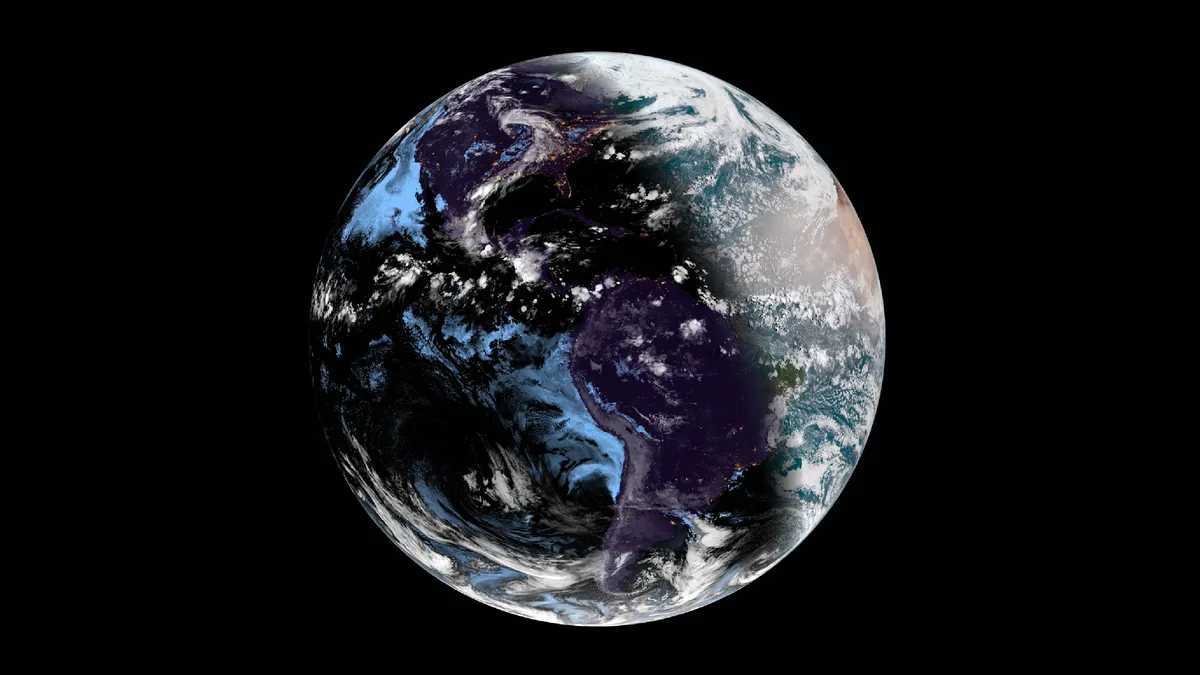
The Surprising Reason Behind Earth’s Summer Solstice
Cybersecarmor.com – As the sun climbs higher in the sky and days stretch longer, summer has officially begun. This annual event, known as the summer solstice, marks the moment when the Northern Hemisphere experiences the maximum amount of daylight. While it may feel like the warmest season has already taken hold, the peak of summer temperatures typically follows a few weeks later due to the planet’s thermal inertia.
Astronomical Significance of the Solstice
On Sunday, June 21, at 4:25 a.m. ET, the summer solstice will occur, as reported by Space.com. At this precise instant, the Sun reaches its highest elevation in the sky, casting the longest shadows and creating the most sunlight for the year. This phenomenon is not merely about daylight duration but also about the intensity of solar radiation, which directly influences seasonal temperatures.
“The summer solstice is the moment when the Sun is at its highest point in the sky each year,” according to EarthSky. This alignment results in the Northern Hemisphere being tilted most directly toward the sun, capturing the most concentrated energy from our star.
While the solstice is often celebrated as the start of summer, the actual warmth of the season is a delayed response. The National Weather Service explains that Earth’s surface—comprising land and water—requires time to absorb and retain heat. This thermal lag means that the hottest days of the year usually arrive after the solstice, similar to how the peak of a typical summer day often occurs a few hours after noon.
The Tilt That Shapes Seasons
The underlying cause of Earth’s seasons lies in its axial tilt. As the planet orbits the sun, this tilt remains consistent, directing one hemisphere toward the sun while the other faces away. This tilt, approximately 23.5 degrees, creates the cycle of seasons by altering the angle and duration of sunlight received throughout the year.
“Earth’s seasons are caused by the tilt of its axis,” states NASA. This tilt, which has been stable for millions of years, ensures that different regions experience varying amounts of solar exposure depending on their position in the orbit.
Interestingly, the tilt itself is not a fixed feature. According to Sciencefocus.com, the Earth’s axial tilt is thought to have originated from collisions with massive protoplanets during the early formation of the solar system. These ancient impacts may have nudged the planet into its current tilted orientation, a state that persists to this day. This tilt, rather than Earth’s rotation, is the primary reason for the seasonal shifts that define our climate patterns.
When Solstices Meet Equinoxes
Summer solstices occur annually in June, while winter solstices happen in December. These events signify the transition between seasons, with the solstice marking the longest day of the year and the winter solstice the shortest. Equinoxes, on the other hand, occur in March and September, dividing the year into equal halves of daylight and darkness.
“Equinoxes occur when day and night are nearly equal in length,” notes EarthSky. This happens twice a year, as the sun crosses the equator, resulting in balanced sunlight distribution across the globe.
Although the solstices and equinoxes are well-documented, their impact on human perception of seasons can vary. In many regions, the effects of the solstice may be subtle, as the transition to warmer weather often begins weeks before the official date. This is due to the gradual heating of the Earth’s surface, which takes time to reach its full intensity.
Global Implications of the Solstice
The summer solstice is not limited to the Northern Hemisphere. In the Southern Hemisphere, it marks the beginning of winter, as the tilt directs that region away from the sun. This contrast highlights the interconnected nature of Earth’s seasonal cycles, where one hemisphere’s warmth corresponds to the other’s cooling.
While the solstice is a fixed astronomical event, its influence extends beyond scientific observations. Cultures around the world have long celebrated this time of year, often through festivals, rituals, or simply by appreciating the extended daylight. These traditions underscore the deep connection between celestial events and human life, even as the scientific mechanisms behind them remain unchanged.
Why the Heat Follows the Solstice
Despite the sun’s highest position on the solstice, the Earth’s thermal properties create a delay in the temperature response. NOAA explains that land and water masses absorb solar energy over time, leading to a gradual warming of the atmosphere. This process, known as thermal inertia, means that the peak of summer heat typically arrives several weeks after the solstice.
For example, in the United States, the effects of the solstice may already be noticeable, with prolonged daylight and warmer air temperatures. However, the most intense heat of the season often occurs later, as the ground and oceans continue to accumulate heat. This lag is particularly pronounced in areas with large bodies of water, where temperatures rise more slowly compared to arid regions.
Understanding this delay is crucial for accurate weather forecasting and climate modeling. Scientists use this knowledge to predict seasonal trends and prepare for extreme heat events. The National Weather Service emphasizes that while the solstice is a key milestone, it serves as a starting point rather than an endpoint for the warmest days of the year.
Seasons Beyond the Solstice
The summer solstice is just one of two solstices that define the solar year. The other, the winter solstice, occurs in December and marks the beginning of the coldest season in the Northern Hemisphere. These two events, along with the equinoxes, create a four-part cycle that governs the Earth’s climate and ecosystems.
Together, these astronomical markers shape not only the weather but also the natural world. From the migration of animals to the blooming of flowers, the timing of these events influences biological rhythms across the planet. The solstice, in particular, signals the start of the longest day, which can have profound effects on plant growth, animal behavior, and even human activities.
As the sun reaches its zenith on June 21, it’s a reminder of Earth’s dynamic relationship with the cosmos. The tilt of the axis, the thermal inertia of the planet’s surface, and the predictable patterns of sunlight all contribute to the seasonal changes that define our lives. While the solstice is a fixed moment in time, its impact on the environment and human experience is both immediate and enduring.
For those unable to view the accompanying graphics, a link is provided to access visual representations of the solstice and related phenomena. These images, sourced from NASA, NOAA, Sciencefocus.com, and EarthSky.org, offer a clearer understanding of how the Earth’s tilt and orbit interact to create the seasons we experience each year.
In summary, the summer solstice is more than a marker of the year—it is a pivotal event that reflects the intricate balance of celestial mechanics and planetary physics. By recognizing the role of the Earth’s tilt and thermal properties, we gain a deeper appreciation for the natural forces that shape our world and the changing seasons that define it.