Mail-in ballot rules spark voter confusion. Where do things stand?

Daftar Isi
Mail ballot plans proceed as Supreme Court weighs Postal Service rule
Cybersecarmor.com – Election offices across the country are beginning to send out midterm ballots while a major legal dispute over mail voting remains unresolved. The timing has created uncertainty for voters and administrators alike, particularly in states where ballots have already entered the mail stream or will do so within days.
Twenty states are scheduled to mail ballots to voters during the coming week or have already started the process, the National Conference of State Legislatures has indicated. Federal law also requires ballots for military personnel and overseas voters to be sent at least 45 days before Election Day, placing an important deadline in the week of Sept. 14.
The dispute centers on a new U.S. Postal Service requirement that would give USPS a more direct role in determining whether mail ballots can be delivered. The agency announced the policy in May and finalized it on Aug. 26 after President Donald Trump signed an executive order in March.
What the proposed Postal Service requirements would do
Under the rule, state and local election offices would need to submit voter names and addresses through a USPS portal that is not yet available. Postal officials could decline to deliver ballots that fail to satisfy the new standards or that list a voter whose name does not appear in the submitted records.
The policy also calls for new envelope specifications, including a tracking barcode for mail ballot envelopes. States would have to create those designs and provide them to USPS for approval.
For many election offices, those changes would arrive after ballots and envelopes have already been printed or are deep into production. Because states administer their own elections, the proposed federal postal requirements could affect roughly 10,000 separate state and local contests, each with its own ballot materials and election calendar.
The immediate question before the Supreme Court is narrow: whether the rule may take effect for this election while lawsuits continue. The justices are not deciding the ultimate constitutionality of either the Postal Service policy or Trump’s executive order.
Lower courts have paused the policy
Two dozen states have challenged the rule, arguing that it is unconstitutional. U.S. District Judge Indira Talwani put the measure on hold, finding that it could not realistically be carried out in time for this year’s elections.
On Sept. 10, the 1st Circuit rejected the Trump administration’s request to allow the requirements to proceed. The administration had already made an unusual appeal to the Supreme Court before the appeals court issued its decision. A ruling from the high court could arrive at any time.
USPS has not answered questions about a key practical issue: whether ballots already sent through the mail before a Supreme Court decision could still be mailed back to election offices if the stay is lifted.
Even if the Supreme Court permits the restrictions to take effect, the broader court fight will continue in federal district court in Boston. If the stay remains in place, election officials will still face the task of explaining to voters why the rules have been widely discussed but are not currently being enforced.
Election officials warn of disruption
A bipartisan collection of election administrators, including several Republican secretaries of state, urged the Supreme Court to leave the rule paused for now. Republican officials from Kentucky, North Dakota, South Dakota, Georgia and Kansas joined the filing, along with Utah’s lieutenant governor and about two dozen additional local election officials.
The group did not take a position on whether the rule is lawful. Instead, it focused on the difficulty of making broad operational changes so close to an election.
“late changes breed confusion, that confusion keeps eligible voters from voting, and that a chaotic election erodes confidence in the result.”
State and local offices generally continue to follow their existing state-law deadlines unless a court specifically directs them to comply with the new federal postal rule. That means voters in many places should expect their mail ballot process to remain unchanged for the moment.
“As far as citizens and the clerks are informed across the state, it is business as usual,”
Nevada Secretary of State Cisco Aguilar, a Democrat, said that election operations in his state were continuing normally.
“We’re taking a wait and see approach.”
Arizona Secretary of State Adrian Fontes, also a Democrat, described his state’s posture as officials await further court action.
Mail voting begins on different schedules
Mail voting began in North Carolina on Sept. 4. Wisconsin is scheduled to begin on Sept. 17, followed by Idaho, Minnesota, New York and Virginia on Sept. 18. Other states will start their mail ballot periods shortly afterward.
That staggered schedule makes a nationwide shift especially difficult. A policy introduced after one state has mailed ballots could affect another state still preparing its envelopes, while voters elsewhere may have already received and returned their ballots.
Mail voting remains a significant part of the American election system. Nearly 30% of voters used a mail ballot in the 2024 election, MIT Election Data & Science Lab figures show. Democrats have been more likely than Republicans to vote by mail, making the outcome of the dispute potentially consequential in closely contested midterm races.
What voters can do now
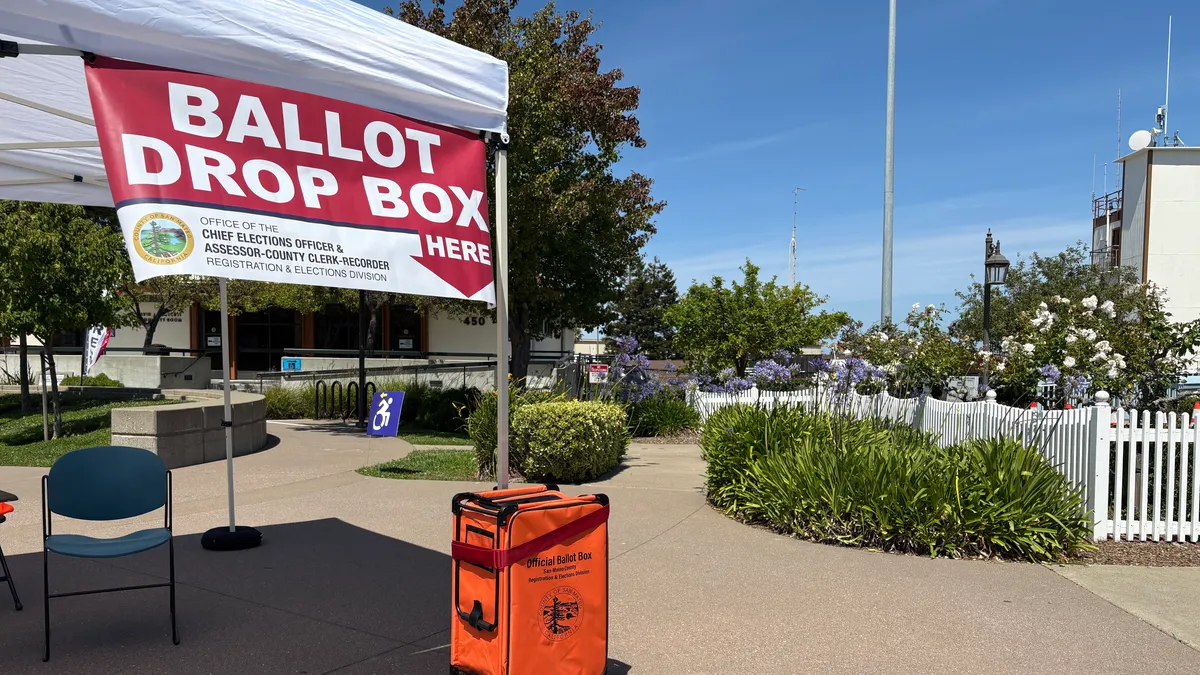
Voters who have questions about a ballot should check instructions from their local election office. Officials have spent months encouraging voters concerned about return-mail timing to use a secure ballot drop box where one is available or deliver the ballot directly to a local election office.
Those options can help voters avoid potential delays in the mail, though availability and rules vary by state and county. Voters should also pay attention to ballot-return deadlines, signature requirements and any local instructions concerning identification or envelope completion.
Until the Supreme Court acts, the core message from many election offices is that existing voting plans remain in place. But the legal uncertainty means election administrators may need to communicate quickly if the court changes the status of the Postal Service rule in the days ahead.
Related Reading
Frequently Asked Questions
What is Mail in ballot rules spark voter?
Mail in ballot rules spark voter is the main topic of this guide. The article explains the context, practical details, and next steps readers should understand.
Why does Mail in ballot rules spark voter matter?
Mail in ballot rules spark voter matters because readers are looking for a useful answer, not just a short summary. Good content should match search intent and help them decide what to do next.