
UAE-backed programme broadens assessment of public institutions
UAE-backed programme broadens assessment of public institutions
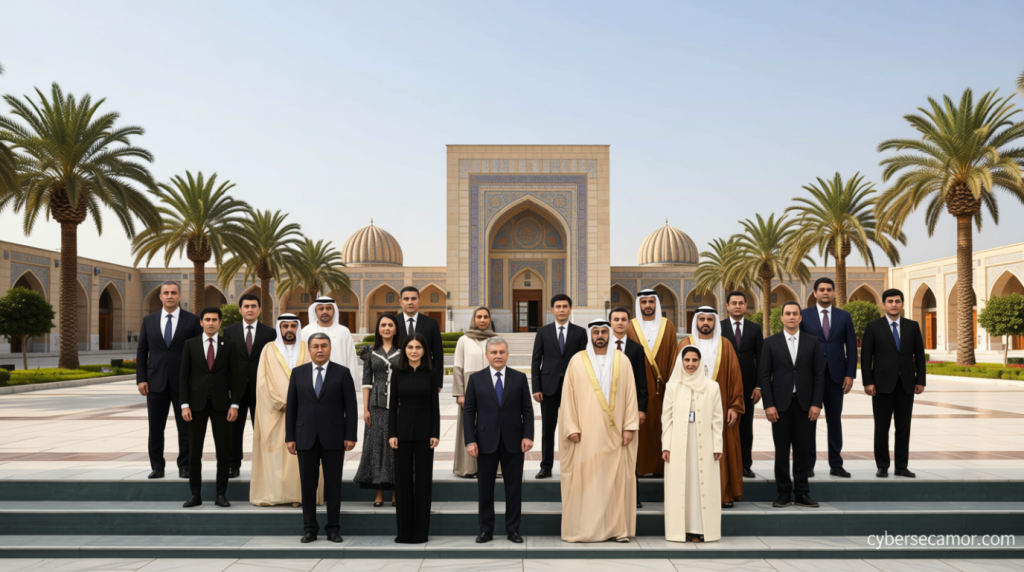
UAE backed programme broadens assessment of public – Uzbekistan has taken a significant step in enhancing its evaluation framework for public sector performance, with a UAE-supported initiative now encompassing 41 government bodies. This number doubles the count from the prior assessment cycle, reflecting a broader commitment to institutional accountability. The latest round of evaluations concluded with a ceremony in Tashkent, attended by President Shavkat Mirziyoyev and Mohammed Bin Abdullah Al Gergawi, the UAE Minister of Cabinet Affairs. The event underscored the collaborative efforts between the two nations to modernize governance structures.
Performance Metrics as a Global Standard
As nations worldwide increasingly prioritize performance indicators, digitalization benchmarks, and service delivery metrics, Uzbekistan has integrated these frameworks into its public administration reforms. The UAE-backed programme serves as a tool to gauge the effectiveness of state institutions, focusing on how well they address citizen needs through operational efficiency and transparency. By aligning with the UAE’s Government Excellence Programme, which has been operational since 2019, Uzbekistan aims to measure not just procedural adherence but tangible outcomes.
“When government bodies effectively tackle the challenges citizens face in a timely and fair manner, public confidence in the state grows substantially,” Mirziyoyev remarked during the ceremony. This statement highlights the program’s dual purpose: evaluating institutional performance while fostering a culture of service-oriented governance. Al Gergawi, representing the UAE, emphasized the initiative’s role in driving systemic change. “This is part of a wider transformation,” he stated, noting the potential for Uzbekistan to become a model for administrative reform in the region.
Expanded Scope and Evaluation Criteria
The current phase of the assessment has seen a notable broadening of its scope, with joint teams of Uzbek and Emirati evaluators scrutinizing ministries, agencies, and committees using a comprehensive set of criteria. These include digitalization levels, transparency in operations, internal management efficiency, and the effectiveness of public service delivery. According to Abdulla Abdukadirov, Director of Uzbekistan’s Agency for Strategic Development and Reforms, the program’s reach has grown substantially. “We decided to include smaller committees and agencies in addition to major ministries,” he explained, underscoring the program’s commitment to inclusivity and holistic evaluation.
Abdukadirov also highlighted a shift in focus from formal documentation to real-world functionality. “The emphasis is now on how institutions operate, not just how they report,” he said. Evaluators are now assessing whether processes are systematic, digitized, and aligned across different levels of governance. This approach ensures that administrative tasks are not only understood but also executed with consistency and clarity. For instance, the Ministry of Internal Affairs was praised for its efforts in digitizing public services, a key factor in improving accessibility for citizens.
Case Study: Ministry of Internal Affairs
One standout example from this year’s assessment is the Ministry of Internal Affairs, which demonstrated notable progress in digitalizing its services. Deputy Interior Minister Zafar Kurbanov noted that 55 of the ministry’s 62 services are now available online, a significant increase from the 20 services offered in 2020. “This means citizens can access services within minutes via the government portal,” he said, illustrating the practical benefits of the program’s focus on efficiency. The ministry’s success has become a benchmark for other departments, showcasing how technology can streamline bureaucratic processes.
The program has also introduced individual categories to recognize outstanding contributions by civil servants. These awards highlight the importance of human capital in driving institutional excellence, with specific focus on young professionals, HR specialists, and women in leadership roles. By celebrating these individuals, Uzbekistan aims to motivate the workforce to prioritize measurable outcomes over rigid procedures. “The goal is to ensure that every part of the system works toward results,” Abdukadirov reiterated, emphasizing the shift from traditional methods to performance-driven models.
Bureaucracy Reduction and Public Trust
A core objective of the initiative is to reduce administrative red tape and simplify access to public services. This aligns with Uzbekistan’s recent “Zero Bureaucracy” initiative, which has been lauded as a key component of the program. UAE Assistant Minister of Cabinet Affairs for Government Knowledge Exchange Mohammed Bin Taliah pointed to this effort as a prime example of how the collaboration has influenced policy. “The program seeks to eliminate inefficiencies in both the government and the broader society,” he stated, noting the transformative impact on citizens’ daily lives.
Officials stress that the program’s success hinges on its ability to translate political will into sustained administrative improvements. Mirziyoyev, in his address, outlined the importance of this shift. “From now on, the principle of working not for the process but for the result will define how state institutions operate,” he said. This declaration signals a renewed emphasis on accountability, with underperforming ministries facing greater scrutiny in future cycles. The program’s structure ensures that progress is continuously measured, and those lagging behind are given targeted support to improve.
Collaborative Impact and Future Goals
The UAE’s involvement in Uzbekistan’s administrative reforms has not only introduced new evaluation methodologies but also fostered a shared vision for public sector transformation. By leveraging the UAE’s experience in governance excellence, Uzbekistan is adapting best practices to its unique context. The program’s expansion reflects a strategic move to create a more transparent and citizen-focused system, with officials acknowledging its role in building a culture of innovation.
Abdukadirov noted that the broader objective is to ensure institutions are judged by their ability to deliver results. “We want to shift the focus from paperwork to outcomes,” he said, highlighting the program’s adaptability to evolving challenges. The recent assessments have already demonstrated measurable progress, with ministries demonstrating improved efficiency and responsiveness. As the program continues, its impact is expected to ripple through various sectors, reinforcing Uzbekistan’s commitment to modernization.
Looking Ahead: A Culture of Excellence
For some officials in the program, the expanded scope presents both opportunities and challenges. While the inclusion of smaller agencies ensures a more comprehensive evaluation, it also requires greater coordination and resource allocation. Nevertheless, the collective effort has been seen as a positive step toward institutional accountability. “What we are witnessing today is a clear example of the results achievable when political will becomes a work culture,” Al Gergawi said, emphasizing the partnership’s role in driving change. The UAE and Uzbekistan are now working to sustain this momentum, with the ultimate aim of establishing a lasting culture of excellence in public administration.
The program’s long-term success will depend on its ability to maintain rigorous standards while adapting to the needs of the evolving public sector. As evaluations continue, the focus remains on creating a transparent, efficient, and citizen-centric system. This collaborative effort between the UAE and Uzbekistan exemplifies how international partnerships can catalyze domestic reform, offering a model for other nations seeking to modernize their governance frameworks. With 41 institutions now under review, the program is poised to become a cornerstone of Uzbekistan’s administrative development in the years to come.

