3 deaths reported during Burning Man 2026 event in Nevada

Daftar Isi
Three Participants Dead at Burning Man 2026 as Nevada Desert Festival Closes
Cybersecarmor.com – The Black Rock Desert, a vast salt flat in western Nevada that transforms each August into a temporary city of tens of thousands, has claimed three lives during the 2026 edition of Burning Man. Pershing County Sheriff’s Office confirmed on September 7 that a third participant died en route to a hospital in Reno, bringing the death toll for this year’s festival to three. The office withheld the individual’s name and further identifying details at the time of confirmation.
The third fatality emerged while investigators were already working through the circumstances surrounding two earlier deaths. In both of those cases, officials stated that foul play was not suspected. The two previously identified participants were Craigh Mann, age 60, and Sampson Tshombe, a man in his mid-50s.
Timeline of the Deaths
Tshombe was found unresponsive at approximately 6:30 p.m. local time on September 3. He had suffered a medical emergency during the event and was transported to the on-site emergency care center, where medics pronounced him dead. Authorities described the incident as a medical event rather than a criminal one.
Mann’s death came two days later. Campmates discovered him at roughly 3 p.m. on September 5. The Washoe County Regional Medical Examiner’s Office was tasked with performing an autopsy to establish both the cause and the manner of his death. No criminal investigation was opened in his case.
The third death, confirmed on September 7, occurred while the individual was being airlifted or driven to a hospital in Reno. Because the person had not yet been formally identified by the time of the sheriff’s office announcement, no name, age, or cause of death was made public.
Official Response and Condolences
Burning Man, the organization behind the annual gathering, issued a brief statement on September 5 addressing the loss of a participant:
“Our thoughts and deepest condolences are with the participant’s family, friends, campmates and all those affected by this loss.”
The Pershing County Sheriff’s Office continued its investigative work through the final days of the festival. Sheriff Jerry Allen addressed the circumstances surrounding Mann’s discovery to local press, confirming the approximate time and the involvement of fellow campers who found him.
Scale and Self-Sufficiency of the Event
Burning Man is structured around principles of radical self-expression, communal effort, civic responsibility, and active participation. The 2026 gathering was projected to attract roughly 70,000 attendees to a landscape that offers no permanent infrastructure. Participants are expected to bring and manage their own food, water, and shelter for the duration of the week. The Black Rock Desert, at an elevation near 4,000 feet, can swing from scorching daytime heat to near-freezing nights, and the nearest major medical facility sits well over an hour’s drive away.
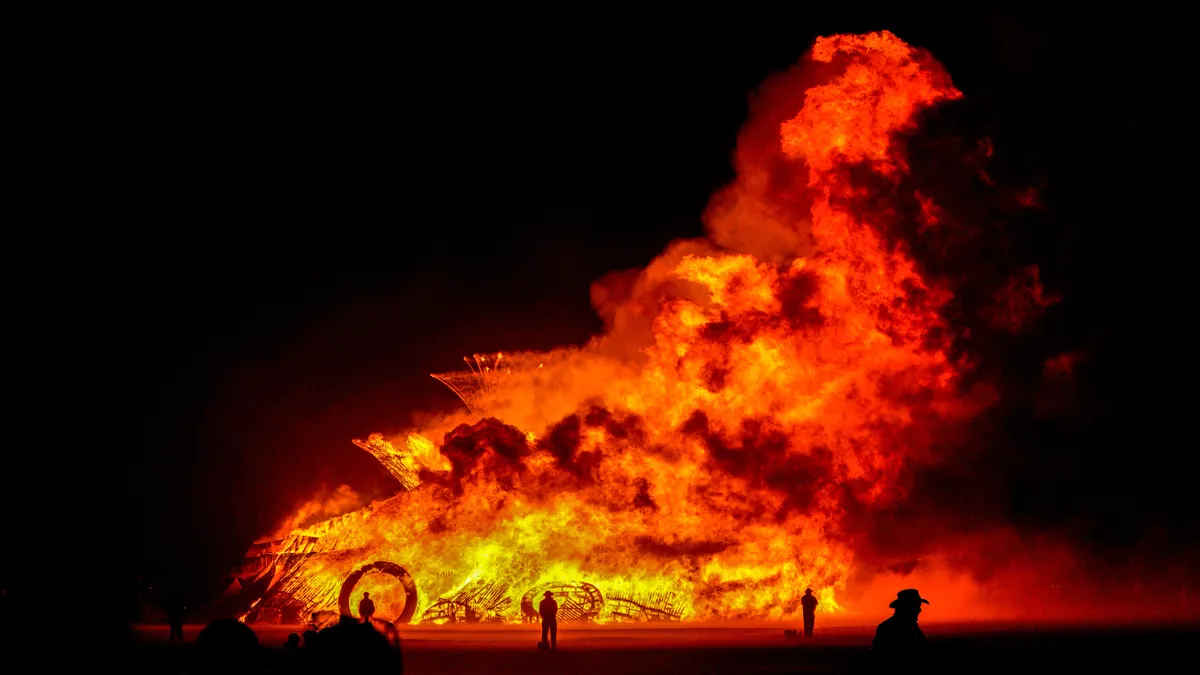
The festival’s ceremonial climax — the ignition of the Man, a towering wooden effigy — took place on the night of September 5. The event officially wound down on September 7, the same day the third death was confirmed.
A Pattern of Fatalities
This year’s three deaths bring the running total of fatalities connected to Burning Man over the past four years to at least six. Since the festival relocated from San Francisco to the Nevada desert in 1990, at least ten people have died at the event, according to records compiled by local news organizations.
The most recent prior fatality dates to 2025, when Vadim Kruglov, a 37-year-old Russian national residing in Washington state, was found fatally stabbed during the festival. That case remains open; no arrests have been announced, and the Pershing County Sheriff’s Office continues its investigation.
In 2024, Kendra Frazer, 39, died on the first day of the event after suffering an asthma attack while asleep. In 2023, Leon Reece, 32, was discovered unresponsive at the festival grounds. The Washoe County Regional Medical Examiner’s Office attributed his death to suspected drug intoxication at the time.
What Comes Next
With the festival concluded and the desert returning to its usual emptiness, the Washoe County Regional Medical Examiner’s Office will complete its autopsy work on Mann’s case. The circumstances of the third death remain under review by the Pershing County Sheriff’s Office. Families of all three deceased participants have been notified, and the organization behind Burning Man has indicated it will cooperate fully with ongoing investigations.
For a gathering that draws tens of thousands into one of the most remote and unforgiving landscapes in the continental United States, the margin between a week of communal art-making and a medical emergency measured in minutes is thinner than many attendees realize. The desert does not wait, and the nearest emergency room is always a long drive away.
Related Reading
Frequently Asked Questions
What is 3 deaths reported during Burning Man 2026?
3 deaths reported during Burning Man 2026 is the main topic of this guide. The article explains the context, practical details, and next steps readers should understand.
Why does 3 deaths reported during Burning Man 2026 matter?
3 deaths reported during Burning Man 2026 matters because readers are looking for a useful answer, not just a short summary. Good content should match search intent and help them decide what to do next.