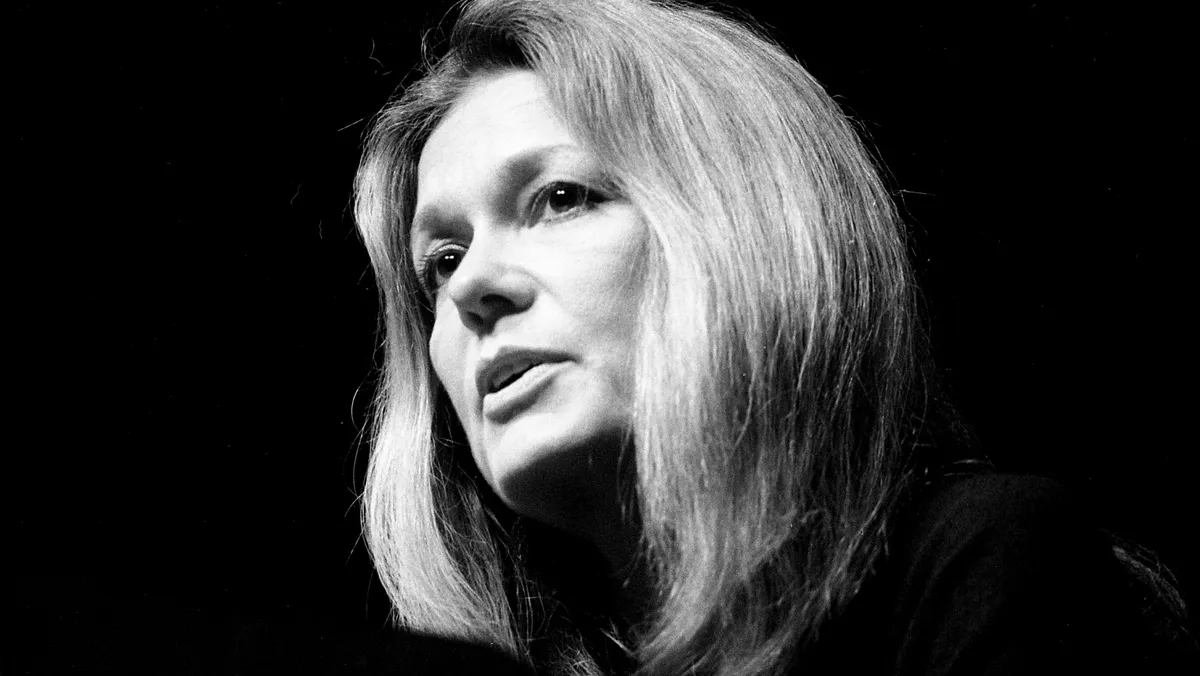
Gloria Steinem’s touching tribute to doctor who made her abortion possible

Daftar Isi
Gloria Steinem, Feminist Icon and Voice of a Generation, Dies at 92
Cybersecarmor.com – Gloria Steinem, the journalist, author, and lifelong champion of women’s rights who spent more than six decades reshaping American public discourse on gender equality, passed away on Wednesday, September 2, at the age of 92. Her death was confirmed through an announcement posted on her official Instagram page, where her team offered a brief but deeply personal eulogy.
“Gloria’s greatest gift was her ability to listen to others, to make others feel seen and heard. Her words, actions, and example gave people permission to be their truest selves.”
Steinem’s influence stretched across journalism, publishing, grassroots organizing, and legislative advocacy. She co-founded the National Women’s Political Caucus, the Ms. Foundation for Women, the Free to Be Foundation, and the Women’s Media Center. In 1970, she stood before the U.S. Senate to argue in favor of the Equal Rights Amendment, a constitutional proposal that would have guaranteed equal legal rights regardless of sex. Though the ERA never achieved ratification, Steinem’s testimony helped keep the question alive in national conversation for decades.
A Dedication That Became a Landmark
Among the many passages Steinem wrote over a career spanning six decades, few carry the emotional weight of a brief dedication she included in her 2015 memoir, My Life on the Road. The book, which traced the people, places, and political forces that shaped her activism, opened with a letter addressed to a physician she had known for barely an hour.
In 1957, a twenty-two-year-old Steinem was traveling from New York to India, where she had secured a fellowship that would introduce her to nonviolent protest and community-level organizing. Before boarding that flight, she needed an abortion — a procedure that remained illegal in England at the time unless performed for reasons tied to the woman’s physical health. She turned to Dr. John Sharpe, a London-based physician, who agreed to refer her despite the legal peril such a referral carried.
Steinem recalled the exchange in the memoir’s dedication:
“Dr. John Sharpe of London, who in 1957, a decade before physicians in England could legally perform an abortion for any reason other than the health of the woman, took the considerable risk of referring for an abortion a twenty-two-year-old American on her way to India. Knowing only that she had broken an engagement at home to seek an unknown fate, he said, ‘You must promise me two things. First, you will not tell anyone my name. Second, you will do what you want to do with your life.’ Dear Dr. Sharpe, I believe you, who knew the law was unjust, would not mind if I say this so long after your death: I’ve done the best I could with my life. This book is for you.”
The passage struck a chord far beyond the book’s readership. In a 2022 appearance on CNN, Steinem read the dedication aloud and reflected on its continuing resonance:
“I think there are women and men across this country saying thank you to physicians who recognize individual rights.”
That single sentence — “you will do what you want to do with your life” — encapsulated a principle that Steinem spent the rest of her career defending: that bodily autonomy and self-determination are not privileges to be granted selectively but foundational rights. She later coined the phrase “reproductive freedom,” a formulation that entered the lexicon of modern feminism and continues to frame debates over contraception, abortion access, and healthcare policy.
From Smith College to the Front Lines of Activism
Steinem graduated magna cum laude from Smith College in Massachusetts in 1956. The India fellowship that followed was meant to immerse her in the methods of nonviolent resistance she had admired since reading about Mahatma Gandhi’s campaigns. The abortion she obtained en route to that fellowship was, by her own account, a small but defining act of self-assertion — a decision made before the legal architecture of the United States had caught up with the reality of women’s lives. The landmark 1973 Supreme Court decision in Roe v. Wade would later establish a constitutional right to abortion, but for Steinem and millions of women before her, the procedure existed in a gray zone of risk, secrecy, and dependence on sympathetic physicians.
Back in New York, Steinem began freelance reporting in 1960, writing for magazines and newspapers that were beginning to notice a new generation of women demanding coverage of issues previously dismissed as “private.” In 1971, she co-founded Ms. magazine, which became the flagship publication of the second-wave feminist movement, blending investigative journalism with cultural criticism and political analysis. The magazine ran for decades and trained a cohort of writers who went on to shape reporting on gender, labor, and civil rights.
A Final Memoir and a House That Will Outlive Its Owner
Steinem’s last book, An Unexpected Life, was scheduled for release on September 22 from Random House — twenty days after her death. The memoir, described by her team as a chronicle of “unlikely experiences and pivotal moments,” also looks back across six decades of activism, cataloging both hard-won advances and recurring setbacks in the fight for equality.
In a passage shared alongside the death announcement, Steinem wrote about the brownstone in which she had lived for more than fifty years:
“I have now lived for more than fifty years in this brownstone, in rooms that have witnessed lives before mine, and will know others after I am gone.”
Her team added that the book, together with her commitment to transforming the home into a center for social-justice movements, represented among the many gifts she intended to leave the world — gifts she hoped would produce “ripple effects for generations to come.”
Steinem’s death closes one chapter of American feminist history, but the questions she spent a lifetime pressing — who controls the body, who gets to define a life, who is permitted to speak without being silenced — remain open. The doctor in London who told a frightened young woman she could do whatever she wanted with her own life set in motion a chain of choices that would eventually reshape a nation’s conversation about rights. That chain, Steinem insisted, was never meant to end with her.
Related Reading
Frequently Asked Questions
What is Gloria Steinem s touching tribute to doctor?
Gloria Steinem s touching tribute to doctor is the main topic of this guide. The article explains the context, practical details, and next steps readers should understand.
Why does Gloria Steinem s touching tribute to doctor matter?
Gloria Steinem s touching tribute to doctor matters because readers are looking for a useful answer, not just a short summary. Good content should match search intent and help them decide what to do next.