
UK health minister Wes Streeting resigns, saying he has lost confidence in Starmer
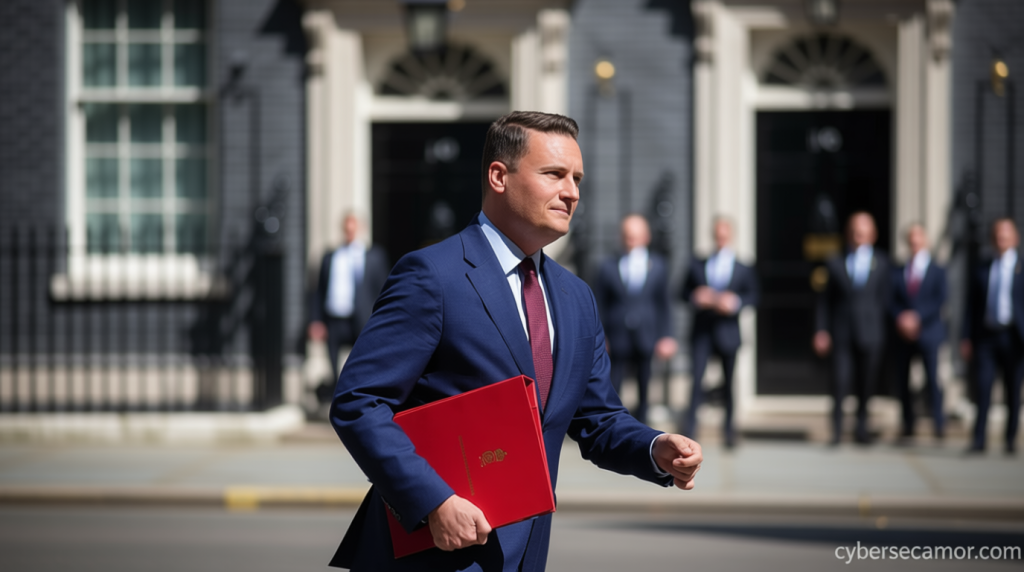
UK Health Minister Wes Streeting Resigns, Expressing Loss of Confidence in Starmer
UK health minister Wes Streeting resigns – On Thursday, Wes Streeting, the UK’s health minister, announced his departure from Prime Minister Keir Starmer’s Cabinet, signaling a potential challenge to the Labour leader’s tenure. His resignation, detailed in a statement posted on X, highlighted concerns over the party’s direction and the absence of clear vision. Streeting’s exit marks the first cabinet-level resignation since Starmer assumed power, intensifying speculation about a leadership contest within the Labour Party.
Leadership Uncertainty Looms
Starmer, who led Labour to a historic victory in the 2024 general election, now faces mounting pressure as the party’s recent performance in local and regional elections has shaken its foundations. The results, which saw significant losses, have emboldened critics to argue that the current leadership is failing to connect with voters. Streeting’s letter to Starmer, published publicly, stated,
“Where we need vision, we have a vacuum. Where we need direction, we have drift.”
This critique underscores the internal fractures within the party, with some members calling for a shift in strategy to reclaim political momentum.
As tensions rise, potential rivals for the leadership have begun positioning themselves. Among them is Angela Rayner, the former deputy prime minister and a prominent figure on the party’s left. Rayner’s recent tax clearance by the UK’s tax authorities has opened the door for her to enter the race. She stated,
“I welcome HMRC’s conclusion, which has cleared me of any wrongdoing.”
Rayner emphasized her commitment to delivering change, though she clarified that she would not be the one to initiate the contest. Her stance reflects a balance between defending her record and remaining open to a leadership challenge.
The Battle for Leadership
Streeting’s resignation is seen as a pivotal moment in the unfolding leadership crisis. While he has not formally announced his candidacy, media reports suggest he is preparing to run. The move has been interpreted as a strategic signal to Starmer, urging him to reconsider his approach. Meanwhile, Andy Burnham, the mayor of Greater Manchester, remains a key contender despite being barred from running due to his lack of a parliamentary seat. Burnham’s supporters are pushing for Starmer to outline a timeline for his departure, allowing Burnham to step forward as a viable alternative.
The Labour Party’s electoral struggles have fueled this leadership debate. Last week’s local and regional elections resulted in a major setback, with Reform UK and the Greens gaining ground at Labour’s expense. The party lost control of the Welsh parliament for the first time and failed to overtake the Scottish National Party (SNP) in Edinburgh. These losses have left Starmer’s government under scrutiny, with many questioning its ability to govern effectively. Rayner, who had previously hesitated to call for Starmer’s resignation, now acknowledges voter frustration, stating,
“What we are doing isn’t working, and it needs to change.”
Her 1,000-word analysis of the party’s electoral woes on Sunday further intensified the calls for reform.
Political Realignment and Internal Dynamics
Rayner’s tax affair, which led to her stepping down as deputy PM in September, has been resolved by HMRC, clearing her of deliberate wrongdoing. She claimed,
“I set out to pay the correct amount of tax. I took reasonable care and acted in good faith, based on the expert advice I received.”
The £40,000 in outstanding taxes she reportedly settled has been presented as evidence of her commitment to accountability. However, her position has been bolstered by the recent exoneration, positioning her as a candidate with a clean record.
Streeting, in contrast, represents a different faction within Labour. Known for his popularity on the party’s right, he has drawn criticism from left-wing MPs who favor Rayner or Burnham. His resignation is part of a broader pattern of dissent, with four junior ministers having already left the cabinet. Over 80 Labour MPs have called for Starmer’s resignation, but more than 100 lawmakers have rallied behind him, urging stability. This divide highlights the deepening rifts within the party as it seeks to redefine its political identity.
Despite the growing unrest, Starmer has shown no signs of retreating. He has vowed to fight any leadership challenge, reaffirming his determination to lead Labour into the next general election. In a Monday press conference, he pledged to “do better” and “prove his doubters wrong.” His resolve is supported by Finance Minister Rachel Reeves, who addressed the turmoil in her first public comments. Reeves urged colleagues to avoid jeopardizing the economy by plunging the country into chaos through premature leadership changes, emphasizing the need for unity.
Context and Implications
The resignations and calls for Starmer’s exit come against a backdrop of public discontent. Voters have punished the Labour government for its 22-month tenure, with the party losing significant ground to Reform UK and the Greens. This has forced Starmer to defend his leadership and pivot toward a more cohesive strategy. However, the political landscape remains volatile, with internal debates over ideology and governance shaping the future of the party.
As the Labour Party navigates this crisis, the leadership race is expected to be a test of its ability to adapt. Rayner’s tax clearance and Streeting’s resignation have both been framed as steps toward a more competitive contest. The threshold for triggering a leadership race requires 81 Labour MPs to support a challenger, a condition that Rayner and others may soon aim to meet. For now, the outcome remains uncertain, with Starmer’s survival hinging on his capacity to rebuild trust and consolidate support.
The situation also raises questions about the future of Labour’s governance. With four junior ministers having resigned and over 80 MPs advocating for change, the party’s leadership appears to be under siege. Yet, the remaining supporters remain steadfast, highlighting the intense internal politics at play. As the debate continues, the focus will shift to whether Starmer can unify his faction or if the party will fracture further, paving the way for a new era of leadership.
Rayner’s statement about the need for reflection adds another layer to the discourse. She called on Starmer to reassess his role, suggesting that his leadership may be at odds with the party’s grassroots aspirations. Meanwhile, Burnham’s potential candidacy could further complicate the race, as his working-class appeal contrasts with the more establishment-oriented figures in Starmer’s inner circle. The competition for the top job will not only determine the party’s direction but also test its ability to reconcile differing factions and restore public confidence.
In the absence of a formal challenger, the leadership contest remains in the shadows, with key players quietly gathering support. Streeting’s exit, Rayner’s tax exoneration, and Burnham’s political viability have created a landscape where multiple options exist. As the Labour Party grapples with its identity, the coming weeks will be crucial in shaping its trajectory. The outcome of this internal battle may ultimately decide whether Starmer can salvage his leadership or if the party will undergo a transformative shift under new guidance.

